
- Health Conditions A-Z
- Health & Wellness
- Nutrition
- Fitness
- Health News
- Ayurveda
- Videos
- Medicine A-Z
- Parenting
This Is Why Emmanuel Macron Wore Sunglasses At Davos

Credits: AP
French President Emmanuel Macron on Tuesday addressed the World Economic Forum in Davos, Switzerland. As he spoke on the European solidarity amid US President Donald Trumps' treat to annex Greenland, something else seemed to take the attention away. Macron was seen wearing a pair of blue-tinted mirrored aviator sunglasses. The surprising part was that he wore it indoors. French media had already reported that he was seen wearing sunglasses since last week.
Trump also mocked Emmanuel Macron’s sunglasses during his speech at Davos, joking, “what the hell happened?” regarding the French president’s appearance.
Also Read: Nipah Virus Outbreak In India: After Two West Bengal Cases, Tests On Bats Show No Active Infection
Why Was Emmanuel Macron Wearing Sunglasses Indoors?
On Monday, Macron said that reflective glasses were to disguise a minor eye injury that he had sustained after having been spotted with a heavily bloodshot right eye. "Apologies for the shades, but I have to wear them for a while". He further said that it is for a "mild eye condition".
Last week, when he appeared at a military event in southern France with red eye, while addressing the troop, he said, it was "totally benign" and "completely insignificant", he also added, "Please pardon the unsightly appearance of my eye". He also joked about it, calling it "l'oiel du tigre" or the "eye of the tiger". This was a reference to rock band Survivor's song used in the 1982 boxing moving Rocky III. He said, "For those who get the reference, it is a sign of determination".
What Happened To Macron's Eyes?

As per the French media reports, Macron appeared to have a sub-conjunctival hemorrhage. This means there is a broken blood vessel in his eyes. It is harmless, painless, and does not affect the vision. It also cannot cause permanent injury to the eye, and clears within a fortnight.
Macron Wears Sunglasses Indoor: Is It Absolutely Necessary?
Medical doctor and media commentator Jimmy Mohamed told French broadcaster RTL that Macron "opted for this style for aesthetic reasons, because he is a public figure. However, sunglasses are not necessary to protect vision in this condition. Some people wear it to avoid attracting attention.
"Some people might think he's ill, so to avoid being photographed in that state, he decided to wear sunglasses. The glasses protect his image, but not really his eye," said Jimmy Mohamed.
Read: Why Can't I Hear When I Take My Glasses Off?
How Have Netizen Reacted To Macron Wearing Sunglasses?
He has been called 'kéké', which is a French slang for a show off. Others also joked about him being a "cyborg" or emulating Hollywood actor Top Cruise in Top Gun, the 1986 movie that made wearing aviators a fashion statement.
What Is Sub-conjunctival hemorrhage?
Sub-conjunctival hemorrhage or SCH is a common ocular condition defined by extravasation of blood beneath the conjunctiva, producing a sharply demarcated red patch on the scleral surface. The condition is usually painless and does not impair vision. It usually resolves within 1 to 2 weeks, making it a frequent but benign cause of ocular redness.
It usually happens by a sudden pressure increase from coughing, sneezing, vomiting, or heavy lifting. This could rupture tiny eye blood vessels, or from eye trauma like rubbing or foreign bodies, and can be linked to risk factors like high blood pressure, diabetes, blood thinners, or even childbirth in newborns.
Australian Techie Uses ChatGPT, Grok To Develop 1st Personalized Cancer Vaccine For His Dog

Credit: University of New South Wales
In a first, a tech entrepreneur from Australia, Paul Conyngham, has claimed to have developed a personalized cancer vaccine for his dog, Rosie, using two popular Artificial Intelligence (AI) chatbots -- ChatGPT from OpenAI and Grok, built by Elon Musk's xAI.
Conyngham's eight-year-old rescue dog developed large tumors on her legs and was diagnosed with mast cell cancer -- the most common skin cancer in dogs.
Rosie, a staffy-cross-shar pei, had multiple surgeries, chemotherapy, and immunotherapy. While that could slow down the disease, it could not help stop her tumor growth. Vets then gave her a maximum of 6 months to live.
However, not willing to give up on his "best mate" who has been with him "through really tough times", Conyngham turned to AI, The Australian reported.
Conyngham, leveraging 17 years of his expertise in data science and artificial intelligence, used ChatGPT and Google DeepMind 's AlphaFold to develop a plan, along with researchers at the University of New South Wales.
"The final vaccine construct for Rose was designed by Grok," Conyngham shared in a post on social media platform X.
The team analyzed two samples of DNA — one healthy, and one from Rosie's cancer. He explained that they converted the tumor into DNA data and used it to develop a treatment, with guidance from ChatGPT throughout the process.
After analyzing protein structures linked to cancer, customized mRNA vaccine was designed to target specific mutations in Rosie's tumor. The vaccine was administered to Rosie in December 2025.
Rosie is now showing significant improvement, and the tumor has reportedly shrunk by half. Conyngham was even shocked to see her jump over a fence while chasing a rabbit.
"This represents a breakthrough in personalized medicine," said Professor Páll Thordarson from UNSW. He added that Rosie’s case shows mRNA-based personalized therapies can be effective and applied quickly, with potential lessons for human treatments.
Despite the positive signs, Conyngham remains cautious. “I’m under no illusion that this is a cure, but I do believe this treatment has bought Rosie significantly more time and quality of life.”
He is now working on developing another vaccine to target a remaining tumor. Conyngham also believes that this approach may one day change how some cancers are treated, and is now helping people who are facing the disease with their pet friends.
"A lot of people have been asking if this can be done for their dogs and for people. I'm speaking with everyone involved to see what is possible here," Conyngham wrote on X, asking them to connect personally via a Google form.
Meningitis Outbreak: University of Kent Student Among Two Who Died of the ‘Invasive’ Disease

Credits: University of Kent, Cantebury
Two people have died, including a university student in meningitis outbreak. University of Kent reported an outbreak of "invasive" meningitis. As per a BBC South East report, 11 people from Cantebury area have also been hospitalized and reported to be seriously ill. Most of these patients are of ages between 18 and 21, and a number of them are students at the university.
The people who have died are also between the age 18 and 21. The spokesperson of University of Kent confirmed that one of the two who died was a student at the university.
The UK Health Security Agency (UKHSA) is contacting the over 30,000 students, staff and their families to inform them of the situation.
Read: What This 19-Year-Old Thought Was 'Freshers' Flu' Actually Turned Out To Be Meningitis
What Is Meningitis?
Meningitis is a serious medical condition that affects the protective membranes covering the brain and spinal cord, the meninges. While fever is not always present, it is usually considered as one of the classic symptoms of meningitis. It is important to know the varied symptoms, causes, and treatments of meningitis for early diagnosis and proper management of the disease.
Meningitis is an infectious illness that brings about inflammation in the meninges. The most common cause of such inflammation is bacterial or viral infections, though other causes are also possible including fungal, parasitic, or non-infectious causes (autoimmune disease, head injury, or brain surgery). Meningitis may be caused by bacterial meningitis, which the Centers for Disease Control and Prevention (CDC) indicates can be so severe and bring about conditions like hearing loss, vision problems, and death if not received on time.
Also Read: What Is the Viral Water Stacking Trend?
Does Meningitis Always Cause Fever?
Although fever is a common presentation of meningitis, it is not always present. Certain people, particularly those with compromised immune systems, newborns, or the elderly, can get meningitis without significant temperature elevation. In these instances, other signs such as headache, confusion, or stiff neck can be more suggestive symptoms of the disease.
Fever in meningitis is usually caused by the body's immune reaction to the infection, but some factors can affect its occurrence or absence, such as:
- The nature of meningitis (bacterial, viral, fungal, or non-infectious)
- The immune response of the individual
- Pre-existing health conditions
- The course of the disease
What Are The Common Symptoms Of Meningitis?
Meningitis signs may differ based on the reason and severity of infection. Even though fever is a common symptom, it should also be noted for other vital symptoms, which are:
- Severe headache
- Stiff neck
- Photophobia (sensitivity to light)
- Nausea and vomiting
- Confusion or inability to concentrate
- Fatigue or trouble waking up
- Seizures
- Skin rash (in meningococcal meningitis)
Symptoms in infants can be different and also involve excessive crying, irritability, feeding problems, a bulging soft spot (fontanelle) on the head, and unusual lethargy.
Mpox Outbreak: First Case of Severe Strain Reported in New York City
Credits: Canva
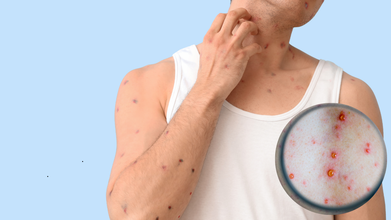
The first known case of a more severe strain of Mpox has been discovered in the New York City. This is the Mpox clade 1. Clade 1 strain has a higher mortality rate than Clade 2. According to the latest records, the former strain has a mortality rate of 1-10% compared to Clade 2's 1-4%. Moreover, statistics have shown that Clade 1 infects children more than adults. People with Mpox are considered infectious until all their lesions have crusted over, the scabs have fallen off and a new layer of skin has formed underneath, and all the lesions on the eyes and in the body (in the mouth, throat, eyes, vagina and anus) have healed too.
Also Read: Travel Vaccine Update: CDC Issues Travel Advisory Against 32 Countries For Poliovirus
In the US, since November 2024, a total of 11 cases of this severe strain have been detected.
As per the US Centers for Disease Control and Prevention (CDC), these cases were in people who had recently traveled to areas that have Mpox outbreak, including Central and Eastern Africa. Some cases were also seen in people who may not have traveled, but had links to people who did travel to these areas.
The ray of hope here is that the CDC says the risk of clade 1 Mpox to the general public in the US remains low. A two-dose vaccine for Mpox had been made available since 2022 for people at a higher risk.
What Is Mpox?
MPOX is a viral zoonotic disease, meaning it can be transmitted from animals to humans. It is caused by the monkeypox virus, which belongs to the Orthopoxvirus genus, the same family as the variola virus that causes smallpox. The disease was first identified in 1958 when two outbreaks of a pox-like disease occurred in colonies of monkeys kept for research, hence the name "monkeypox." The first human case was recorded in 1970 in the Democratic Republic of Congo, during a period when smallpox was being eradicated.
Symptoms of MPOX
MPOX symptoms are similar to those of smallpox but are generally milder. After an incubation period of 5 to 21 days, the disease typically begins with fever, headache, muscle aches, and fatigue. Swelling of the lymph nodes, a distinguishing feature of MPOX, occurs before the appearance of the characteristic rash. The rash usually starts on the face and then spreads to other parts of the body, including the palms of the hands and the soles of the feet. Lesions progress through stages—from macules to papules, vesicles, pustules, and finally scabs—before falling off.
While the disease is usually self-limiting, lasting 2 to 4 weeks, severe cases can occur, especially in children, pregnant women, and immunocompromised individuals. Complications can include secondary bacterial infections, respiratory distress, and, in rare cases, death.
Read: Clade 1 Mpox Virus Detected in US Wastewater; How High Is the Risk of Catching The Virus?
Causes of MPOX: Transmission and Spread
MPOX is primarily transmitted through direct contact with the blood, bodily fluids, or skin lesions of infected animals, including rodents and primates. Human-to-human transmission can occur through close contact with respiratory secretions, skin lesions of an infected person, or recently contaminated objects. It can also be transmitted through respiratory droplets in prolonged face-to-face contact.
The recent global outbreaks have highlighted the possibility of transmission through close contact during sexual activities, although MPOX is not considered a sexually transmitted infection in the traditional sense. The virus can enter the body through broken skin, the respiratory tract, or the mucous membranes of the eyes, nose, or mouth.
Prevention of MPOX
Given the current global emergency, the World Health Organization (WHO) and the Centers for Disease Control and Prevention (CDC) have issued guidelines for preventing MPOX transmission. Key recommendations include:
- Avoiding contact with animals that could harbor the virus, particularly in regions where MPOX is endemic.
- Practicing good hygiene by washing hands frequently with soap and water or using alcohol-based hand sanitizer.
- Using personal protective equipment (PPE), such as masks, gloves, and gowns, when caring for infected individuals.
- Isolating infected individuals from others who are at risk of contracting the virus.
- Vaccination, where available, is also an effective preventive measure. The smallpox vaccine has been shown to provide some protection against MPOX, and newer vaccines specifically designed for MPOX are being developed and deployed.
- Follow Us :


© 2024 Bennett, Coleman & Company Limited