
- Health Conditions A-Z
- Health & Wellness
- Nutrition
- Fitness
- Health News
- Ayurveda
- Videos
- Medicine A-Z
- Parenting
WHO's New Guidance to Accelerate Antibiotics Development for 3 Deadly Bacterial Infections
Credit: Canva
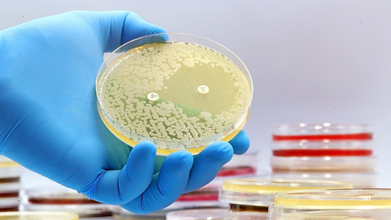
Amid a global increase in multidrug resistance, the World Health Organization (WHO) has released new guidelines that flags the lack of innovative antibiotics for vulnerable populations, as well as press the need for the rapid development of drugs to target three deadly bacterial infections.
The WHO's 2025 report on antibacterials in pipeline has highlighted that 90 new antibacterial agents are in preclinical or clinical development. Yet few are innovative antibiotic candidates with potential to target bacterial priority pathogens.
The WHO-developed Target Product Profiles (TPPs) call for accelerating the development of antibiotics to tackle the burden of drug-resistant bacteria in at-risk populations worldwide that lead to:
- Severe multidrug-resistant gram-negative infections such as bloodstream infections and hospital-acquired or ventilator-associated bacterial pneumonia. These are caused by carbapenem-resistant Enterobacterales, Acinetobacter baumannii, and Pseudomonas aeruginosa.
- Severe antibiotic-resistant gram-positive infections in immune-suppressed and critically ill patients. It is caused by Enterococcus faecium
- Community-acquired and health care-associated bacterial meningitis -- a devastating and deadly disease that not only accelerates fatality rate but also causes long-term disabilities, including hearing loss, epilepsy or cognitive impairment.
“The scientific community has developed and approved new antibiotics in recent years. This is good, but unfortunately not sufficient to catch up with evolving drug-resistant bacteria, especially against those of greatest concern,” said Dr Yvan Hutin, Director of Antimicrobial Resistance at WHO.
"We need a reliable pipeline with new antibacterial agents that are innovative, affordable, and accessible to all those who need them.”
The TPPs have been developed with extensive global consultation and also define the minimum and preferred characteristics of future antibacterials against these diseases, which specifically increase the risk of immunosuppressed people and critically ill patients. The vulnerable populations are also at risk of more deaths, prolonged hospitalizations and increased demand for intensive care that in turn strains health care systems.
What The TPPs Seek
The TPPs share a blueprint which:
- prioritizes developing antibiotics for infections with high morbidity and mortality
- sets specific standards for quality, efficacy, safety, and pharmacokinetics
- includes diverse and vulnerable populations, including immunosuppressed patients, critically ill patients, neonates, and children
- promotes partnerships between public and private sector
Rising Global Antimicrobial Resistance
Antimicrobial resistance (AMR) occurs when germs develop the ability to defeat the drugs designed to kill them.
It is one of the 10 top global health threats, undermining the effectiveness of essential treatments and placing millions at risk of untreatable infections.
As per WHO data, AMR is an urgent global public health threat, killing at least 1.27 million people worldwide and associated with nearly 5 million deaths in 2019.
In the US alone, more than 2.8 million antimicrobial-resistant infections occur each year. More than 35,000 people die as a result, according to CDC's 2019 Antibiotic Resistance (AR) Threats Report.
The WHO in a 2025 report noted that one in six laboratory-confirmed bacterial infections causing common infections in people worldwide in 2023 were resistant to antibiotic treatments.
Between 2018 and 2023, antibiotic resistance rose in over 40 percent of the monitored antibiotics with an average annual increase of 5-15 percent.
Andhra milk adulteration: 13 Dead, 3 year old Among Victims

Credit: iStock
About 13 people, including a 3-year-old child, have died in East Godavari district of Andhra Pradesh in recent days, allegedly after consuming adulterated milk.
Dozens more are hospitalized and receiving treatment at hospitals in Rajamahendravaram, according to PTI news agency.
The cases first came to light on February 22, when several elderly residents were admitted to hospitals with symptoms such as anuria (absence of urine production), vomiting, abdominal pain, and kidney failure, requiring dialysis.
"The death toll in the suspected milk adulteration case in East Godavari district has reached 13, while seven persons are undergoing treatment at hospitals in Rajamahendravaram," health officials said.
Action Taken
Primary investigations indicated milk adulteration as the major reason behind the cases. High blood urea and serum creatinine levels in medical examinations of the victims also suggested possible toxic exposure.
The contaminated milk was reportedly supplied to nearly 106 families by Varalakshmi Milk Dairy in Narasapuram village of Korukonda mandal. Following the cases, the supply was immediately halted, the report said.
To curb further fatalities and hospitalization, officials have set up emergency medical camps in affected localities, with doctors and ambulances deployed round the clock.
The suspected milk vendor, Addala Ganeswararao (33), a resident of Narasapuram village, has also been taken into custody, and the associated dairy unit has been sealed.
The state Food Safety Department also plans to distribute pamphlets and booklets in educational institutions to raise awareness about identifying adulterated milk.
Recent Cases Of Contaminated Food In India
Earlier this month, the Uttar Pradesh Food Safety and Drug Administration (UPFSDA) issued 37 notices for non-compliance to sellers of substandard oil. The department also seized oil worth Rs. 6.43 crore.
Additionally, the FSSAI seized fake paneer near Noida, 1,400 kg of fake khoya in Jhansi, and 400 kg of expired ghee.
Health and Me had previously reported on FSSAI raids in Kanpur, where adulterated oil, rotten dates, and sweets were found. Bacteria were found in Amul milk packages, along with Mother Dairy and Country Delight.
Also read: FSSAI Reveals Key Tips To Keep Your Kitchen Healthy – How To Spot High Quality Vegetables?
FSSAI In Action
In February, the FSSAI launches a nationwide adulteration drive to curb adulteration in sweets, milk products, edible oils, and other festive foods.
The food regulator also led intensive inspections and on-the-spot testing through Food Safety on Wheels across States/UT.
Fisheries, Animal Husbandry, and Dairying Minister Rajiv Ranjan Singh today informed the Lok Sabha about action taken by FSSAI against the violators during 2025-26.
"A total of 1,65,747 samples were analyzed by the FSSAI between 2025-26. Of these, 28,450 were found non-conforming, with 6492 unsafe and 19,073 in the sub-standard category," Singh told the Parliament.
During the period, a total of 2,493 samples were analyzed in Andhra Pradesh. Of these, 216 were found non-conforming, with 101 in the 'unsafe' and 114 'sub-standard' category.
Travel Vaccine Update: CDC Issues Travel Advisory Against 32 Countries For Poliovirus

Credits: Canva
On March 9, the United States issues a travel advisory against global polio and listed 32 countries, including some European countries. The International travel often comes with vaccine reminder and health checks to stay safe. The Centers for Disease Control and Prevention (CDC) issued a Level 2 travel advisory for certain international destinations with circulating poliovirus. The CDC has asked travelers to ensure they are up to date on their polio vaccines.
Also Read: Harish Rana Case Brings Spotlight On How Passive Euthanasia Has Evolved Over The Years
The Destination list for global polio travel Advisory notice includes:
- Afghanistan
- Algeria
- Angola
- Benin
- Burkina Faso
- Cameroon
- Central African Republic
- Chad
- Côte d'Ivoire
- Democratic Republic of the Congo
- Djibouti
- Ethiopia
- Gaza
- Germany
- Guinea
- Israel
- Laos
- Namibia
- Niger
- Nigeria
- Pakistan
- Papua New Guinea
- Poland
- Senegal
- Somalia
- South Sudan
- Sudan
- Tanzania
- United Kingdom
- Yemen
The CDC issued a 'Level 2' advisory, which means to 'practice enhanced precautions'.
The advisory suggests that children and adults should be up to date on their routine polio vaccines. Travelers are also asked to get an inactivated polio vaccine booster if they are going to the destination that has circulating poliovirus, or have completed their routine polio vaccine series; and have not already received one adult booster dose.
Also Read: Colon Cancer Is The Leading Cause Of Death In US For People Under 50
If Polio Has Been Eliminated In The US, Then Why Do Travelers Need Advisory?
Dr Leana Wen, CNN wellness expert, who is an emergency physician and adjunct associate professor at the George Washington University said that while the US eliminated continuous transmission of polio in 1979, eradication within the country does not eliminate the risk when people travel to places where the virus is still circulating.
Speaking to CNN, Wen said that the risk for any individual traveler is usually low if they are fully vaccinated, however, from a population health perspective, it is important to take the precautionary steps. "Even a single imported case could lead to local spread in communities where vaccination coverage is low."
Types Of Notices Issued By CDC
The CDC issues four different types of notices based on the gravity of the disease spread.
Level 1 : Practice Usual Precautions
Practice usual precautions for this destination, as described in the Travel Health Notice and/or on the destination page.
Level 2: Practice Enhanced Precautions
Practice enhanced precautions for this destination. The Travel Health Notice describes additional precautions or defines a specific population at risk.
Level 3: Reconsider Nonessential Travel
Reconsider nonessential travel to this destination. The outbreak or event poses risk to travelers because limited precautions are available.
Level 4: Avoid All Travel
Avoid travel to this destination unless traveling for humanitarian aid or emergency response; there is an extreme health risk for travelers and no available precautions.
What Is Polio?
The World Health Organization (WHO) notes that it is a highly infectious disease caused by a virus that invades the nervous system and can cause total paralysis in matter of hours. The virus is transmitted by person to person spread mainly through the fecal-oral route, or less frequently, by a common vehicle, which could be either from contaminated food or water. The virus also multiplies in the intestine.
The National Institute of Health (NIH), US, notes that the virus responsible for causing Polio belongs to the Picornaviridae family.
As per the WHO, the common Polio symptoms are:
- Fever
- Fatigue
- Headache
- Vomiting
- Stiffness of the neck a
- Pain in the limbs
How Does Polio Spread?
Polio is mainly transmitted through the fecal-oral route, meaning it spreads when a person consumes food or water contaminated with the virus. It can also spread through close contact with an infected individual. The poliovirus lives in the throat and intestines of those infected, and poor sanitation, unsafe water, and inadequate hygiene greatly increase the risk of transmission, especially in communities with limited access to clean facilities.
In severe cases, polio can lead to acute flaccid paralysis, which may affect the diaphragm and throat muscles, making it difficult to breathe or swallow. Since there is no cure for polio, prevention remains the only line of defense. Raising awareness about polio vaccination is therefore essential to protect individuals, especially children, from this potentially life-threatening disease.
Middle East Crisis Disrupting Health Services, Fueling Diseases & Environmental Hazards: WHO
Credit: MSF/X
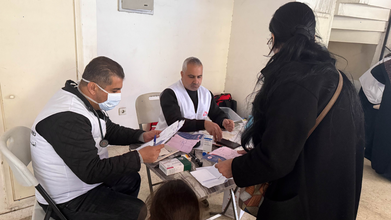
The ongoing conflict in the Middle East, which has stretched to more than 10 days, is disrupting health services and fueling the risk of several infectious diseases as well as environmental hazards, the World Health Organization (WHO) has said.
Citing national health authorities, the WHO reported casualties:
- Iran - over 1,300 died, 9,000 injured
- Lebanon - 570 people died and more than 1,400 injured
- Israel - 15 died and 2,142 injured.
These include:
- Iran
- 8 deaths among health workers
- Lebanon
- 16 deaths and 29 injuries to health care workers.
"The conflict is affecting the very services meant to save lives," the WHO said.
"These attacks not only cost lives but deprive communities of care when they need it most. Health workers, patients, and health facilities must always be protected under international humanitarian law,” it added.
Notably, the conflict is also collapsing health system with the shutdown of critical medical services:
- Lebanon - 49 primary health care centers and 5 hospitals shut down.
- Occupied Palestinian territory - ambulances and mobile clinics access delayed.
- Gaza - medical evacuations suspended since 28 February
- WHO’s global logistics hub in Dubai - disruption in movement of medical supplies
Francesca Quinto, Desk Manager at Doctors Without Borders, in an update social media platform X informed the threat to healthcare facilities in Lebanon.
"Our teams are witnessing the suffering up close: hospitals under pressure, communities repeatedly displaced and humanitarian needs rising sharply. Civilians and healthcare facilities must be protected and access to care and safety must be guaranteed," Quinto said.
The global health body also flagged wider public health risks due to the crisis, driving up disease risks among people displaced and living in shelter camps with limited access to safe water, sanitation, and hygiene.
As per current estimates, more than 100,000 people in Iran have relocated to other areas of the country due to insecurity, and up to 700,000 people have been internally displaced in Lebanon.
"These conditions increase the risk of respiratory infections, diarrheal diseases, and other communicable illnesses, especially for the most vulnerable populations, such as women and children," the WHO said.
Black Rain And Environmental Hazard
In addition, the Middle East crisis is also increasing concerns over environmental hazards. The petroleum fires and smoke from damaged infrastructure in Iran are potentially causing breathing problems, eye and skin irritation, and contaminated water and food sources.
Recently, Iran saw black rainfall after overnight Israeli strikes on several fuel depots caused fires to burn for hours.
Iran's Red Crescent Society had warned the residents of Tehran and the surrounding region that the rainfall after the strikes could be "highly dangerous and acidic", and could cause "chemical burns of the skin and serious damage to the lungs".
Call For De-escalation
The WHO called on all countries to de-escalate the conflict and "to protect civilians and health care, ensure unimpeded and sustained humanitarian access".
The WHO Director General, Tedros Adhanom Ghebreyesus, shared concerns about the rising global military expenditure and the rising world hunger rates.
"Global military expenditure just hit $2.7 trillion - in a single year. According to the UN estimates, ending world hunger by 2030 would require $93 billion annually. That means we spend almost 30 times more every year on killing each other than on making sure everyone eats. Numbers don't lie. Our priorities do," he said, in a post on social media platform X.
- Follow Us :


© 2024 Bennett, Coleman & Company Limited