
- Health Conditions A-Z
- Health & Wellness
- Nutrition
- Fitness
- Health News
- Ayurveda
- Videos
- Medicine A-Z
- Parenting
5 Symptoms of Piles and Fissures That Should Never Be Ignored, According To Doctor

Credits: iStock
Hemorrhoids and anal fissures are far more common than most people admit, yet they often go undiagnosed for months or even years. What begins as mild discomfort or occasional itching is frequently brushed aside, either due to embarrassment or the belief that it will resolve on its own.
According to Dr. Rajan Modi, MBBS, MS, FMAS, Founder and Medical Director, Kapadia Multispecialty Hospital, this delay in seeking care can allow the condition to worsen significantly. He explains that many patients ignore early symptoms because they seem minor, but over time, these warning signs can progress into more painful and complicated issues. Early identification, he stresses, is key to avoiding long-term discomfort and even surgical intervention in some cases.
Bleeding During Bowel Movements
One of the most common yet overlooked symptoms is bleeding while passing stool. This typically appears as bright red blood on toilet paper, in the toilet bowl, or on the stool surface.
Dr. Modi explains that in piles, swollen veins in the anal canal may rupture during straining. In the case of fissures, even a small tear in the anal lining can lead to bleeding, often accompanied by sharp pain. While the bleeding may seem minimal, repeated episodes should never be ignored. He advises that persistent bleeding could indicate worsening inflammation and requires prompt medical evaluation to prevent complications.
Pain That Comes And Goes
Pain is another major red flag. It may range from mild discomfort to severe, recurring pain that can last for hours after a bowel movement.
Dr. Modi notes that both piles and fissures can cause pain around the anal area, especially after using the toilet, sitting for long hours, or even during travel. Patients often report a burning or itching sensation along with swelling. Ignoring such pain, he says, can delay diagnosis and prolong suffering, while early treatment can provide quick relief.
Swelling Around The Anus
Swelling is a symptom many patients notice but hesitate to discuss. It may appear during straining and then go back inside, require manual pushing, or remain outside permanently.
This swelling is often painful and can interfere with daily activities. According to Dr. Modi, any visible or persistent swelling should be evaluated, as it may indicate advanced piles that need medical attention.
Persistent Itching
Anal itching is one of the most uncomfortable symptoms and is commonly associated with both piles and fissures. It is usually caused by irritation of the sensitive skin around the anus.
Dr. Modi explains that mucus discharge, inflammation, or even small amounts of stool can irritate the area and trigger itching. Moisture linked to piles can further worsen the condition, making it difficult for patients to ignore but still easy to overlook in terms of seriousness.
Mucus Discharge
Another sign that should not be dismissed is mucus discharge. This may appear as a slimy or sticky substance on toilet paper or in the stool.
He points out that this happens due to inflammation in the rectum, where the body produces mucus as a protective response. However, excessive discharge can signal underlying issues that need medical evaluation to prevent further complications.
When To Take Symptoms Seriously
Dr. Modi emphasizes that these symptoms should never be ignored, especially if they appear after the age of forty, are accompanied by weight loss, or involve changes in bowel habits.
Early diagnosis can make a significant difference. Timely medical care not only helps manage symptoms effectively but also prevents complications such as infection, chronic pain, and worsening of the condition. Seeking help at the right time ensures better long-term digestive and anorectal health.
Cardiovascular Diseases Lead As India’s Top Killer: US Cardiologist Points Out Risk Factors
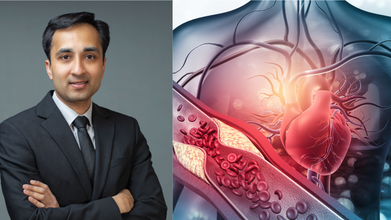
Credit: NYU Langone/iStock
Indians are facing an increasing burden of heart diseases, and mortality is rising faster compared to other countries. A top US cardiologist has now shared the major risk factors that range from genetics to obesity to pollution.
Cardiovascular diseases (CVDs) cause nearly 31 per cent of all deaths in India, according to the latest Sample Registration Survey (SRS) 2021-2023 data from the Registrar General of India, released in September 2025.
The SRS report highlighted cardiovascular diseases as the leading cause of death, especially among adults over 30.
Speaking exclusively to HealthandMe, Dr. Sripal Bangalore, Professor of Medicine at New York University School of Medicine, highlighted the key reasons why India is seeing a huge burden of heart diseases.
"I think it’s a combination of traditional and non-traditional risk factors. Globally, we are seeing the burden of obesity increasing, and specifically in India, genetic factors and non-traditional risk factors also play a role," Dr. Sripal said.
"There is a growing investigation into lipoprotein(a) and other causes of cardiovascular disease (in India). Obesity is a major risk factor, and I’m sure stress and pollution also add to it, with more and more data supporting these links," he added.
Data from the World Heart Federation showed that heart disease kills 28.6 lakh Indians every year. In the recent past, India has also been seeing a significantly higher rate of heart attacks and related deaths, even in children as young as 12 years old.
Also read: AHA’s New Dyslipidemia Guidelines Stress Early Screening, Lifestyle Management
What Factors Are Driving This Trend
"I think we need to know that part of it tends to be non-traditional, because in the Western world most of it is explainable by traditional risk factors like hypertension, diabetes, and hypercholesterolemia," Dr. Sripal said.
"What we see in India is that it is less about those risk factors, but more about non-traditional ones, including potentially genetic factors and lipoprotein(a)," the doctor added.
The Indian-origin interventional cardiologist also cited lifestyle factors such as stress and pollution that are significantly adding to the increased risk of cardiovascular events in the country.
AHA 2026 Cholesterol Guidelines: Relevance For India
Recently, the American Heart Association (AHA) released cholesterol guidelines, which stressed the importance of early screening, starting with teenagers.
The guidelines call for early intervention through early screening and healthy lifestyle changes, starting from childhood.
It recommends:
- Children (9-11 years): Cholesterol screening if never done before.
- Adults (30-79 years): Evaluate 10- and 30-year ASCVD risk to determine the need for early intervention
"India is a good example where LDL levels (bad cholesterol) may not be very high, like in the Western world. Many times, HDL cholesterol (good cholesterol) tends to be lower, and there are other risk factors, including lipoprotein(a), which seems to be elevated here," Dr. Sripal said.
How To Improve Heart Health
The doctor also explained whether overall diet quality matters more than just cholesterol intake.
"Diet adds to the totality of everything that we do, including increasing the risk of obesity. Cholesterol may explain some part of it, but having a heart-healthy diet is critically important," Dr. Sripal said.
The cardiologist highlighted the need to increase the intake of fruits and vegetables, as consuming natural foods is critically important.
Importantly, he also emphasized at least making sure that you have a lipid panel to check your cholesterol levels.
"We are assuming that you are staying healthy and not smoking. Checking blood pressure, it depends on your age, but at least once a year, checking your lipid panel would be critically important," Dr. Sripal told HealthandMe.
As a cardiologist, he shared that to boost heart health, the key is
- to make sure that you lead a healthy lifestyle,
- stay away from smoking,
- increase physical activity,
- reduce stress.
"Pollution is one factor, and I think we can all do our part to make sure that we don’t contribute more to environmental pollution," he noted.
Study Shows Single-use Plastics Still Rampant In India: How It Can Affect Your Health?

Credit: Toxic Link
While India’s Ministry of Environment, Forest, and Climate Change (MoEFCC) enforced a nationwide ban on identified single-use plastic (SUP) items from July 1, 2022, a new survey showed that violations continue to persist across major cities in the country, raising significant health and environmental risks.
The survey of 560 locations by Toxics Link -- an Indian environmental research and advocacy organization -- showed that 84 percent of sites across Delhi, Mumbai, Guwahati, and Bhubaneswar still use or sell banned plastic items.
Bhubaneswar recorded the highest availability of banned SUPs at 89 percent of survey locations, followed by Delhi at 86 percent, Mumbai at 85 percent, and Guwahati at 76 percent.
The survey noted that high use among street food vendors, juice shops, coconut water sellers, vegetable vendors, and ice cream parlours.
"The continued presence of banned plastic items in a majority of locations suggests that enforcement remains inconsistent,” said Ravi Agarwal, Director of Toxics Link.
“Unless implementation improves and the supply of these products is controlled, the ban will not effectively address plastic littering and pollution,” he added.
How Plastics Can Harm Your Body
Plastic carry bags, disposable plastic cutlery, cups, plates, and straws often contain chemicals like BPA and phthalates, which can interfere with the body’s hormonal balance.
BPA is an industrial chemical used to make certain plastics and resins, and its exposure has been linked to several health conditions, including an increased risk of high blood pressure.
Phthalates, another group of chemicals used to make plastics more flexible, have been found to disrupt the endocrine system, leading to potential health issues.
Also read: Your Kids’ Fast-fashion Clothing May Be Laced With High Levels of Toxic Lead
Studies have proven that BPA and phthalates can mimic the body’s hormones, particularly estrogen. This interference can disrupt the normal functioning of the cardiovascular system, leading to increased blood pressure.
Plastics also contain some highly toxic chemicals, such as flame retardants, per- and polyfluoroalkyl substances (PFAS), that can migrate into the environment and into human bodies.
According to a report by WWF, an average person could be ingesting approximately 5 grams of plastic every week.
Scientific studies have proven that the health effects of plastics include cancer or changing hormone activity (known as endocrine disruption), which can lead to reproductive, growth, and cognitive impairment.
Recent evidence also indicates that humans constantly inhale and ingest microplastics through contaminated seafood, including fish and shellfish.
In addition, microplastics have been found in tap water, bottled water, and even commonly consumed beverages, such as beer and salt.
How to Reduce the Disease Risks?
The UNDP urges individuals, organizations, and governments to work together to
- manage plastic waste,
- reduce plastic usage,
- transition to a more sustainable and resilient environment.
Other options include
- Opting for BPA-free and phthalate-free options
- Switching to reusable water bottles, plates, and cutlery made from glass, stainless steel, or other safe materials can significantly reduce exposure to harmful chemicals.
- Avoid exposing plastic bottles or lunch boxes to high temperatures, as heat can accelerate the leaching of chemicals into the water.
HIV No Longer Barrier To Organ Transplants, Say Delhi Doctors After Successful Kidney Surgery

Credit: Canva
While a weakened immune system and fear of complications once denied people with HIV access to organ transplants, doctors at a Delhi hospital have now challenged the idea with a successful kidney transplant surgery on a 43-year-old HIV-positive patient from Ethiopia.
According to the team of doctors from the Max Super Speciality Hospital, Patparganj, who successfully performed the complex living donor kidney transplant, advancements in antiretroviral therapy and transplant protocols have made such procedures increasingly safe in carefully selected cases.
“HIV is no longer a barrier to organ transplantation when managed appropriately,” said Dr. Ravi Kumar Singh, Senior Consultant, Nephrology and Transplant Physician at Max Hospital, Patparganj.
“With strict selection criteria and coordinated multidisciplinary care, patients with well-controlled HIV can achieve outcomes comparable to the general transplant population.”
Also read: India Identifies 219 Districts As Priority For Intensified HIV/AIDS Interventions
Kidney Transplant In HIV Positive Patient
The patient, who had been living with HIV for 10 years, developed end-stage renal disease 3 years ago and has been dependent on regular dialysis since then.
Before the surgery, the patient underwent extensive evaluation to ensure optimal control of HIV, including a stable immune profile and undetectable viral load.
The patient’s 33-year-old wife donated one of her kidneys. Compatibility testing confirmed matching blood groups and a negative cross-match, enabling the team to proceed with the transplant.
“Kidney transplantation in patients with HIV requires a highly meticulous and coordinated approach, given the complexities of balancing immunosuppression with ongoing antiretroviral therapy,” said Dr. Paresh Jain, Senior Director, Urology, Robotic Surgery & Renal Transplant.
“In this case, careful pre-transplant evaluation, precise surgical execution, and close post-operative monitoring were critical to ensuring a successful outcome. This procedure reflects how advances in transplant science and surgical expertise are enabling us to safely expand access to life-saving transplants for patients who were once considered high-risk,” he added.
Following the transplant, the patient has shown encouraging recovery, has been taken off dialysis, and is gradually returning to normal daily activities, the doctors said. The patient also continues on a carefully monitored regimen of immunosuppressive and antiretroviral therapy, they added.
Also read: India's Silent Crisis: Why We Must Embrace Deceased Donor Organ Transplantation
Can People With HIV Get A Transplant?
With advancements in antiretroviral therapy (ART), enabling people to live longer, HIV has now become a chronic, manageable condition. However, the HIV positive patients are now more likely to die from end-stage organ disease than from AIDS-related infections.
As per the US National Institutes of Health, people with HIV can successfully donate or receive transplanted organs with reasonable success rates.
However, health care providers must consider and monitor potential drug interactions, kidney and liver function, and HIV viral suppression in people with HIV receiving a transplant.
Further, the NIH advised HIV positive patients to continue taking all prescribed HIV medicines before and after transplant.
- Follow Us :


© 2024 Bennett, Coleman & Company Limited