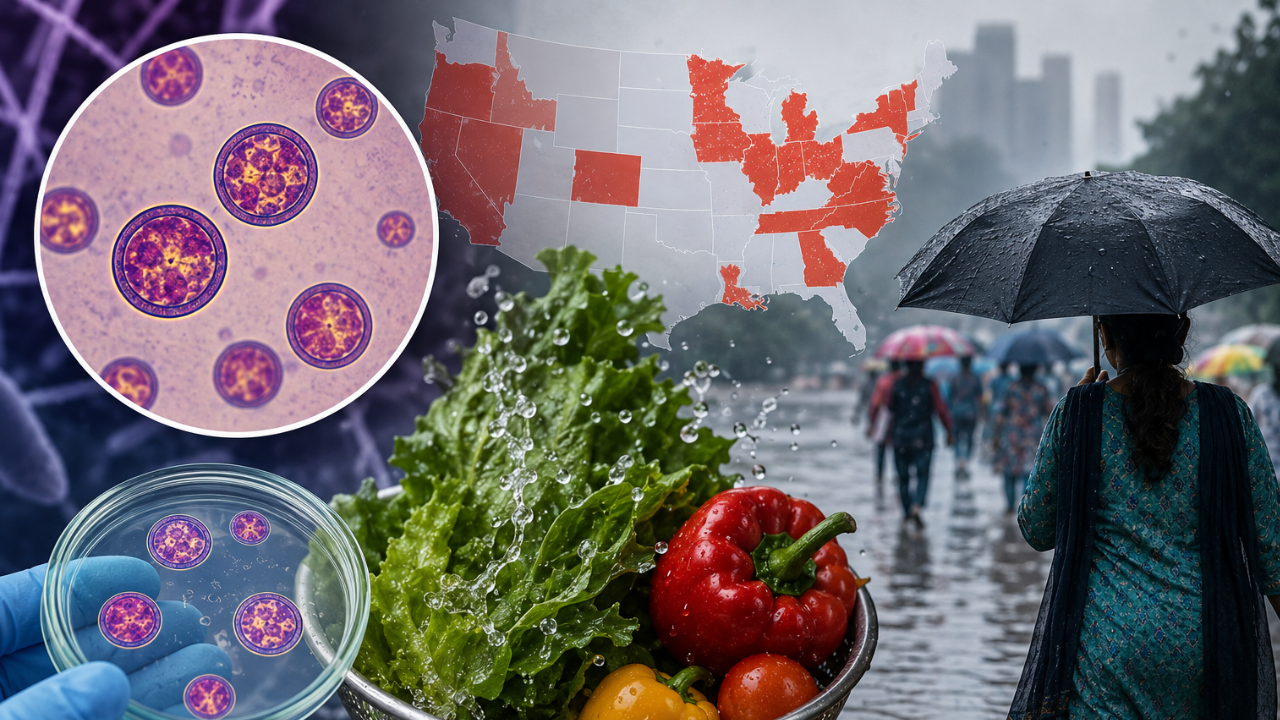
The United States is currently experiencing one of its worst Cyclospora outbreaks in recent years, with health officials still unable to determine the source of the infections. According to the latest data, the outbreak has spread across at least 18 states. Michigan has reported at least 1000 cases, emerging as the hardest-hit state. With around 40 hospitalisations, no deaths have been reported so far. Cyclospora Outbreak In The US The outbreak is being investigated by the U.S. Centers for Disease Control and Prevention (CDC), the U.S. Food and Drug Administration (FDA), and state health departments. Investigators have not yet identified a single contaminated food source. Cyclospora infections are commonly linked to contaminated fresh produce which reaches consumers. Previous outbreaks in the country have been caused by cilantro, basil, leafy greens, berries, and bagged salad mixes. Several other states have also reported rising case counts. New York City has confirmed hundreds of infections since May. Health officials believe the actual number of infections is likely higher because Cyclospora is not routinely tested for in people with diarrhea. Symptoms usually begin about one week after exposure and can last weeks if untreated. Also read: Walked Through Floodwater Recently? 5 Things To Do After Reaching Home To Minimise Risk Of Infections About Cyclospora Cyclospora cayetanensis is a parasite that causes cyclosporiasis, a form of food poisoning. People can become infected through contaminated food or water. The infection causes watery diarrhea and other intestinal symptoms. A Cyclospora infection can be mild or severe and may last for weeks or even months. It is typically treated with antibiotics. People with weakened immune systems, such as those with HIV/AIDS or cancer, are at greater risk of severe disease. Cyclospora infection commonly causes: Prolonged watery diarrheaSevere abdominal crampsFatigueLoss of appetiteNauseaWeight lossBloating Health authorities in the US continue to advise people to wash fresh produce thoroughly, maintain good hand hygiene, and seek medical care if they develop prolonged watery diarrhea, especially if symptoms persist for several days. Does India’s Monsoon Raise Risk Of Cyclospora? While there is no indication of a similar outbreak in India, infectious disease experts say the country's monsoon season creates conditions that can facilitate the spread of intestinal parasites if food and drinking water become contaminated. HealthandMe spoke to Dr. Devashish Desai, Consultant, Infectious Diseases at Ruby Hall Clinic, if India, too, faces a possibility of a parasitic infection like cyclospora, especially in monsoon season. Dr Desai said, “The answer is yes. India's monsoon creates conditions that favour the spread of several water and food-borne infections, including Cyclospora. Heavy rainfall can contaminate drinking water sources and fresh fruits and vegetables with sewage or infected soil. Consuming raw salads, unwashed herbs, or untreated water significantly increases the risk of infection.” Unlike bacteria, cyclospora parasites require time in the environment before they become infectious, meaning direct person-to-person transmission is uncommon. Instead, contaminated food and water remain the primary sources of infection. This makes maintaining hygiene from farms to kitchens essential for prevention. The expert added, “Although Cyclospora outbreaks are not commonly reported in India, the environmental conditions during the rainy season make vigilance essential. Strong food safety practices, clean water, and good personal hygiene remain the most effective defences against this preventable parasitic infection.” Although India has not reported a similar outbreak, experts say the current situation in the US is a stark reminder that food safety and sanitation become even more critical during the monsoon.