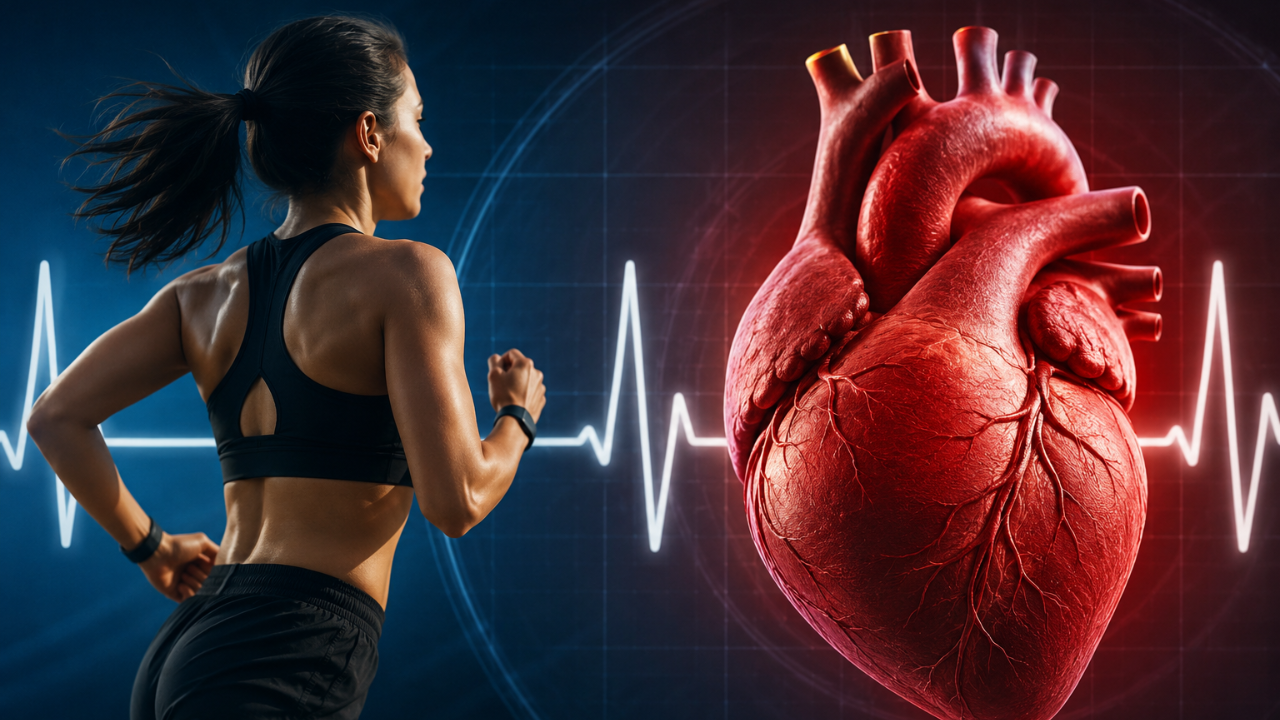
Athletes who spend years training their bodies undergo remarkable physiological changes. Athlete's heart is one of them. It becomes stronger, more efficient, and sometimes even larger. This natural adaptation is known as athlete's heart, a condition that is completely normal in most cases but can occasionally resemble serious heart disease. What Is Athlete’s Heart? Understanding the difference between a healthy athletic heart and an underlying cardiac disorder is crucial, especially as awareness grows around sudden cardiac deaths in young athletes. HealthandMe spoke to Dr. Ruchit Shah, Interventional Cardiologist at Saifee Hospital, Mumbai, who said, “If a person exercises too much, normally more than 60 minutes in most days of the week for a prolonged period of time, the body's need for oxygen and for blood to supply the oxygen rises significantly. This can often be seen in the very intense training regimens of competitive athletes. The heart muscle responds to this extra demand by getting "conditioned" and thickening with time.” Just like skeletal muscles that get bigger and thicker and with training and exercise, the heart muscle can get bigger and thicker too. Athlete's heart is usually characterised by a “conditioned heart rate”. People with athlete's hearts will now show symptoms or serious warning signs and thereby won't need a specific treatment for the condition. Also read: Illinois Governor Claims Trump Continues To Suffer From Dementia Common Signs Of Athlete’s Heart Athlete's heart itself usually causes no symptoms. In fact, many athletes only discover these changes during routine sports medical evaluations. These signs are considered normal adaptations in trained athletes. Signs include: Slow resting heart rate (bradycardia) Mild enlargement of the heart on imaging Changes on an electrocardiogram (ECG) High exercise capacity with no symptoms Athlete’s Heart Is Different From Cardiac Diseases The expert also says that athlete's heart is different from serious cardiac diseases like cardiomyopathies, especially hypertrophic obstructive cardiomyopathy (HOCM). He says, “HOCM is a serious disease, with heart muscle thickening also occurring and causing the left ventricular cavity to narrow. The left ventricle's outflow tract can also become obstructed from this excessive thickening. Athletes with HOCM have a risk of sudden cardiac arrest and death, unlike athletes with athlete's heart.” An athlete‘s heart, by itself, is considered a benign physiological adaptation and does not require medical intervention. However, it becomes important to investigate further if an athlete experiences: Chest pain during exercise Unexplained fainting Palpitations Shortness of breath out of proportion to exertion Reduced exercise performance A family history of sudden cardiac death or inherited heart disease Ignoring these warning signs can delay the diagnosis of potentially serious cardiac conditions. Those who have an athlete’s heart must get periodic cardiac evaluation, do a temporary reduction in training if the diagnosis remains uncertain, and monitor when minor abnormalities are present. Athlete's heart is proof of the body's extraordinary ability to adapt to sustained physical activity. For most athletes, it represents a healthy, efficient cardiovascular system rather than a medical problem. The challenge lies in distinguishing these normal adaptations from potentially dangerous heart conditions that can look remarkably similar.