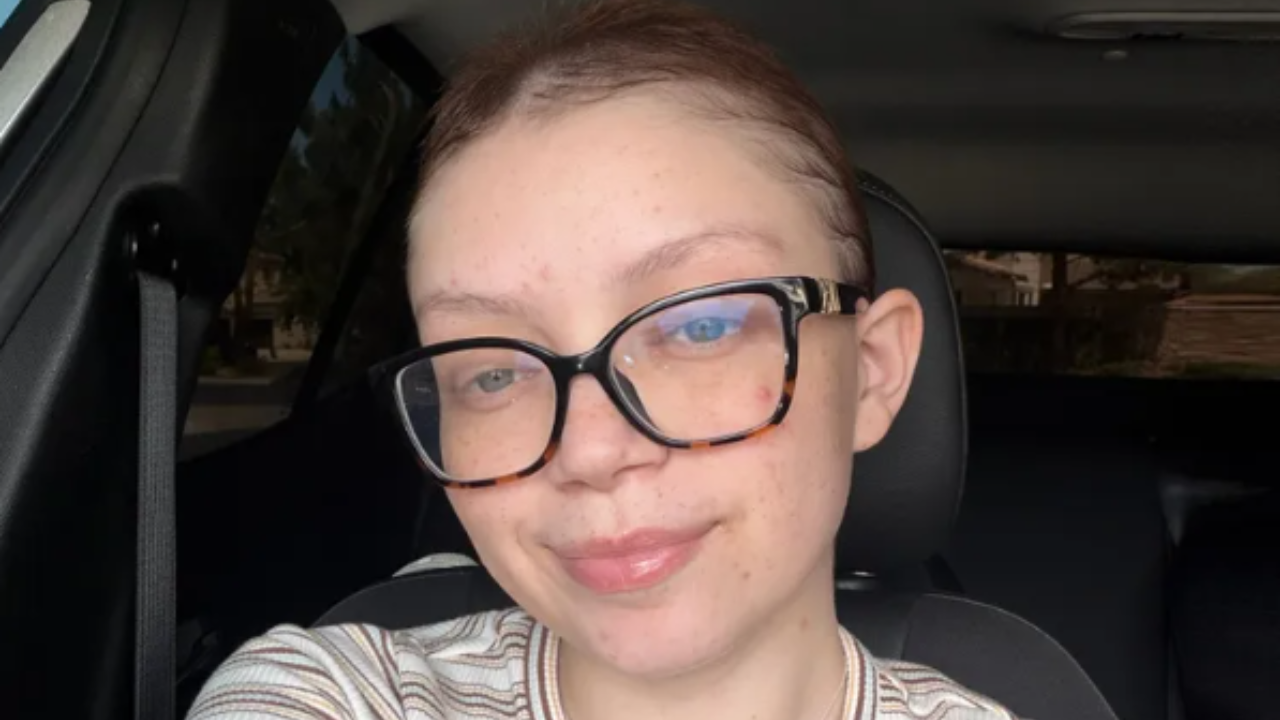
Blocked ears are one of the most common and irritating problems associated with air travel. While the sensation usually resolves on its own shortly after landing, for 22-year-old Aida Burkins from California, it persisted and eventually led to a frightening diagnosis of rare head and neck cancer.Blocked Ears Persisted After FlightBurkins was travelling to Chicago in May 2025 when her ears became blocked. When she returned home, her ears still hadn’t popped.She later developed unusual symptoms, including hearing loss and bleeding from her throat.“I started bleeding into my throat, which would only come out of my nose if I was bent at the hip at about 90 degrees,” the 22-year-old told Newsweek. “My hearing got worse and worse. Then I started getting more tired and losing weight.”Symptoms Were Initially DismissedWhen Burkins sought medical help, her condition was initially dismissed as “just altitude sickness.” After several months, her hearing had deteriorated significantly.“Everything sounded so muffled, and I had a ringing that wouldn’t go away,” she said.Burkins eventually saw an ear, nose, and throat (ENT) specialist, who discovered a mass and noted that her adenoids — soft tissue in the throat, just behind the nose — were inflamed.“The doctor told me he had never seen anything quite like what I had going on. He couldn’t be sure it was cancer, but he said it was very suspicious,” she told the outlet.Diagnosed With Rare Head And Neck CancerIn February 2026, after undergoing CT scans and two biopsies, Burkins learned that she had a widespread tumour affecting the cervical lymph nodes near the base of her skull.She was diagnosed with nasopharyngeal carcinoma, a rare type of head and neck cancer that starts in the upper part of the throat behind the nose and near the base of the skull, according to the American Cancer Society.“Hearing I have cancer, all I thought about was not being able to see my babies grow up or do the things they want to do in life. It was horrifying,” Burkins, who is a mother to a 1-year-old and 3-year-old.Burkins has since undergone months of chemotherapy and radiation. She is now finishing her treatment and hopes to be cancer-free soon as her body is responding well to the treatments. What Is Nasopharyngeal Carcinoma?According to the Mayo Clinic, nasopharyngeal carcinoma is a cancer that starts as a growth of cells in the nasopharynx, the upper part of the throat located behind the nose.The cancer is rare in the United States and occurs much more often in other parts of the world, particularly Southeast Asia.Nasopharyngeal carcinoma can be difficult to detect early because the nasopharynx is not easy to examine and there may be no symptoms initially.Symptoms To Watch ForWhen symptoms do occur, they present non-classic signs which include:A lump in the neck caused by a swollen lymph nodeNosebleedsBloody salivaDouble visionEar infectionsFacial numbnessHeadachesHearing lossNasal stuffinessRinging in the ears, known as tinnitusSore throatHow Is It Treated?Treatment for nasopharyngeal carcinoma usually involves radiation therapy, chemotherapy, or a combination of the two, depending on the cancer and the individual patient.