
- Health Conditions A-Z
- Health & Wellness
- Nutrition
- Fitness
- Health News
- Ayurveda
- Videos
- Medicine A-Z
- Parenting
Can H5N1 Virus Infect Humans?
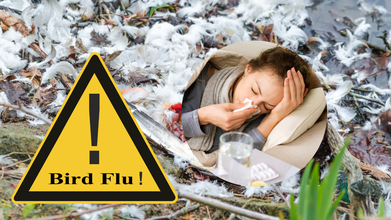
Credits: Canva
After the death of 150 crows in Bihar's Bhagalpur district in Naugacha, sudden death of 1,500 crows in Chennai, in Tamil Nadu has again raised concerns over bird flu. At the center of all these is Highly Pathogen Avian Influenza or the HPAI, which is also known as bird flu or the A H5N1 virus. While the strain is known for being notorious and have jumped states, spreading outbreaks in many Indian states, including Jharkhand, Bihar, Maharashtra, Andhra Pradesh, Kerala, Telangana, and Tamil Nadu, the concerns do not end there. Many are concerned if it is a threat to humans too.
Can H5N1 Virus Infect Humans?
As per the World Health Organization (WHO) data, between January 2023 and December 2025, a total of 993 human cases of avian influenza were reported in 25 countries. Almost half of them, which is around 477 people, died. The virus has a fatality rate of 48 per cent.
Two different studies, one done by the universities of Cambridge and Glasgow that show how avian flu strains are multiplying even when the body temperatures could hinder viruses. Whereas, another important study led by Indian scientists, by Philip Cherian and Gautam Menon of Ashoka University, published in BMC Public Health predict if H5N1 or the bird flu virus, could start spreading among humans. How quickly must we act to stop it?
Can H5N1 Virus Infect Humans? How It Survives In The Body?
Human influenza viruses infect many each year. The seasonal strains we see most often fall under influenza A and tend to do well in the cooler temperatures of the upper respiratory tract, which is close to 33°C. They are less suited to the warmer, deeper parts of the lungs, where temperatures reach about 37°C.
As per Science Daily, when the body cannot slow an infection, the virus continues to multiply and spread, which can lead to more serious illness. Fever acts as a protective response, pushing body temperature as high as 41°C. Until now, the exact reason why fever slows some viruses but not others has been unclear.
Avian influenza behaves differently. These viruses usually grow in the lower respiratory tract, and in their natural hosts, such as ducks or seagulls, they often infect the gut. Temperatures in these areas can reach 40°C to 42°C, which helps explain their greater tolerance to heat.
Read: Could Bird Flu Become The Next Pandemic For Humans?
Can H5N1 Virus Infect Humans? What Does The India Specific Study Reveal?
Using BharatSim, an open-source simulation platform originally developed during Covid-19, the researchers recreated what an outbreak might look like in real life. “The threat of an H5N1 pandemic in humans is a genuine one,” Prof Menon said, “but we can hope to forestall it through better surveillance and a more nimble public-health response.”
Their model begins where experts believe a real outbreak would: with a single human infection, most likely a poultry worker or someone exposed to infected birds at a farm or market. The danger, the researchers argue, lies not in that first case, but in whether sustained human-to-human transmission takes hold.
The study by Ashoka University has the most sobering findings in how fast control can slip away. According to the simulations, once cases rise beyond roughly two to ten people, the virus is likely to move beyond immediate contacts and into the wider community.
If households of close contacts are quarantined when just two cases are detected, the outbreak can almost certainly be contained. By the time ten cases are identified, however, the model suggests the infection has probably already spread far enough that early interventions no longer make a meaningful difference.
To ground their work in reality, the researchers focused on a village in Tamil Nadu’s Namakkal district, one of India’s largest poultry hubs. With more than 1,600 farms, around 70 million chickens and tens of millions of eggs produced daily, the region reflects the kind of dense human-animal interaction where spillovers are most likely.
In the simulation, the virus spreads outward from a single workplace into homes, schools and markets, tracking primary and secondary contacts. Once “tertiary” infections, contacts of contacts, appear, control becomes dramatically harder without severe measures such as lockdowns.
Read: Bird Flu Variant Can Now Withstand Fever, Sparking Stronger Human Threats
Can H5N1 Virus Infect Humans? What Works And What Does Not Work
Culling birds work, but only if it happens before humans are infected. Once the spillover is done, isolating patients and quarantining is the only option that can stop the virus, that too if done very early. Targeted vaccination could help raise the threshold at which the virus can sustain itself. Quarantine imposed too early keeps families together longer, increasing household transmission. Imposed too late, it barely slows the outbreak at all.
Ordinary Movement, Extraordinary Pain: FAQs On Bursitis Answered By Expert
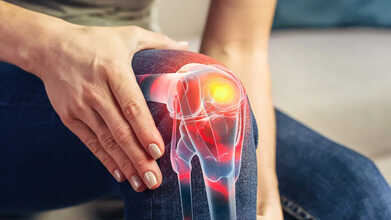
Bursitis is often linked to lifestyle. (Photo credit: iStock)
You pick up a jar on the kitchen shelf and shudder. You take a flight of stairs, and that old pain sinks into your hip. You get up in the morning, and your shoulder feels as though it has been wrung out. You attribute it to age, to a long day on your feet, to just how things are now. But what if your body is trying to tell you something very particular and you have been missing it?
Dr Apoorv Dua, Consultant, Orthopaedics, ISIC Multispeciality Hospital, in an interview with Health and Me, said that this may be a sign of bursitis—a condition that is much more widespread than most people realise, and much more treatable than most people are aware. The expert went on to answer common questions regarding extreme pain that comes with this condition.
What is bursitis?
Bursae are small, fluid-filled sacs located between your bones, muscles, and tendons. Imagine them as the natural cushioning system of the body—shock absorbers that ensure your joints move smoothly and painlessly. Under normal circumstances, you do not even think about them. However, when inflamed, due to repetitive motion, prolonged pressure, injury, or infection, they make their presence known in a very noticeable manner. This is bursitis. Although it most often appears in the shoulder, elbow, hip, and knee, it may occur in nearly any joint in the body.

Who gets bursitis—and why?
This is where the lifestyle connection cannot be overlooked. Bursitis does not discriminate, but it has definite patterns. The weekend warrior who runs ten kilometres on Saturday after sitting at a desk all week. The housewife who spends hours cleaning floors or squatting in the kitchen. The office worker who has been stooped over a computer. The gym enthusiast who does not warm up. The retired teacher who begins a walking routine too vigorously. All these individuals may be silently placing stress on their bursae, and in many cases, bursitis is the eventual outcome.
Age also plays a role—the bursae, like most of our connective tissue, grow weaker with age. Certain medical conditions such as rheumatoid arthritis, gout, and diabetes can increase the risk. However, in many instances, the cause is simply the way we move—or do not move—in our day-to-day lives.
What does bursitis feel like?
A key characteristic of bursitis is pain that is disproportionate to the activity causing it. Reaching overhead, sitting on a hard surface, pressing on your elbow, or walking downhill—these are not dramatic movements, yet with bursitis, they may trigger a sharp, deep, or burning pain that interrupts you mid-action. The affected joint is usually swollen and tender. The area may feel warm to the touch. Movement becomes guarded. Sleep, particularly in cases of shoulder bursitis, can be difficult, as lying on the affected side aggravates the pain.
The challenge with bursitis is that its symptoms can resemble other conditions—tendinitis, arthritis, a muscle strain, or even a ligament tear. Many individuals self-diagnose, self-treat with painkillers, and hope it will go away. Sometimes it does. However, chronic, untreated bursitis may persist for months and, in some cases, lead to complications.
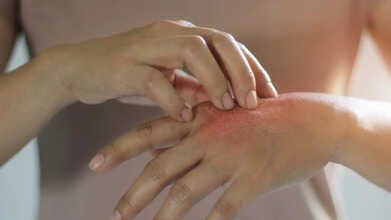
Bursitis diagnosis
A thorough clinical examination is usually the first step. A skilled orthopaedic specialist can identify the affected bursa through specific physical assessments. Imaging, such as ultrasound or MRI, may be recommended depending on the case to confirm the diagnosis, rule out structural damage, or guide treatment.
If infection is suspected—indicated by increased redness, fever, and rapidly worsening pain—fluid may be aspirated from the bursa and tested. Septic bursitis is a serious condition that requires immediate medical attention and is treated differently from the more common non-infectious type.
Bursitis treatment
The encouraging fact about bursitis is that it responds well to treatment, particularly when detected early. Most cases are managed with a combination of rest, activity modification, ice application, and anti-inflammatory medication. Physiotherapy also plays an important role, helping to correct movement patterns, strengthen supporting muscles, and restore the full range of motion.
In more persistent cases, a corticosteroid injection into the bursa may provide rapid and significant relief by reducing inflammation at its source. Surgery is rare and is typically considered only in chronic, recurrent cases that do not respond to conservative treatment.
Prevention is better
In many instances, bursitis is linked to lifestyle—and that presents an opportunity for prevention. Even small changes can help: warming up before exercise, avoiding excessive strain on joints, maintaining a healthy weight to reduce pressure on hips and knees, and ensuring workstations are ergonomically designed.
Pain often becomes background noise—something we get used to, work around, and push through. However, bursitis reminds us that the body communicates with precision. That pain when you pick up a jar, that discomfort on the stairs—it is not simply ageing. It is a signal worth discussing with your doctor.
Have Hernia Surgeries Become Less Painful?
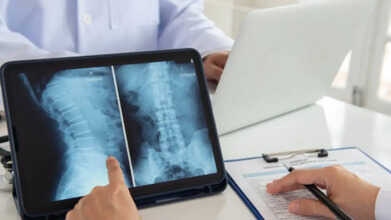
Robotic hernia surgery is less invasive. (Photo credit: iStock)
The bulge that appears when an internal organ pushes through a weakened muscle wall will not recede with rest or medication—it will, in most cases, grow larger and more uncomfortable over time. Surgery is the only definitive treatment. What has changed significantly in recent years is what that surgery looks like and what recovery from it requires.
Dr Rajesh Sharma, Director – General Surgery, Minimal Access & Bariatric Surgery, CK Birla Hospitals, Jaipur, in an interview with Health and Me, spoke about the introduction of robotics in hernia treatment and how it can benefit patients.
How hernia surgeries are becoming less painful
With advances in surgical technology, minimally invasive approaches have significantly improved patient outcomes. One of the most important developments in recent years is robotic-assisted hernia surgery using the da Vinci Surgical System. In robotic surgery, the surgeon operates from a console equipped with a high-definition, three-dimensional, magnified view of the surgical field. The robotic system translates the surgeon’s hand movements into extremely precise movements of miniaturised instruments inserted through small incisions. The system also filters natural hand tremors and provides a greater range of motion than the human wrist, enabling meticulous dissection and suturing.
For hernia repair, these capabilities allow surgeons to perform delicate steps such as accurate defect closure and optimal mesh placement, which are important for the long-term durability of the repair.
Benefits for patients
Robotic hernia repair offers several advantages for patients:
- Smaller incisions and minimal scarring
- Reduced postoperative pain
- Lower risk of wound complications
- Shorter hospital stay
- Faster return to normal activities
Because the procedure is minimally invasive, most patients experience earlier mobilisation and quicker overall recovery compared with traditional open surgery. Robotic surgery is particularly useful in complex, recurrent, or large ventral hernias, where precise reconstruction of the abdominal wall is important. While not every hernia requires a robotic approach, the technology expands the surgeon’s ability to perform advanced minimally invasive repairs with improved ergonomics and visualisation.
The future of hernia surgery
The integration of robotic platforms such as the da Vinci system represents a major step forward in modern general surgery. By combining surgical precision with minimally invasive techniques, robotic hernia repair aims to enhance patient comfort, improve recovery, and deliver durable surgical outcomes.
How Liver Disease Affects The Heart
Credit: iStock
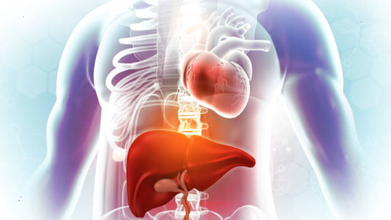
The liver and heart are two of the most vital organs of the body, and although they perform very different functions, they are closely connected. When the liver is not functioning properly, it can place significant stress on the heart and circulatory system of the body.
Liver disease not only affects the digestion process, metabolism, and detoxification but can also trigger serious cardiovascular changes that may go unnoticed in the early stages. Understanding this particular connection is significant for timely diagnosis and better overall care.
The Liver-Heart Connection
The liver helps to regulate the flow of blood, fluid balance, cholesterol metabolism, and inflammation as well. When liver disease develops—whether due to fatty liver, hepatitis, cirrhosis, or alcohol-related damage—all these processes become disturbed.
As a result of the same, the heart may have to work harder to maintain circulation, while blood vessels may also undergo certain changes that impact blood pressure and delivery of oxygen as well.
Changes In Blood Circulation
In well-advanced liver disease, especially cirrhosis, the flow of blood through the liver becomes restricted. This can also increase pressure in the portal vein, a condition known as portal hypertension. At the same point in time, blood vessels in the rest of the body may also widen, causing a drop in effective blood pressure.
To compensate, the heart pumps faster and harder. With the passage of time, this constant strain can weaken cardiac function and even lead to a condition sometimes referred to as cirrhotic cardiomyopathy, where the heart does not respond normally under stress.
Fluid Retention And Heart Stress
Liver disease often causes the body to retain both salt and water. This can also lead to swelling in the legs, abdomen, and surrounding tissues as well. Extra fluid in the body increases the workload on the heart, making it more difficult for it to pump blood in an efficient way. In severe cases, this may also contribute to shortness of breath, fatigue, and worsening cardiovascular strain.
Inflammation And Metabolic Impact
Some of the conditions, such as non-alcoholic fatty liver disease, are also linked with diabetes, obesity, high levels of cholesterol, and high blood pressure – all of which are the major risk factors for heart disease. Chronic inflammation, well-associated with liver damage, may further increase the risk of atherosclerosis and other cardiac complications.
- Follow Us :


© 2024 Bennett, Coleman & Company Limited