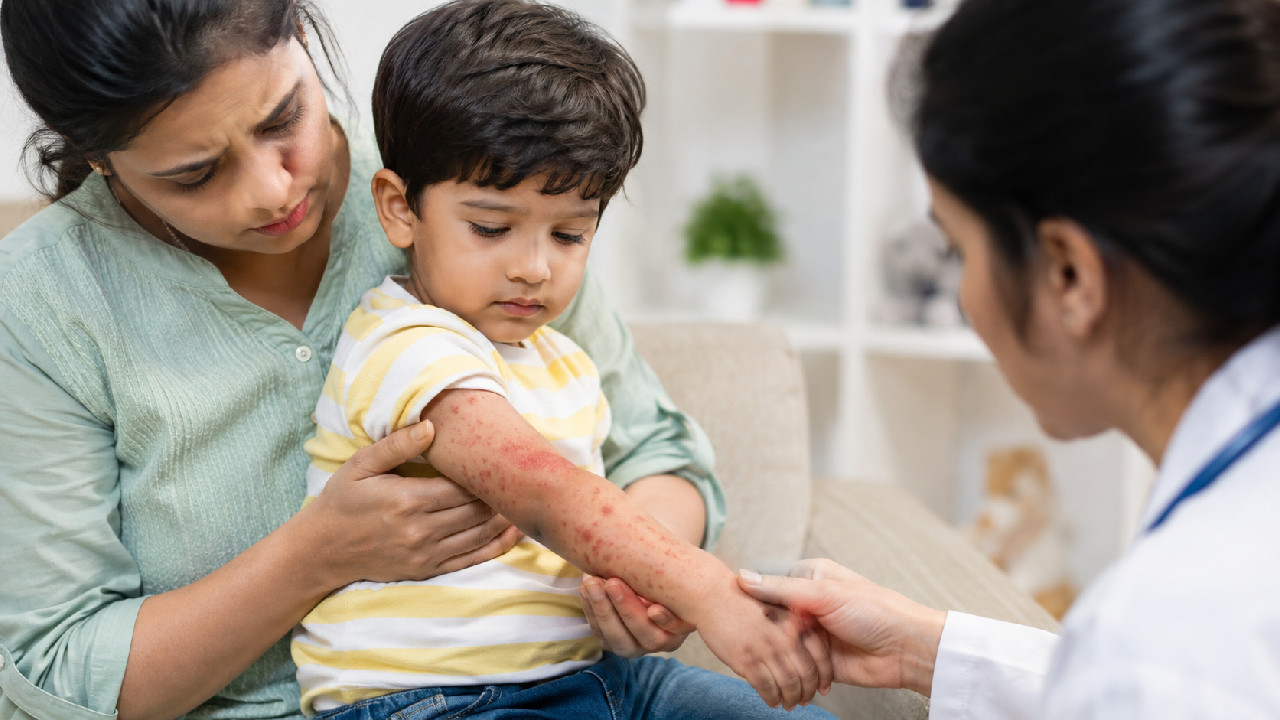
Rashes are common in children and can occur for many reasons. Most are harmless and settle on their own, but some may need medical attention. Knowing the warning signs can help parents decide when home care is enough and when to consult a doctor.Why Do Rashes Happen?Children’s skin is sensitive and can react to heat, friction, allergens, insect bites, irritants or infections. Common causes include heat rash, eczema, contact dermatitis, insect bites and viral infections such as chickenpox, hand-foot-and-mouth disease and roseola.A rash can look worrying, but the child’s overall condition is often as important as the appearance of the rash itself.When Home Care May Be EnoughIf your child is active, reasonably comfortable, feeding and drinking well, and otherwise appears well, a mild rash can often be managed at home.Home care may be appropriate when the rash:Is mild and limited to a small areaIs not spreading quicklyCauses only mild itching or discomfortOccurs without concerning symptomsLooks consistent with a known condition such as heat rash or eczemaKeep the skin cool and dry, and dress your child in loose, breathable cotton clothing. Use a gentle, fragrance-free moisturiser if the skin is dry or itchy. Avoid harsh or fragranced soaps and discourage scratching.Avoid applying multiple creams, powders, antiseptics or home remedies, as these may irritate the skin or make the rash harder to assess. Medicines or steroid creams should not be used without medical advice. Your paediatrician can recommend suitable treatment based on your child’s age, weight and the likely cause of the rash.When Should You See a Doctor?Seek medical advice if your child has:A rash with fever, particularly if the child appears unwell, unusually sleepy, less responsive or is becoming progressively worseA red or purple rash that does not fade or become lighter when pressed firmly with a clear glass, especially if the child has fever or appears unwellA rapidly spreading rashLarge blisters, peeling skin or a painful/tender rashSigns of a secondary skin infection, such as increasing redness, warmth, swelling, pain or pusA new or unexplained rash in a newborn or young infant, especially if accompanied by fever, poor feeding or unusual sleepinessUnusual sleepiness, weakness, poor feeding or reduced drinkingA rash that is getting worse, keeps recurring or does not improve with appropriate home careFever and rashes are common in childhood infections. What matters most is how your child looks and behaves overall. A child who appears very unwell, is difficult to wake, is feeding poorly or is rapidly deteriorating should be assessed promptly.Seek Emergency Care Immediately IfA rash is accompanied by:Difficulty breathing or swallowingSwelling of the lips, mouth, face or tongueExtreme sleepiness, marked weakness or a child who is difficult to wakeRapid deterioration in the child’s overall conditionA concerning non-fading red or purple rash in a child who appears unwellThese symptoms may indicate a serious allergic reaction or another medical emergency and should not be managed at home.What Parents Should RememberMost childhood rashes are temporary and harmless. However, it is important to look beyond the rash itself.Note when the rash started, where it first appeared, whether it is spreading and whether your child has fever or other symptoms. A photo of the rash can also help your paediatrician understand how it has changed over time.Trust your instincts. If your child seems unusually unwell, is getting worse or something simply does not feel right, it is always better to seek medical advice rather than waiting.A Simple Rule for ParentsHome care may be enough if your child is well, active and comfortable. Seek medical attention if the rash is accompanied by significant illness, rapid worsening or any warning signs.By Dr Navin Bhatia, Senior Consultant & HOD – Paediatrics & PICU, PB Health