
- Health Conditions A-Z
- Health & Wellness
- Nutrition
- Fitness
- Health News
- Ayurveda
- Videos
- Medicine A-Z
- Parenting
Could A Easily Available Vitamin Reverse The Most Common Fatty Liver Disease?
Credits: Canva
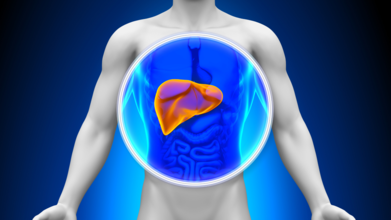
Metabolic dysfunction-associated steatotic liver disease (MASLD), previously referred to as nonalcoholic fatty liver disease (NAFLD), has gone on undetected to become one of the most prevalent liver diseases on the planet. Currently, over 30% of the world's population is believed to be afflicted with MASLD, a condition that may present no symptoms until late stages. Largely caused by obesity and type 2 diabetes, MASLD is a silent epidemic that develops slowly and quietly until it leads to scarring, inflammation, or cirrhosis.
While common, effective treatments have been elusive. Lifestyle modifications like weight reduction, healthy eating, and physical exercise are still the mainstay of management. But today, a new find by a South Korean research team may revolutionize how we approach treatment—and it all hinges on a familiar vitamin most of us have heard of but don't often link to liver health: vitamin B3 or niacin.
What is miR-93 and Its Function in Liver Injury?
At the heart of this finding is microRNA-93 (miR-93), a tiny molecule found in the liver. Under normal circumstances, RNA molecules act to control how our genes function, but when they malfunction, they can cause disease.
Researchers discovered that MASLD patients and animal models of fatty liver disease contained unusually high levels of miR-93. Why care? Because miR-93 represses SIRT1, a gene that is necessary for the breakdown of fats in liver cells. When SIRT1 is inhibited, fats start to build up, leading to inflammation, fibrosis, and escalating liver damage.
In lab tests, mice that had been genetically modified to overexpress miR-93 suffered from advanced fatty liver disease. But when scientists used gene editors to knock down miR-93, the outcome was dramatic: fat accumulations decreased, insulin sensitivity increased, and markers of liver function normalized.
This discovery put the spotlight on miR-93 as a potent cause of MASLD—and a potential therapeutic target.
Which Vitamin Reverses Liver Damage?
After miR-93 was found, the logical question was straightforward yet important, could it be blocked? The research team tested 150 FDA-approved pharmaceuticals to determine whether any of them could reverse miR-93. The surprise winner was niacin (vitamin B3).
Niacin, which has been used for decades as a treatment for lowering cholesterol, suppressed miR-93 in this study and enhanced the activity of SIRT1. The outcome was restored normal lipid metabolism in the liver, decreased fat accumulation, and enhanced overall liver function.
Mice that received niacin experienced noteworthy decreases in miR-93 and distinct improvements in liver function markers. Since niacin is already deemed safe and readily available, scientists suspect that this finding may become human therapies much quicker than new drugs.
The potential is staggering. MASLD strikes almost a third of the world's population, but until today, no specific therapy has been developed. By taking a low-cost vitamin and adapting it, researchers may have identified a way to slow down—and even reverse—the disease.
Study leader Professor Jang Hyun Choi highlighted its importance:
This research clearly identifies the molecular cause of MASLD and shows the therapeutic potential for repurposing a previously approved vitamin molecule to control this pathway, which holds strong translational clinical application."
In simpler terms, this isn't merely a scholarly advancement. It's a move toward practical, real-world treatments.
What Is Metabolic Dysfunction-Associated Steatotic Liver Disease?
MASLD results when there is fat accumulation in the liver in individuals consuming little or no alcohol. It is normal to have some fat in the liver, but increased fat leads to inflammation and scarring. This can eventually advance to metabolic dysfunction-associated steatohepatitis (MASH), cirrhosis, or liver cancer.
Symptoms may not occur until the disease is well underway. Some individuals experience weakness, belly pain, unexplained weight loss, or jaundice. For others, the first hint comes when blood tests or imaging studies are done as part of a normal checkup.
Notably, MASLD is not alcohol-related—although alcohol consumption can cause the disease to dramatically worsen.
Can MASLD Be Reversed?
The good news is: yes, in most instances. If caught early, MASLD can usually be reversed with weight reduction, better diet, regular exercise, and close control of blood sugar and cholesterol levels. But after it develops into cirrhosis, the damage is largely irreversible.
This is why the discovery of vitamin B3 is so promising. By targeting the molecular cause of the disease—miR-93—it may be a means to treat MASLD more efficiently, even in those who have difficulties with lifestyle modification alone.
However, that the niacin already has FDA approval is a huge leg up. Rather than having to develop it from scratch, scientists can move forward based on decades of safety data, potentially accelerating its use in MASLD patients.
Nipah vs Bird Flu in India: Which Virus Poses A Greater Threat To Humans?
Credits: Canva
As India steps into 2026, two familiar yet unsettling names have returned to the public health conversation. Nipah virus cases reported from West Bengal and fresh bird flu detections among crows in Bihar have raised questions about how dangerous these infections really are for humans. While both diseases originate in animals and can cross over to people, their risks, spread patterns and fatality levels are very different.
Two zoonotic threats, very different risks
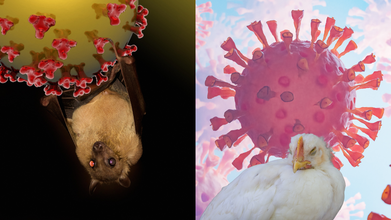
Nipah virus and avian influenza are both zoonotic, meaning they jump from animals to humans. Beyond that similarity, the comparison largely ends. Nipah is rare but extremely lethal when it infects humans. Bird flu, on the other hand, spreads widely among birds and poultry, but only occasionally infects people.
Health experts note that understanding this distinction is crucial. Nipah alarms public health systems because even a small cluster of cases can lead to severe illness and death. Bird flu triggers large scale surveillance mainly due to its impact on poultry and the economy, with human cases remaining uncommon.
Read: Bird Flu In India: How Safe Is It To Eat Chicken And Eggs?
Nipah virus and why it worries health officials
The Nipah virus was first identified in Malaysia in the late 1990s and has since caused multiple outbreaks in South and Southeast Asia. Fruit bats are its natural carriers, and humans can get infected through contaminated food, contact with infected animals or close contact with an infected person.
Symptoms often begin like a common viral illness, with fever, headache and cough. In many patients, the disease progresses rapidly. Within days, some develop encephalitis, seizures, confusion and coma. Respiratory distress is also common in severe cases.
According to the World Health Organization, Nipah’s fatality rate ranges between 40 and 75 percent, depending on the outbreak and access to timely medical care. There is no approved vaccine or specific antiviral treatment. Doctors rely on intensive supportive care, which makes early detection and isolation critical.
In January 2026, West Bengal reported multiple Nipah cases, prompting contact tracing and monitoring of nearly 200 people. Most tested negative, and the WHO assessed the risk of wider spread as low. Still, the high death rate keeps Nipah firmly on India’s list of priority pathogens.
Bird flu and its limited human impact
Bird flu, or avian influenza, is caused by influenza A viruses that primarily infect birds. Strains such as H5N1 and H9N2 have been detected repeatedly in India among poultry and wild birds. Bihar’s Darbhanga district recently reported thousands of bird deaths, triggering containment measures.
Humans usually get infected through close contact with sick or dead birds or contaminated environments. When infection does occur, symptoms can resemble seasonal flu at first, but severe cases may progress to pneumonia or acute respiratory distress.
Some bird flu strains have shown high fatality rates among confirmed human cases, sometimes close to 50 percent. However, experts stress that these numbers come from very small case counts. Sustained human to human transmission remains rare, which limits large outbreaks in people.
Read: Nipah Virus Outbreak In India: Myanmar Airport Tightens Health Screenings
Which virus is deadlier for humans?
In terms of individual risk, Nipah virus is considered deadlier for humans. Its consistently high fatality rate, lack of treatment options and potential to cause severe brain inflammation make it especially dangerous, even when case numbers are low.
Bird flu poses a broader threat to animal health and livelihoods, but its direct impact on human life has so far been limited. Public health officials continue to monitor both closely, knowing that vigilance, early reporting and strong surveillance are the best tools to prevent either virus from spiralling into a larger crisis.
Can H5N1 Virus Infect Humans?
Credits: Canva
After the death of 150 crows in Bihar's Bhagalpur district in Naugacha, sudden death of 1,500 crows in Chennai, in Tamil Nadu has again raised concerns over bird flu. At the center of all these is Highly Pathogen Avian Influenza or the HPAI, which is also known as bird flu or the A H5N1 virus. While the strain is known for being notorious and have jumped states, spreading outbreaks in many Indian states, including Jharkhand, Bihar, Maharashtra, Andhra Pradesh, Kerala, Telangana, and Tamil Nadu, the concerns do not end there. Many are concerned if it is a threat to humans too.
Can H5N1 Virus Infect Humans?
As per the World Health Organization (WHO) data, between January 2023 and December 2025, a total of 993 human cases of avian influenza were reported in 25 countries. Almost half of them, which is around 477 people, died. The virus has a fatality rate of 48 per cent.
Two different studies, one done by the universities of Cambridge and Glasgow that show how avian flu strains are multiplying even when the body temperatures could hinder viruses. Whereas, another important study led by Indian scientists, by Philip Cherian and Gautam Menon of Ashoka University, published in BMC Public Health predict if H5N1 or the bird flu virus, could start spreading among humans. How quickly must we act to stop it?
Can H5N1 Virus Infect Humans? How It Survives In The Body?
Human influenza viruses infect many each year. The seasonal strains we see most often fall under influenza A and tend to do well in the cooler temperatures of the upper respiratory tract, which is close to 33°C. They are less suited to the warmer, deeper parts of the lungs, where temperatures reach about 37°C.
As per Science Daily, when the body cannot slow an infection, the virus continues to multiply and spread, which can lead to more serious illness. Fever acts as a protective response, pushing body temperature as high as 41°C. Until now, the exact reason why fever slows some viruses but not others has been unclear.
Avian influenza behaves differently. These viruses usually grow in the lower respiratory tract, and in their natural hosts, such as ducks or seagulls, they often infect the gut. Temperatures in these areas can reach 40°C to 42°C, which helps explain their greater tolerance to heat.
Read: Could Bird Flu Become The Next Pandemic For Humans?
Can H5N1 Virus Infect Humans? What Does The India Specific Study Reveal?
Using BharatSim, an open-source simulation platform originally developed during Covid-19, the researchers recreated what an outbreak might look like in real life. “The threat of an H5N1 pandemic in humans is a genuine one,” Prof Menon said, “but we can hope to forestall it through better surveillance and a more nimble public-health response.”
Their model begins where experts believe a real outbreak would: with a single human infection, most likely a poultry worker or someone exposed to infected birds at a farm or market. The danger, the researchers argue, lies not in that first case, but in whether sustained human-to-human transmission takes hold.
The study by Ashoka University has the most sobering findings in how fast control can slip away. According to the simulations, once cases rise beyond roughly two to ten people, the virus is likely to move beyond immediate contacts and into the wider community.
If households of close contacts are quarantined when just two cases are detected, the outbreak can almost certainly be contained. By the time ten cases are identified, however, the model suggests the infection has probably already spread far enough that early interventions no longer make a meaningful difference.
To ground their work in reality, the researchers focused on a village in Tamil Nadu’s Namakkal district, one of India’s largest poultry hubs. With more than 1,600 farms, around 70 million chickens and tens of millions of eggs produced daily, the region reflects the kind of dense human-animal interaction where spillovers are most likely.
In the simulation, the virus spreads outward from a single workplace into homes, schools and markets, tracking primary and secondary contacts. Once “tertiary” infections, contacts of contacts, appear, control becomes dramatically harder without severe measures such as lockdowns.
Read: Bird Flu Variant Can Now Withstand Fever, Sparking Stronger Human Threats
Can H5N1 Virus Infect Humans? What Works And What Does Not Work
Culling birds work, but only if it happens before humans are infected. Once the spillover is done, isolating patients and quarantining is the only option that can stop the virus, that too if done very early. Targeted vaccination could help raise the threshold at which the virus can sustain itself. Quarantine imposed too early keeps families together longer, increasing household transmission. Imposed too late, it barely slows the outbreak at all.
Does Bigger Penis Help You Ski Better? Why Olympians Are Injecting Hyaluronic Acid - Explained

Credits: Canva
What won't people do to get that gold. In the quest for so, Olympians re injecting hyaluronic acid in their penises. The reason? For skiing, it helps them fly better and further.
In January, a German newspaper, Bild reported that jumpers were injecting, what now is dubbed as Penisgate in their penis. The newspaper claimed that athletes inject the acid in the penis before they are measured for their suits.
Does Bigger Penis Help You Ski Better?: What Does Penisgate Do To The Penis?
Hyaluronic acid is used for cosmetic surgery, especially as a filler. Surgeons have also used it for penile girth enlargement. This is exactly why it is being used by the Olympians.
Injecting hyaluronic acid will increase the penile girth. However, experts point out that this means, one has to insert a lot of it in the penis to have this worked out. It is not a permanent solution, and can only last up to six to 12 months, depending on the absorption.
Inserting this will increase the penile girth or the penis circumference by one or two centimeters. As per the International Ski and Snowboard Federation, FIS, the surface area of their suits during competition could be increased by this, which increases their flight in the air, reported BBC.
"Every extra centimetre on a suit counts. If you suit has a 5% bigger surface area, you fly further," said FIS ski jumping's men race director Sandro Pertile, reported by BBC.
Does Bigger Penis Help You Ski Better?: Why Are Olympians Injecting Their Penises With Hyaluronic Acid?
Ahead of each season, ski jumpers undergo measurements using 3D body scanners and are required to wear only elastic, body-tight underwear during the process.
Regulations allow suit measurements a tolerance of just 2–4 cm. As part of this assessment, athletes’ crotch height is also recorded. The suit’s crotch height must match the athlete’s own measurement, with an additional 3 cm permitted for men.
Hyaluronic acid injections into the penis can last for up to 18 months.
Athletes have previously faced scrutiny for attempting to boost performance through alterations or manipulation of their suits.
Does Bigger Penis Help You Ski Better?: What Are The Risks Of Injecting Hyaluronic Acid In Penis?
Experts caution that penile injections using hyaluronic acid can pose serious short- and long-term risks.
They warn that improper technique or incorrect dosing may lead to pain, disfigurement, deformity, infection, inflammation, altered sensation, and sexual dysfunction. In rare cases, infections can worsen, causing tissue death (gangrene) and even loss of the penis.
- Follow Us :


© 2024 Bennett, Coleman & Company Limited