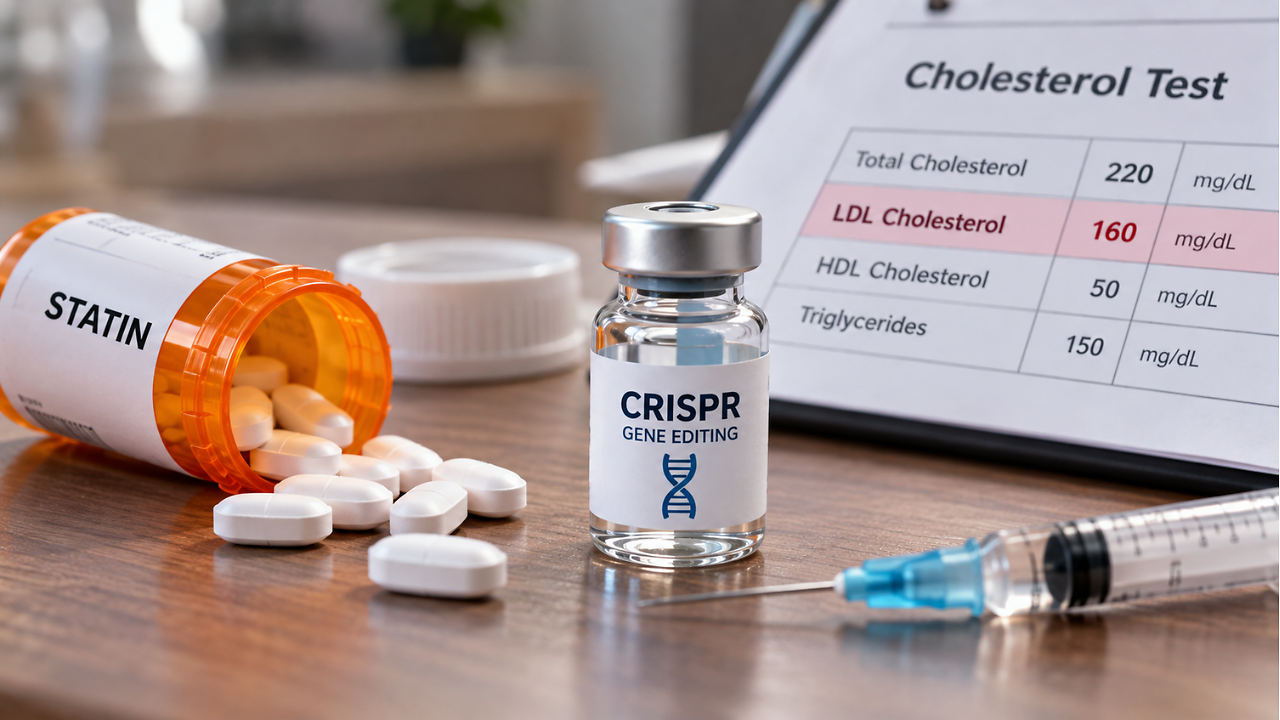
The current treatment course for high cholesterol is taking a daily tablet or regular injections over a long period. But instead, could a single treatment change the way high cholesterol is treated? This possibility is being explored after a small first-in-human trial conducted by Cleveland Clinic found that one infusion of an experimental CRISPR gene-editing therapy lowered LDL, also called bad cholesterol, by about half and that the effect was still present a year later. The treatment, called CTX310, is still experimental. The study involved just 15 people, so the findings are premature, not evidence that CRISPR can replace statins or other cholesterol medications. About The Study The Phase 1 trial included people with lipid disorders who had not responded adequately to existing medications. Participants received a single infusion of CTX310, at different doses, and researchers followed them for 12 months. At the highest dose, LDL cholesterol was reduced by 52.5% after one year, while triglycerides fell by 47.8%. The reductions seen earlier in the trial therefore persisted for at least 12 months. Additionally, no serious adverse side effects related to the treatment were reported during the one-year follow-up. However, the researchers plan to continue monitoring participants for 15 years, as recommended for gene-editing therapies.Also read: Inflammation May Be Quietly Changing Your Heart: Study Finds 43% Higher Risk Of Heart Attack & StrokeHow Does The CRISPR Treatment Work? CTX310 operates differently compared to conventional cholesterol medicines. The treatment uses CRISPR-Cas9 gene editing to target ANGPTL3, a gene involved in regulating fats circulating in the blood. The therapy delivers the gene-editing machinery to the liver, where it switches off ANGPTL3. Lower activity of this gene can reduce levels of LDL cholesterol and triglycerides. The idea is that instead of using daily medicines to keep cholesterol in check, doctors could make a long-lasting genetic change.Also read: Preeclampsia May End With Pregnancy. Your Heart Risk May Not What Does It Mean For Statins? Statins remain a reliable treatment approach for lowering LDL cholesterol and reducing cardiovascular risk. CTX310 has only been tested in a very small Phase 1 trial. Also, the study was primarily designed to examine the safety and explore whether the gene-editing treatment could produce a meaningful effect. The fact that LDL remained lower after one year is promising and encouraging, but researchers still need to determine whether the treatment can safely maintain its effects over many years and, crucially, whether it reduces heart attacks, strokes and other cardiovascular events. There is also a fundamental difference between cholesterol tablets and permanently altering a person’s DNA. Promising Cholesterol Treatment Approach High cholesterol is often a long-term condition. Depending on their risk, patients may need cholesterol-lowering treatment for many years. If CRISPR becomes a reality, people may no longer have to stick to a chronic treatment strategy for managing cholesterol. "Building upon the initial data presented in November 2025, the durability of the lipid-lowering effect was impressive," said Cleveland Clinic cardiologist Luke Laffin, M.D., first author of the study. "It is encouraging that there were no serious safety events related to CTX310 in the trial and in the year following treatment. We look forward to continuing to investigate this therapy in a larger number of patients."