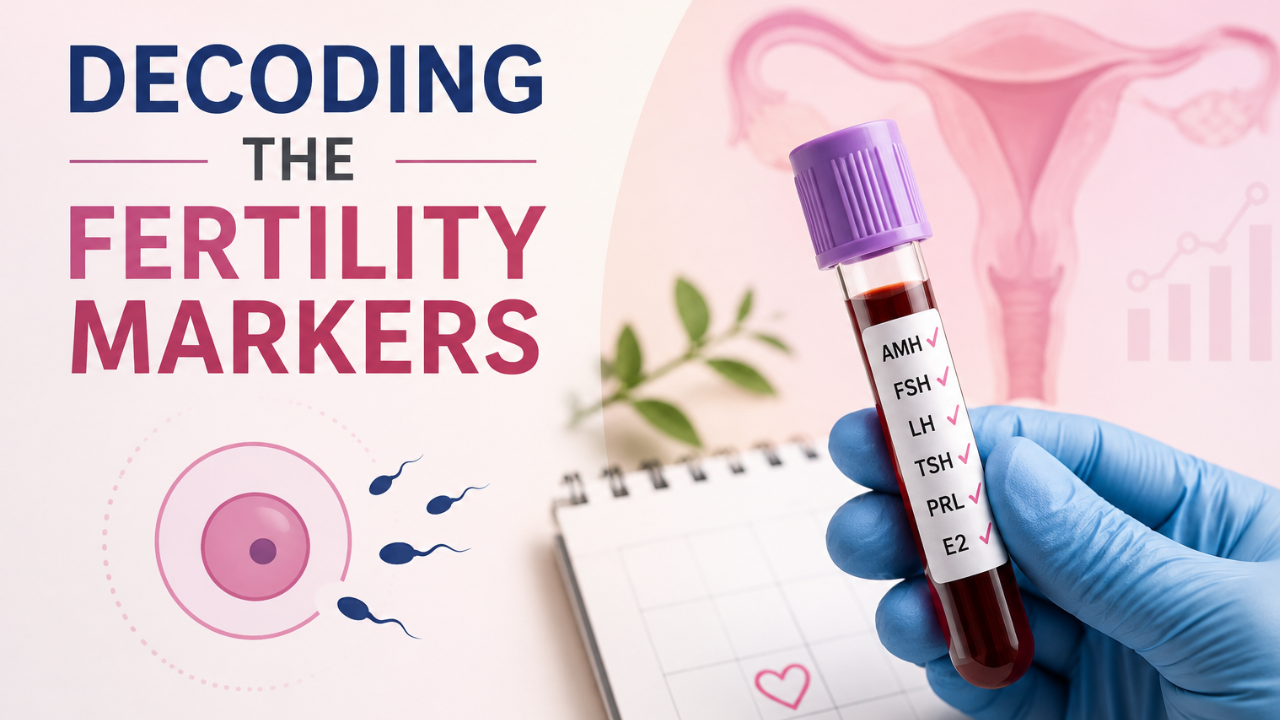
A blood test is considered the first step towards fertility enquiries, but for many, the results might seem like a confusing jumble of numbers and acronyms. Reports sometimes contain terms like AMH, FSH, LH, AFC, and estradiol, which makes patients confused if a single "abnormal" figure indicates they are unable to conceive. The truth is more reassuring, and more nuanced. Fertility experts stress that a person's fertility cannot be ascertained by a single test. Instead, these markers serve as parts of a bigger picture, assisting fertility specialists in comprehending reproductive health and suggesting the best course of action when necessary. Fertility Tests Are Guides, Not Verdicts The idea that a single blood test can determine whether a woman would naturally become pregnant is one of the most widespread myths. Age, egg quality, ovulation, sperm health, uterine health, lifestyle, and underlying medical issues are some of the factors that actually affect fertility. Although diagnostic markers offer useful information, they must always be interpreted in conjunction with the couple's overall reproductive profile, clinical history, and ultrasound results. Also read: How Menopause Changes Heart Health Risks?Understanding The Ovarian Reserve “AMH” Anti-Müllerian Hormone (AMH) is perhaps the most talked-about fertility marker today. These are produced by small follicles present in the ovaries. AMH reflects ovarian reserve, which identifies the estimated number of eggs remaining in the ovaries. High AMH indicates larger ovarian reserve, whereas lower levels suggest fewer eggs. However, it can neither measure the egg quality nor guarantee the ability to conceive naturally. Many women with low AMH can still achieve successful pregnancies, especially if they continue to ovulate regularly. Similarly, women with high AMH are not necessarily more fertile, elevated AMH levels in women also means Polycystic Ovary Syndrome (PCOS), where ovulation may actually be irregular. For fertility specialists, AMH is useful in predicting the number of eggs that are likely to respond to ovarian stimulation medication, based on which they customize IVF treatment. Also read: Making IVF Affordable: Experts Push For Insurance Cover, Public Funding & Better Access To Fertility Care In IndiaFSH Determines Ovarian Function Our pituitary gland produces Follicle Stimulating Hormone (FSH) and this hormone helps in stimulating egg development.Usually, the second or third day of the menstrual cycle is when FSH is measured. If ovarian reserve is reduced, that is higher-than-normal levels, which may imply that ovaries need more stimulation to mature eggs. From cycle to cycle the FSH levels change. Also read: NCR's Long Commutes Are Stealing Sleep & Affecting Reproductive HealthLH And The Ovulation Story FSH and luteinizing hormone (LH) cooperate to control ovulation. The ovary releases a developed egg in response to an increase in LH. LH levels may be disproportionately greater than FSH in PCOS-affected individuals, which can lead to irregular menstrual periods and ovulation. Instead of using LH alone, fertility specialists assess it in link with other hormone markers. Also read: World Embryologist Day: What Really Happens Inside An IVF Lab?Estradiol And AFC: Completing The Picture An indicator of ovarian activity during the menstrual cycle is estradiol (E2), a type of estrogen generated by growing follicles. Combined interpretation is crucial since elevated early-cycle estradiol levels can occasionally conceal an elevated FSH. The Antral Follicle Count (AFC), which is done via a transvaginal ultrasound, is another crucial evaluation. AFC gives an additional indication of ovarian reserve by counting the number of visible tiny follicles in the ovaries. Indeed, the combination of AMH and AFC provides a more thorough insight than any test by itself. Also read: World IVF Day: Why Men Need To Be Part Of The Fertility ConversationFertility Evaluation Isn't Just For Women Female hormone testing frequently receives greater attention, whereas male fertility contributes to roughly half of all infertility issues. A semen screening remains one of the most significant and cost-effective tests, measuring sperm count, mobility, and morphology. When necessary, additional hormonal or genetic tests might be suggested. Era Of Self-Diagnose After getting a test report, many people search the web for quick answers, but those disguised numbers without proper medical context from a specialist can erupt unnecessary tension. The fertility markers depend on a variety of factors, some of which include: age, weight, menstrual history, prior pregnancies, medications, hormonal status, and lifestyle. Therefore, understanding the parameters like “low” or “high” online may create chaos within the individuals. Instead, consult a fertility specialist to decode the report.By Dr Rubeena Zainab, Senior Consultant - Reproductive Medicine, Milann Fertility and Birthing Hospital, Bengaluru