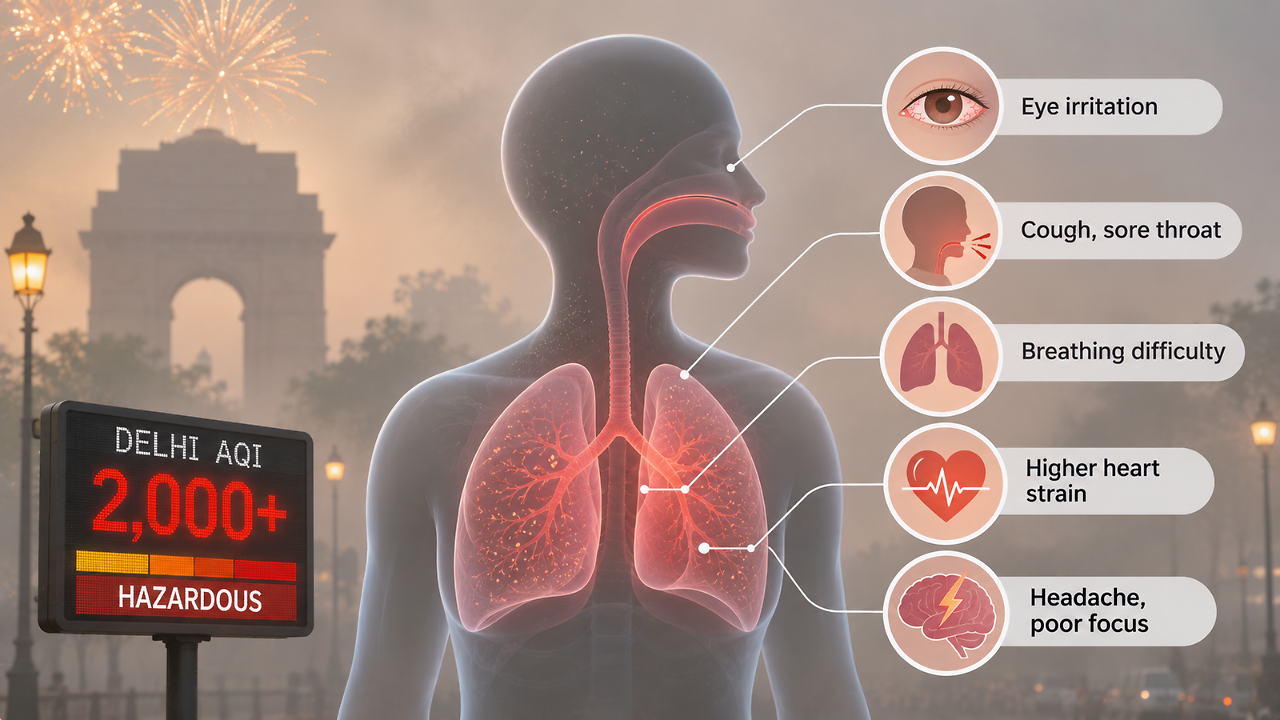
Delhi's air quality took a nosedive after Diwali celebrations on Sunday. Smoke from firecrackers contributed to the already soaring pollution across the national capital. Some real-time air-quality platforms reported readings above 1,000, while some claims of levels crossing 2,000 also surfaced . Meanwhile, the city's official Central Pollution Control Board (CPCB) AQI reached the 'severe' category at several monitoring stations.India's official AQI scale runs from 0 to 500. Anything above 400 is classified as severe. A reading above 2,000 was reported by independent real-time air quality platforms. The staggering AQI has sparked numerous health concerns among those who are continuously exposed to the toxic air. Exposure to high concentrations of fine particulate matter like PM2.5 can trigger a number of health issues including respiratory and cardiovascular effects within a matter of hours. The effects may linger even after a person returns indoors.What Happens Within The First Few Hours Of Exposure?Also read: Delhi Becomes World's Most Polluted City Ahead Of Diwali, Says Swiss Agency: Experts Recommend PrecautionsPM2.5 refers to particles measuring 2.5 micrometres or smaller. Because of their miniscule size, they can traverse deep into the lungs. Some particles can even enter the bloodstream.According to the World Health Organization (WHO), these particles can affect multiple organs and increase the risk of respiratory and cardiovascular diseases. Within hours of exposure, people may experience:Irritation of the eyes, nose and throatCoughing, wheezing and shortness of breathChest tightness or discomfortWorsening of asthma and other existing respiratory conditionsThe UK's Department of Health and Social Care notes that symptoms of short-term air pollution exposure can start within hours or several days. People with asthma, chronic obstructive pulmonary disease (COPD) and heart conditions are vulnerable to such high concentrations of particulate matter.The effects of polluted air are not restricted to the lungs. Fine particles can trigger oxidative stress and inflammation, potentially affecting blood vessel function and the cardiovascular system.Experts say that that exposure to PM2.5 can affect heart rate regulation and blood vessel function within six hours. Dr Viny Kantroo, Senior Consultant, Respiratory Medicine, Critical Care & Sleep Medicine Indraprastha Apollo Hospital, New Delhi, told HealthandMe, "Short-term exposure to high levels of particulate pollution can increase the risk of heart attacks and strokes. Fine particles can enter the bloodstream and contribute to inflammation, affect blood vessel function and increase the tendency for blood clots to form. The risk is higher in people with hypertension, diabetes or existing heart disease." Effects Continue After You Return HomeAlso read: Pregnant During Peak Pollution? A Trimester-Wise Guide to Safer Festive CelebrationsInflammatory responses may continue even after exposure stops. It also depends on the pollution concentration, duration of exposure and an individual's underlying health.Moving indoors reduces further exposure, but it does not instantly reverse the damages triggered by pollutants that you have already inhaled.Airway inflammation and increased sensitivity can last for days, depending on the intensity and duration of exposure. People may continue to experience coughing, wheezing or breathing issues after leaving a polluted environment.The US Environmental Protection Agency also notes that short-term particle pollution exposure can aggravate asthma and bronchitis and is also linked with cardiovascular events, including heart attacks and strokes, especially among people with existing heart disease. How To Reduce Exposure After Diwali?During severe pollution days, avoid outdoor exercise and avoid stepping out. If going outdoors is unavoidable, use a well-fitting N95 or N99 respirator rather than a cloth or surgical mask.Dr Kantroo advised, "During severe pollution, they should avoid strenuous outdoor activity and continue their prescribed medicines."At home, keep windows closed when outdoor pollution is high and use a properly sized HEPA air purifier, if available. Avoid adding to indoor pollution through incense, candles, mosquito coils or smoking.People with asthma or other chronic conditions should follow their prescribed treatment plans. Seek medical attention for breathing difficulty, chest pain or worsening symptoms. Severe breathlessness or chest pain need urgent medical care.