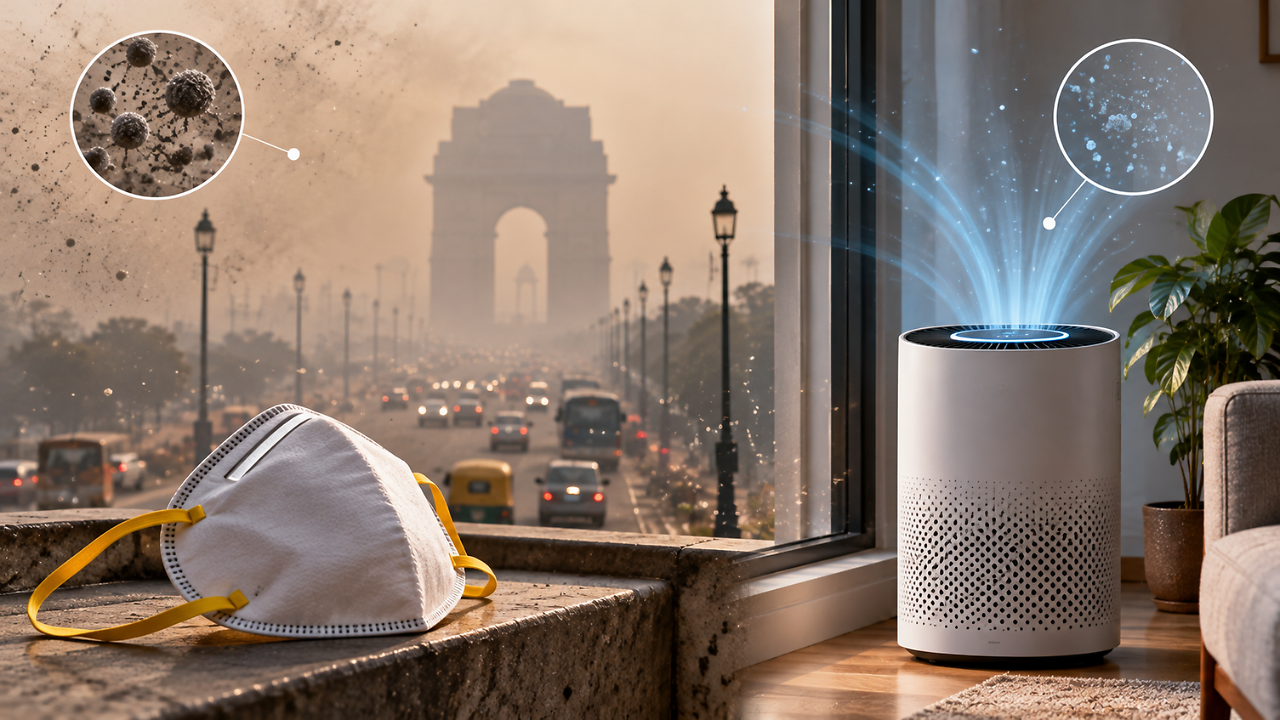
As pollution season creeps back in Delhi, N95 masks outdoors and air purifiers are once again most likely to become the primary go-to protective measures for the public. Both are known to lower exposure to harmful particles significantly, but neither can completely nullify the health risks of polluted air. So before you invest in an air purifier or buy a dozen N95 masks, understand how much you will be protected as you step out during smog everyday. How Much Protection Does An N95 Mask Offer?Also read: Delhi Pollution: What Are The Different Types Of Anti-Pollution Masks?A properly fitted N95 respirator can filter at least 95% of airborne particles under standard environment. That makes it substantially more protective against fine particulate matter like PM2.5 than regular surgical or cloth masks.But just wearing an N95 does not mean you are breathing toxins-free air. Its effectiveness depends heavily on fit. Gaps around the nose, cheeks or chin can let polluted air to bypass the filter. An N95 also does not protect equally against every pollutant. It is designed primarily to filter particles, not gases like nitrogen dioxide or ozone. So if you spend most of your time outdoors during severe pollution, wear a well-fitted, certified respirator to reduce exposure.Protection from PM2.5 is key as these particles are small enough to seep deep into your lungs and, in some circumstances, even cross over to enter the bloodstream. Long-term exposure to PM2.5 has been associated with cardiovascular disease, respiratory disease and other serious health problems.Is An Indoor Air Purifier Enough To Tackle Outdoor Pollution? The effectiveness of an air purifier depends significantly on the purifier, the size of the room and how it is used. A purifier equipped with a HEPA filter can remove fine particles from indoor air. When outdoor PM2.5 levels are high and polluted air enters homes through windows, doors and ventilation systems, this could be one of the best ways to protect yourself.However, simply switching on a purifier in a large room does not guarantee clean air. The purifier needs to have sufficient clean air delivery rate (CADR) for the size of the room. Keeping doors and windows closed during periods of extreme outdoor pollution can also help reduce the amount of polluted air entering. Filters need to be replaced according to the manufacturer's recommendations because a heavily loaded filter can reduce performance.Also read: Delhi Air Pollution Is Back: What Days Of Poor AQI Can Do to Your LungsOne of the limitations is that HEPA filtration primarily addresses particles. A purifier needs additional technologies, like an activated-carbon filter, to reduce some gaseous pollutants, and even then it cannot remove every pollutant completely.For Delhi's pollution season, these two measures address different exposure issues. N95 masks help reduce inhalation of polluted particles while outdoors. Air purifiers help lower indoor concentrations of particulate matter. Using both can therefore provide greater protection than relying on either measure alone. People with asthma, COPD, heart disease or other respiratory and cardiovascular conditions, as well as children and older adults, can be more vulnerable to the effects of air pollution.Even healthy people can experience symptoms like coughing, throat irritation, wheezing, eye irritation and breathing discomfort when pollution levels rise.