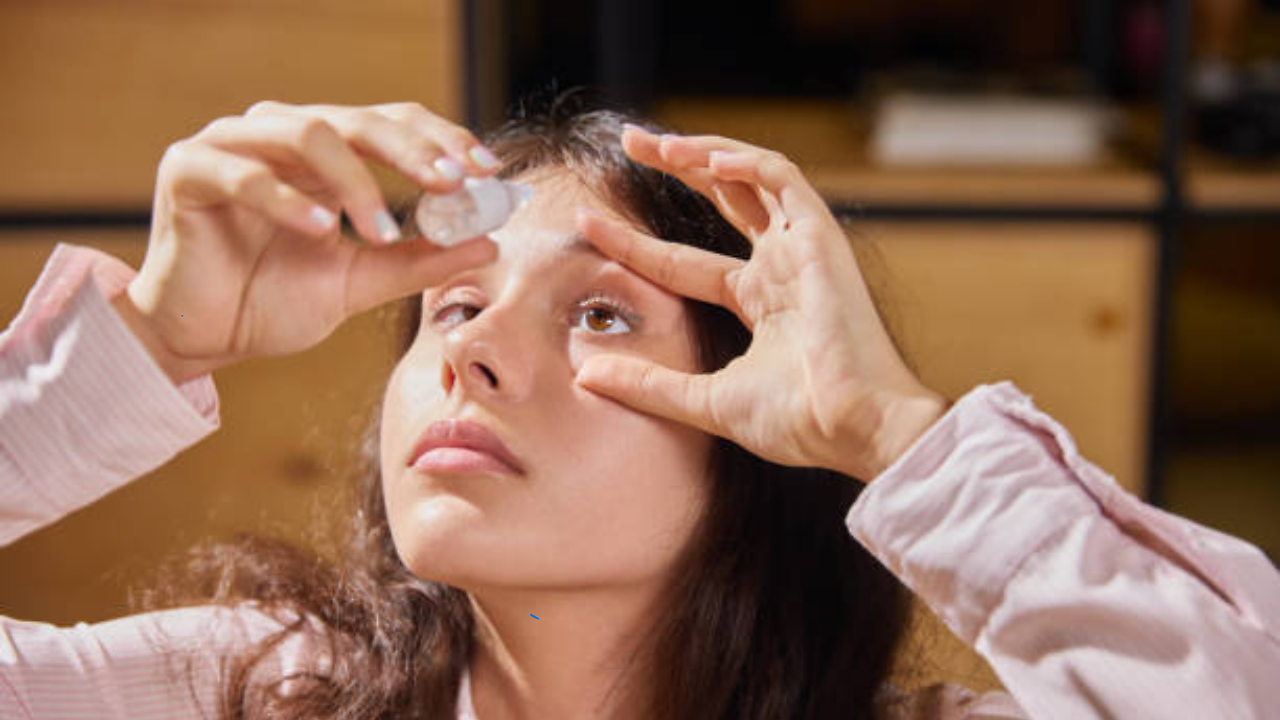
Dry eyes are common among people who spend long hours on screens, and lubricating eye drops are often used for relief. But using the wrong drops, keeping an opened bottle for too long or even sharing eye drops can create problems.Estimates suggest that up to 50% of adults experience dry-eye symptoms, making artificial tears a common part of self-care. But persistent symptoms should not simply be treated indefinitely without identifying the underlying cause.So, how often can you use eye drops, and what should you keep in mind?We spoke to Dr. Ritika Sachdev, Director at Centre for Sight, New Delhi, to understand the common mistakes people make while using eye drops.Eye Drops For Dry Eyes: When Should You See A Doctor?Dr. Ritika said persistent or bothersome dry eye symptoms should be assessed by a doctor because dryness can have several causes.These may include:Eyelid inflammationAllergiesContact lens useMakeupIncorrect spectacle power causing eye strain“Sometimes even not wearing your right spectacle power contributes to eye strain which can be misread as dry eye,” she said.Lubricating drops can help support dry eyes, but prolonged use should be discussed with an eye specialist.Using Eye Drops For Long? Check For PreservativesAlso read: Eye Drop Recall: Nearly 750,000 Products Pulled Over Sterility Concerns in USSeveral eye-drop products have been recalled in the US in recent years over contamination and other safety concerns. This makes proper storage, handling and hygiene particularly important when using eye drops.Dr. Ritika cautioned that some eye drops contain preservatives that may worsen dryness when used for a long time.“Many of the eye drops have preservatives which if used over a long period of time actually cause more dry eye,” she said.According to her, preservative-free drops or those with very mild preservatives may be preferable for people who need regular use.Don't Keep An Open Eye Drop Bottle Forever"Once opened, an eye drop bottle can become contaminated if it is not handled or stored properly," Dr. Ritika said.The expert advised:Note the date when you open the bottle.Follow the product's storage instructions.Do not let the bottle tip touch your eye.Discard the bottle according to the manufacturer's instructions.Do not continue using an opened bottle indefinitely.“Once the bottle is open, it often may get contaminated,” she said. “If it gets contaminated, it is a source of infection.”Read More: Andrew Huberman’s Sleep Trick: Can Eye Movements Help You Fall Back Asleep?How Many Eye Drops Should You Use?More drops do not mean more relief.“The capacity of the eye is only one drop,” Dr. Ritika said.Putting two or three drops at once can cause the excess to spill onto the surrounding skin and simply waste the product. One properly administered drop is generally enough at a time, she said.Avoid Squeezing Your Eyes After Using DropsDr. Ritika said people often squeeze their eyes tightly after putting in drops because they think this will keep the medicine inside. But squeezing can push the drop back out.Instead:Gently pull down the lower eyelid.Place the drop into the eye.Avoid touching the bottle tip to the eye.Do not squeeze the eyes tightly immediately afterward.Why Do Eye Drops Sometimes Reach The Throat?Some people experience an unpleasant sensation in the throat after using medicated eye drops.Dr. Ritika explained that tears can travel from the eye through the tear duct to the nose and then the throat.She suggested gently pressing near the inner corner of the eye for a while after applying the drop to reduce this drainage.Never Share Your Eye DropsSharing eye drops may seem harmless, particularly within families, but Dr. Ritika advised against it.If the bottle tip accidentally touches an infected eye, the bottle can become contaminated and potentially transmit infection when used by someone else.“Eye drop is something that is for your personal hygiene and it should therefore be kept by you and used by you,” she said.