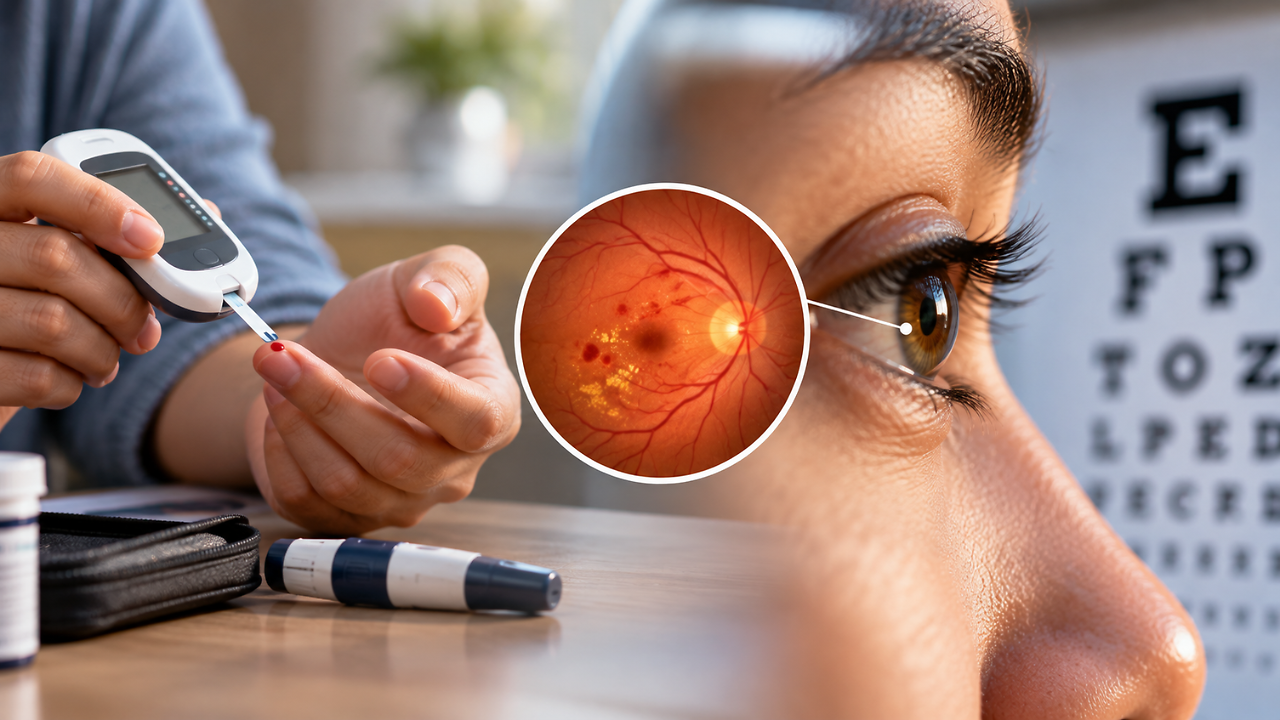
Clear vision does not always mean that the eyes are healthy. Diabetes can damage the retina the sensitive layer at the back of the eye long before a person notices any change in eyesight. This happens because high blood sugar can weaken the blood vessels that supply the retina causing them to leak fluid or blood.What happens as retinopathy progresses?Diabetic retinopathy is a complication in which high blood sugar damages the blood vessels. In the stages these vessels may swell or develop small areas of bleeding without affecting vision.As the condition advances, reduced blood supply can cause abnormal new blood vessels to grow. These vessels are fragile. May bleed into the vitreous the clear gel inside the eye. In some cases, scar tissue can pull the retina away from its normal position leading to retinal detachment and potentially permanent vision loss.Also read: Eye Drop Recall: Nearly 750,000 Products Pulled Over Sterility Concerns in USHow diabetes affects central visionDiabetes can also affect the macula, the part of the retina responsible for sharp detailed vision. When fluid builds up in this area it can cause macular oedema and gradually affect the quality of vision.It may lead to:Distorted central visionDifficulty reading or recognising facesProblems with activities that require clear detailed vision, such as drivingDiabetic macular oedema can occur at different stages of diabetic retinopathy and does not always cause symptoms in the early stages.Also read: Eye Twitching: Is It Just Stress Or Something Serious?Who is at risk?The likelihood of eye damage increases with the duration of diabetes and poor blood sugar control. High blood pressure, abnormal cholesterol levels and kidney disease can further increase the risk. Women with diabetes may also need monitoring during pregnancy as hormonal and blood sugar changes can worsen existing retinal disease.Why regular eye examinations matter On World Sight Day, doctors recommend that a routine eyesight test may not detect damage to the retina. People with diabetes should therefore undergo an eye examination, including a dilated retinal examination at intervals recommended by their ophthalmologist.Keeping blood sugar, blood pressure and cholesterol, under control can help reduce the risk of complications. If damage is detected treatment may include eye injections, laser therapy or surgery depending on its severity.Diabetic eye disease can often be managed effectively when identified early. Regular retinal examinations remain important when a person can see clearly as changes may develop before symptoms appear.By Dr Ashu Agarwal, Senior Consultant, Opthalmology, Indraprastha Apollo Hospital, Delhi