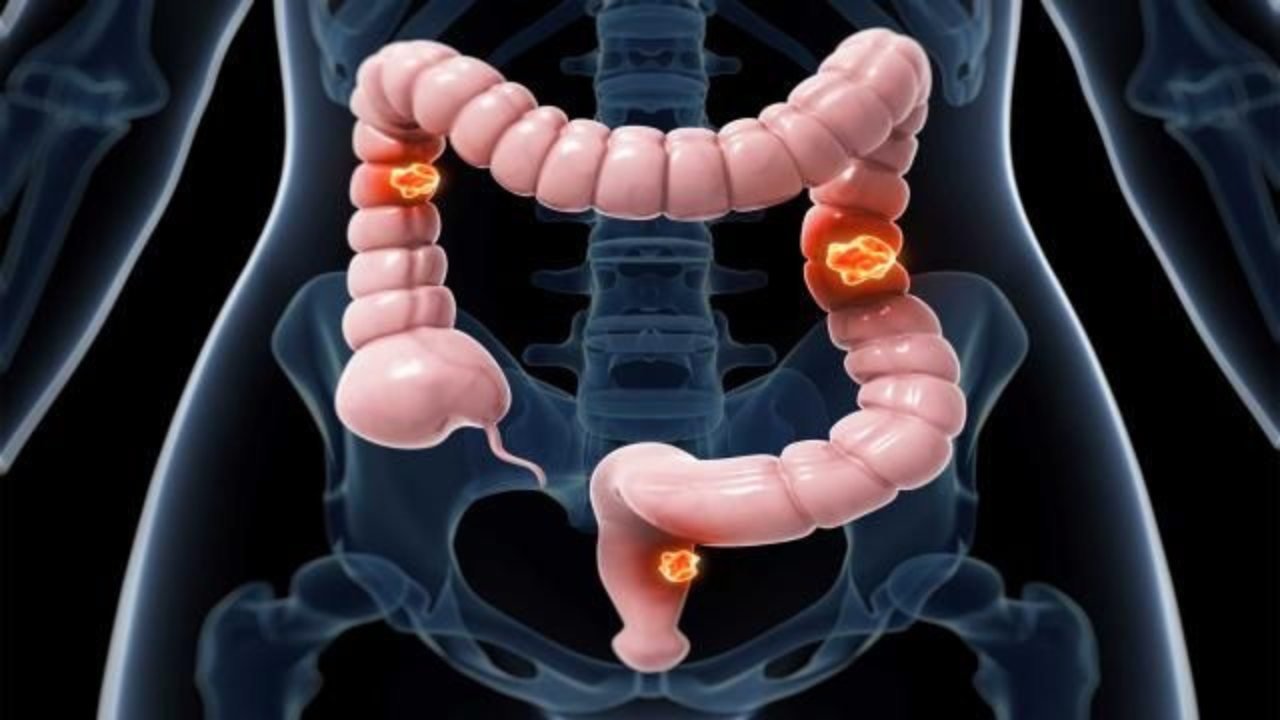
Colon cancer develops from polyps in the colon or rectum, often taking years to show symptoms. The cancer begins when small growths called polyps form on the inner lining of the colon or rectum. Over time, changes in the DNA of these cells can cause the polyps to become cancerous.As abnormal cells multiply, they replace healthy cells and eventually form a mass known as a tumor. This process develops slowly, often taking up to ten years for a precancerous polyp to turn into cancer and begin showing symptoms.The American Cancer Society notes that colorectal cancer impacts around 1.9 million people every year.. In India, it is the fourth most common cancer among both men and women. In 2022, there were 64,863 new cases and 38,367 deaths. Projections suggest that incidence will continue to rise by 2026, reflecting both lifestyle changes and improved detection.Colon cancer can be difficult to detect because it often develops without obvious symptoms. However, Dr Jordan Karlitz, MD, of Exact Sciences, shared with The American Journal of Managed Care (AJMC) the three fundamentals of CRC prevention and early detection. What Are The Three Tips For CRC Screening?According to the expert, these are the three things you should do to protect yourself: 1. Timely risk screening 2. Knowing your cancer family history3. Acting on early symptoms"These are the 3 pillars that everybody needs to be aware of, because I think gaps in any of them could increase the risk of developing CRC and, unfortunately, lead to presenting with more advanced-stage disease," said Dr Karlitz. Why Is Risk Screening Essential?Timely screening for colon cancer is essential because it detects precancerous polyps early, allowing for their removal before they turn into cancer and identifies the tumors at highly treatable stages when survival rates are about 90 percent.Screenings (like colonoscopies) can detect and remove pre-cancerous growths called polyps, preventing the development of cancer. The expert suggested that average risk screening now starts at the age of forty-five; you do not have to wait until age 50. What Early Symptoms Should You Look Out For?Colon cancer rarely announces its presence with dramatic symptoms. More often, it whispers — through changes in bowel habits, subtle abdominal discomfort, or unexplained weight loss.Some of the most commonly missed early signs include:Persistent changes in bowel movements: Chronic constipation or diarrhea often dismissed as dietary effects.Blood in stool: Bright red or dark blood should not be ignored.Unexplained weight loss: Especially when unintentional.Abdominal cramps or bloating: Misinterpreted as common digestive issues.Persistent changes in bowel habits, especially if they last more than a few days, must be taken seriously. Narrow or ribbon-shaped stools may indicate a tumor partially blocking the colon.