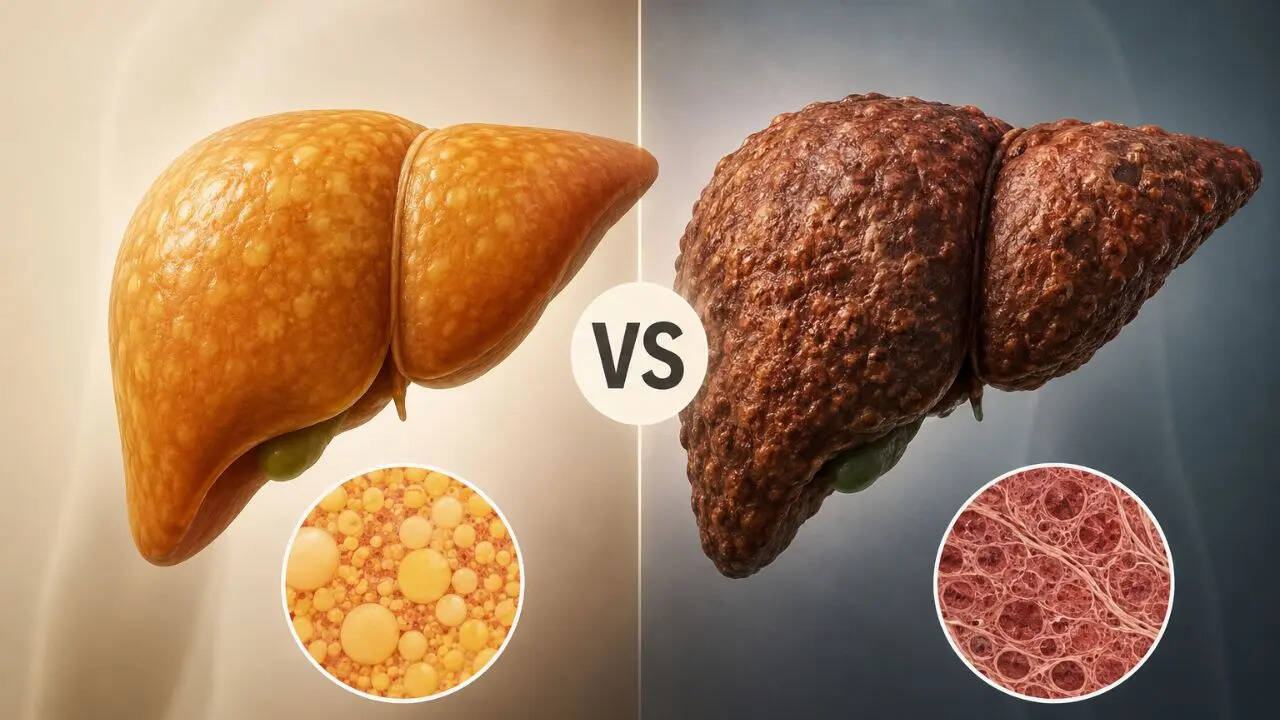
Fatty liver and liver damage are not identical. While fatty liver refers to a buildup of excess fat inside the liver cells, liver damage describes harm caused to the liver due to inflammation, scarring, toxins, infections, or any long-term disease. What Is Fatty Liver? The liver turns fatty, when the body stores too much fat in the liver. This can be caused due to obesity, insulin resistance, type 2 diabetes, high cholesterol- referred to as MASLD (Metabolic dysfunction associated Liver Disease). High consumption of alcohol or chronic hepatitis infection can also lead to fatty liver. In many cases, fatty liver causes no obvious symptoms, especially in the early stages. Some people may feel tired or notice discomfort in the upper right side of the abdomen, but many often know about it incidentally- either during blood tests or through an ultrasound scan. What Is Liver Damage? Liver damage, on the other hand, can range from mild irritation to severe and permanent injury. The damage may be caused by viral hepatitis, alcohol misuse, certain types of medicines, autoimmune diseases, inherited conditions, or fatty liver that has turned serious. Liver damage may be referred to inflammation, liver-cell injury, fibrosis, cirrhosis, or a reduction in the function of the liver. In short, fatty liver is one condition, while liver damage points to a wider range of liver diseases.Also read: Healthcare In India No Longer A Privilege, Becoming A Right: PM Modi How Are They Related? The relationship between the two is important. Fatty liver does not always mean that the liver is badly damaged. Certain people have a simple fatty liver, where fat is present but there are little or no inflammation or scarring in the liver. This stage often improve with weight loss, a healthy diet, exercise, and a reduction in alcohol intake, if alcohol is a factor. However, in some people, fatty liver can progress. When this fat buildup causes liver swelling and cell damage, it is called MASH (Metabolic Dysfunction-Associated Steatohepatitis) which can lead to an injury and the formation of scar tissue in the liver. Over a period of time, this can progress to fibrosis and, in advanced cases, cirrhosis. At this stage, the liver is damaged and may not be in a position to function properly. Symptoms and Warning Signs Symptoms also differ. Early fatty liver is often silent. More serious liver damage may cause jaundice, swelling in the legs or abdomen, easy bruising, severe fatigue, confusion, itching, or dark urine. These symptoms suggest the liver is under undue stress and needs proper medical management.Also read: Novo Nordisk Sues Eli Lilly Over Weight-Loss Drug Ads: Should GLP-1 Users Be Concerned? Diagnosis Doctors diagnose these conditions by taking note of the medical history, getting blood tests done, scans, and sometimes specialized tests or even a liver biopsy. Blood tests will show any signs of liver inflammation or liver dysfunction, whereas scans will reveal the presence of fat or scars on the liver. Key Takeaway The key message is this: fatty liver is not always severe liver damage, but it can damage the liver if left ignored. The earlier it is diagnosed, the better is the chance of stopping or reversing the problem. Healthy weight management, regular exercise, balanced nutrition, control of diabetes and cholesterol, and abstinence of alcohol are the important protective steps. When to Seek Medical Advice If someone has ongoing fatigue, yellowing of the skin, abdominal swelling, or abnormal liver tests, they consult a doctor at the earliest. Early attention can make a major difference in protecting long-term liver health. ***