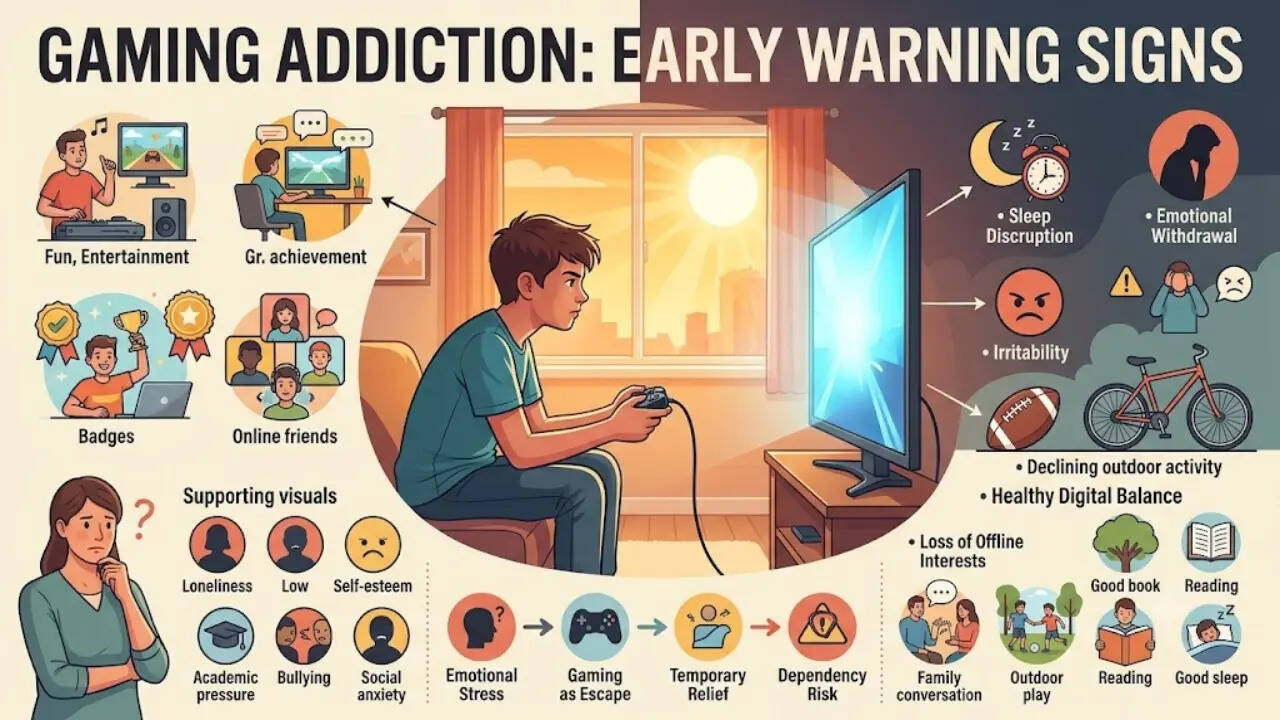
Summer vacations are ongoing, and at a time when heatwaves are at its worse, it is no wonder that most children and teens would prefer staying indoors. And for those who spend hours on video games, a psychologist has answered FAQs for parents. If you are concerned about the possibility of gaming addiction in your children, a senior psychologist lists symptoms and simple techniques to help parents deal with it better.Neha Cadabams, Senior Psychologist and Executive Director at Cadabams Hospitals, in an interview with Health and Me, answered FAQs about the consequences of gaming addiction in children. Parents often struggle to differentiate between normal gaming enthusiasm and problematic gaming behaviour. What are some of the earliest psychological warning signs that gaming may be becoming an unhealthy emotional dependency rather than just a hobby?The difference usually becomes visible not through the number of hours spent gaming, but through the emotional role gaming begins to play in the child’s life. Gaming starts becoming concerning when it shifts from being recreational to becoming the primary way a child regulates emotions, avoids distress, or experiences self-worth.Some of the earliest warning signs are emotional withdrawal from offline life, irritability or emotional outbursts when unable to game, noticeable sleep disruption, declining interest in activities they previously enjoyed, and increasing dependence on in-game achievements for confidence or validation. Parents may also notice that the child appears emotionally disengaged outside gaming environments or struggles to tolerate boredom, stress, or disappointment without returning to gaming immediately.What is important to understand is that many children using gaming as an emotional coping mechanism continue functioning normally in school or daily routines initially, which is why the issue is often recognised late. You mentioned that gaming often becomes an “escape hatch” for painful emotions. What are some of the deeper emotional or psychological struggles children may be trying to escape from through excessive gaming?In many cases, excessive gaming is less about the game itself and more about what the virtual environment provides psychologically. For some children, gaming offers predictability, achievement, social acceptance, control, or emotional relief that they may not be experiencing consistently in real life.The underlying emotional struggles can vary significantly. We commonly see children using gaming to cope with loneliness, social anxiety, bullying, academic pressure, low self-esteem, family conflict, emotional neglect, or feelings of inadequacy. For some adolescents, gaming becomes a space where they feel competent, valued, or emotionally safer than they do offline.What makes this particularly concerning is that the emotional distress itself often remains hidden because the gaming behaviour becomes the visible focus. Families may attempt to reduce screen time without recognising the deeper emotional need the child is trying to fulfil through gaming. Many teenagers who are struggling emotionally continue to perform normally in academics and daily life. Why is emotional distress among adolescents becoming harder for families to recognise today?One of the biggest shifts we are seeing today is that emotional distress in adolescents no longer always appears as an obvious emotional breakdown or visible dysfunction. Many young people have become highly functional externally while internally struggling with anxiety, loneliness, emotional exhaustion, or low self-worth.Adolescents today are also under constant pressure to remain socially connected, emotionally composed, and academically competitive. As a result, many learn to internalise distress rather than express it openly. Parents often expect mental health concerns to appear dramatically, but in reality, the early signs are usually subtle behavioural shifts such as emotional withdrawal, irritability, sleep changes, reduced communication, loss of interest in offline activities, or increasing emotional dependence on digital spaces. Gaming can sometimes become one of the places where this hidden emotional life quietly reveals itself. What are some common misconceptions parents have about gaming addiction and mental health?One of the most common misconceptions is that gaming addiction is simply a discipline problem or a result of poor parenting. In reality, problematic gaming behaviour is often deeply connected to emotional coping, psychological vulnerability, and unmet emotional needs.Another misconception is that all heavy gaming automatically indicates addiction. Many children and young adults engage deeply with gaming recreationally without it interfering with their emotional health or daily functioning. The concern begins when gaming starts replacing emotional coping, relationships, sleep, education, or the ability to function comfortably offline.Parents also often focus only on restricting access to games without understanding why the child feels emotionally drawn toward gaming so strongly in the first place. Without addressing the underlying emotional factors, simply removing the game can sometimes intensify distress rather than resolve it. With gaming becoming a massive part of youth culture in India, how can parents build healthier digital habits at home without making children feel controlled or misunderstood?The starting point should not be surveillance or punishment, but emotional understanding and communication. Children are far more likely to engage positively with boundaries when they feel emotionally understood rather than judged.Parents should focus on creating balance rather than framing gaming itself as the enemy. This includes encouraging offline activities, improving emotional conversations within the family, maintaining healthy sleep routines, and helping children build confidence and connection outside digital environments.It is also important for parents to observe the emotional patterns around gaming rather than only the duration. How does the child behave when they are not gaming? Are they able to emotionally regulate offline? Are they socially connected outside virtual environments? Are they using gaming occasionally for enjoyment, or consistently to avoid discomfort, stress, or emotional pain?