
- Health Conditions A-Z
- Health & Wellness
- Nutrition
- Fitness
- Health News
- Ayurveda
- Videos
- Medicine A-Z
- Parenting
Is There A Link Between Your Kidney Health And Other Chronic Diseases? Lancet Study Says Yes
Credits: iStock
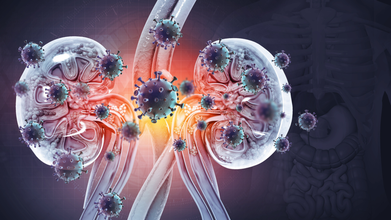
Turns out, kidney disease is not just a ‘kidney’ problem anymore, it can, in fact, affect other organs, and could even be linked to other chronic conditions, revealed a recent study.
In the US, more than 1 in 7 adults are affected by chronic kidney disease or (CKD). This means that 35.5 million Americans are affected by it, and what makes it worse is that 9 out of 10 people do not even know they have CKD, says the Centers for Disease Control and Prevention (CDC). Amid all these numbers thrown on to, something more concerning lies. A recent Lancet study shows a link between the rise in CKD and other chronic diseases. We are talking about chronic conditions like diabetes, high blood pressure, and obesity.
So, What Does The Study Say?
The researcher saw that 14 percent of adults who are over the age 20 or older, which makes 788 million Americans who had CKD in 2022. The biggest problem is not the disease itself, but the unawareness. Doctors, experts, and researchers from time and again have pointed out how kidney disease is often asymptomatic, this is why it is ignored until it becomes advanced. However, at that point the patients could already need dialysis or even an organ transplant. This gap in early diagnosis and treatment is what has made CKD the ninth leading reason of death, worldwide.
When you kidney functions naturally, it works as the powerhouse of filtration. A pair of healthy kidneys are able to filter and process more than 150 liters of fluid from the blood. These organs are also responsible for filtering out the waste and toxins through your urine. Not just that, but your kidneys also help in red blood cells production that keeps you healthy. When all of that does not happen, it can eventually impact every other organ in your body.
Like they say, everything is connected, and it surely is. For instance, somewhere around 20% of the blood that your heart pumps goes to your kidneys. If someone has diabetes and high blood pressure, it could damage the blood vessels and lead to protein in the urine and a slower filtration rate. It can then lead to other chronic infections, autoimmune disorders, and even genetic variants.
Kidney-Body Relation
If you leave your kidney disease untreated, it could lead to kidney failure. This is when you would be more in need of dialysis or a transplant. Doctors have pointed out that most people do not die of chronic kidney disease, rather it impacts their quality of life, worsening their cardiovascular conditions. It can lead to complications like a heart attack, a stroke, or a heart failure.
How Does This Happen?
People who have kidney diseases are at an increased risk for high blood pressure. Due to hurdles in the process of filtration, plaque build ups and hardens the arteries. This in return increases stress on the heart. In fact, the American Heart Association also defined the link between kidney and heart as 'cardiovascular-kidney metabolic syndrome'. This defines a health disorder that is a condition of the overlap of obesity, chronic kidney disease and cardiovascular diseases.
The bleed out of CKD is not just limited to your heart. The National Institute of Health, US points out that along with heart complications and high blood pressure, CKD could also lead to anemia, mineral and bone disorder, metabolic acidosis, malnutrition, and electrolyte imbalances in the blood.
So, What Is The Best Way To Keep Yourself Safe?
The first way is to note any symptoms and get yourself diagnosed. Look for signs like loss of appetite, unexplained nausea or vomiting. Do you feel tired often? Are you having trouble concentrating? Is there any change in how often you go pee?
Other symptoms like a change in your urine color or texture, or feeling itchy or dry, muscle cramps, unexplained weight loss or skin conditions could also signal towards kidney diseases.
However, not always does CKD show symptoms, experts suggest that to be one step ahead, it is important to undergo regular health checkups, including blood culture. General guidelines usually point towards getting a blood test done every 3 to 6 months. For someone with high blood pressure, diabetes or any other disease, the current guidelines say that those people should get regular blood and urine tests to screen for kidney disease. But what really happens is that though these tests exist, they are still used far too little. Doctors point out that many patients skip them because collecting a urine sample feels inconvenient, and overall awareness about kidney disease remains low. As a result, research shows that only about 35 percent of people with diabetes, and just 4 percent of those with high blood pressure, actually end up getting the recommended urine screening.
A ray of hope is that there are now several effective tools to slow the progression of kidney disease. Along with traditional options like ACE inhibitors, newer classes of medications including certain heart failure drugs and GLP-1 drugs. These medicines have shown to help protect kidney function. Although these newer treatments are not widely used yet, their adoption is steadily increasing.
What is important to remember is to also always consult your GP to ensure all preventative measures are followed carefully.
India's Silent Crisis: Why We Must Embrace Deceased Donor Organ Transplantation
Credit: iStock
In India, around 95 percent of kidney transplants and a significant proportion of liver transplants depend on living donors—primarily family members. While live donation can be lifesaving, it transforms a medical crisis into a family ordeal.
Parents feel obligated to donate to their children, spouses face immense pressure, and siblings also navigate complex emotional stress. This decision is typically free from the weight of duty, guilt, and family expectations. I have seen young professionals delay their careers, mothers hide their own health concerns, and elderly parents risk their lives—all because we lack a robust deceased donor program.
Moreover, the real challenge lies with living donors. Donors face surgical complications, long recovery periods, and potential long-term health consequences. While we counsel families about these risks, the urgency of their loved one's condition often overshadows rational decision-making.
Why Deceased Donation Remains A Distant Dream
Despite the introduction of the Transplantation of Human Organs Act and necessary amendments in India, the decrease in organ rates continues to remain abysmal—approximately 0.8 donors per million population, compared to 20 in the UK, 36 in Spain, and 33 in the United States.
Several deeply rooted factors explain this gap:
Cultural and religious misconceptions continue to persist. Many Indians also believe that the donation of organs conflicts with the religious beliefs regarding the sanctity of the body or rebirth, even though many religious institutions have endorsed organ donation.
The concept of brain death remains poorly understood; families struggle to accept that their loved one is dead when the heart still beats, and the chest rises on ventilator support. Families fear that clinical teams may hasten death to procure organs or that the wealthy will receive preferential treatment.
These anxieties, while often unfounded and deep-rooted, reflect legitimate concerns about transparency and equity in our healthcare institutions. We lack trained transplant coordinators, efficient organ retrieval networks, and standardized protocols across states.
When a potential donor is identified in a district hospital, the administrative maze often ensures organs go unutilized. Finally, public awareness is minimal.
Most Indians have never discussed organ donation with their families. Death remains a taboo subject, making advance directives about organ donation exceptionally rare.
The Urgent Need For Change
Over 150,000 patients await kidney transplants; fewer than 10,000 receive them annually. Similarly, roughly 50,000 patients are listed waiting for a liver transplant nationally. For hearts and lungs, deceased donation is the only option, yet these transplants remain rare. Patients die waiting—not because medical expertise is lacking, but because organs are unavailable.
Our dependence on living donation also perpetuates inequality. Those without family networks, or
whose families cannot afford the medical evaluation and recovery costs for donors, are effectively excluded from transplantation. Deceased donation would democratize access.
Lessons From Spain And The United States
Spain has the world's highest deceased donation rate, achieving success through a "Spanish Model" of dedicated transplant coordinators in every hospital, robust training programs, and a presumed consent system where all citizens are potential donors unless they opt out. Importantly, families are still consulted, but the default position favours donation.
Their success stems not just from infrastructure but from normalizing conversations about donation through media campaigns and school education programs.
A hybrid approach suited to Indian realities—combining elements of presumed consent with robust family consultation, investing in coordinator training, and launching sustained public awareness campaigns—could transform our landscape.
The Government's Critical Role
This transformation should be led by the government through several concrete actions:
First, invest in infrastructure. Every medical college and tertiary care center must have trained transplant coordinators and clear protocols for identifying and managing potential donors. State governments must establish well-funded organ retrieval networks with 24/7 operational capacity.
Second, Public awareness campaigns should be launched. Use television, radio, social media, and community health workers to educate citizens about brain death, the donation process, and the lives saved. Do a partnership with religious leaders to dispel the myths. Make organ donation part of school curricula.
Third, ensuring transparency and equity alongside establishing clear and publicly accessible waitlist protocols. To prevent commercialization, strict oversight from the government is recommended. Transplant programs must build trust by indicating that the system works for everyone, not just the privileged.
Changing Public Perception
We must reframe organ donation from an extraordinary act to a normal, expected part of medical care at the end of life. This requires: Open family conversations and discussing their wishes regarding organ donation with the loved ones, also removing the burden of decision-making during the grief.
Celebrity and community leadership: When a pledge to donate is made by public figures, it enables a gradual shift in thought and practice.
Media responsibility: Gifts of life should be highlighted by news coverage, humanizing donors and recipients while respecting their privacy.
Medical community engagement: Doctors should initiate sensitive conversations regarding donation with families of brain-dead patients, considering it as part of compassionate end-of-life care rather than an awkward position.
With world-class transplant surgeons, excellent medical infrastructure in urban centers, and a population of over 1.4 billion. We should not have patients dying for lack of organs, and programs being heavily reliant on living organ donations.
What we lack is collective will, bold government action, and public education. As a society, we take pride in seva (service) and daan (giving), and organ donation should align perfectly with our values. Let us make it so.
Colorectal Cancer: The Preventable Tragedy
Credit: iStock
In the world of oncology, we usually speak of battling or fighting cancer. We pool in our whole life’s earnings to find a cure or solution for the advanced stages of this disease. What if cancer were not a threat?
Here is one of the most common and deadly cancers, which is also one of the most preventable ones. We are talking about Colorectal cancer, which is often described by medical professionals as a preventable tragedy. This is because, unlike many other forms of the disease, we have a clear window of opportunity to stop it before it even begins.
As we observe Colorectal Cancer Awareness Month in March, it is time to strip away the fear surrounding the tests and understand why nobody should ever have to die from a condition that gives many chances to catch it well in time.
How It All Begins
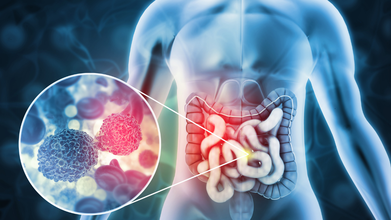
To understand why colorectal cancer is preventable, we have to look at how it develops. As with most cancers, this too doesn’t appear overnight. Almost always, these cancers start as small growths called polyps or precancerous lesions on the inner lining of the colon or rectum.
These polyps are like seeds; they are mostly benign. But there is one type of polyp that can gradually turn into cancer over a period of time. This is where the advantage lies. There is a long interval of time before polyps develop into cancer.
During this time, they can be removed if they are identified. If a doctor removes a precancerous polyp during a routine screening, they would not only have nipped the cancer in the bud, but would have also prevented it from occurring.
The statistics are encouraging when detected early, with figures showing that over 90 per cent of cases of colorectal cancer are fully curable. However, people do not seek medical attention until they experience some symptoms, at which point the seed-like polyps have already grown into a deep-rooted cancer.
Screening – The Main Defense
In Western countries, the death rate from colorectal cancer has been declining at a visible rate due to the presence of strong and well-supported screening programs from their governments.
Although some countries have not yet introduced a formal national program, the consensus among medical experts is that if you are above 45 years of age or have high-risk factors, you need to take the initiative to be screened.
There are two primary ways we do this:
1. The FIT (Fecal Immunochemical Test) – This is a simple, non-invasive stool test that has become a staple in most general health check-up packages. It works by detecting tiny amounts of human hemoglobin (blood) that aren’t visible to the naked eye.
The advantage of getting a Fecal Immunochemical Test done is that it is very easy, and it can be done at home, and requires no special preparations. It acts as an early warning system. If a FIT result comes back high, it signals that something is happening in the bowel that requires a closer look via colonoscopy. It is recommended that everyone over 45 undergoes this test annually. While not as definitive as a colonoscopy, it is a vital first line of defence.
2. The Colonoscopy – This is the gold standard. Despite all the fear and misinformation that can be spread on the Internet, a colonoscopy is a routine and safe procedure. It allows a doctor to visually inspect the inside of the colon. It is a procedure that has dual benefits – to see what is wrong, and to make things right. Should the doctor find a polyp, it can be safely removed at the time of the procedure.
Many people avoid this procedure because of embarrassment and fear of discomfort. However, with the sedation, most people find it to be completely painless.
Recognizing The Red Flags
While screening is for people with no symptoms, you must be alert to signs that require an immediate expert opinion, regardless of your age. Also, never ignore these symptoms or assume that they are due to bad food choices:
- If you feel changes in bowel habits frequently, then this is not just a one-off upset stomach. Pay attention to persistent change, such as recurrent diarrhea or a sudden onset of constipation that doesn’t resolve.
- Blood in the stool is perhaps the most critical sign. Many people write off rectal bleeding as piles (hemorrhoids). But bleeding that persists despite treatment must be checked by an expert.
- Losing weight without trying is often a sign that the body is under significant stress. Not all unexpected weight loss is a happy occurrence.
- Anemia and fatigue are visible proof. If a blood test shows low hemoglobin or iron-deficiency anemia – especially in men or in post-menopausal women – a colonoscopy is often mandatory to rule out internal bleeding from a tumor.
- Persistent abdominal pains, which are chronic, severe, or are accompanied by unexplained cramping and pain in the lower tummy area, must be evaluated by a doctor.
Breaking The Stigma
The aim of Colorectal Cancer Awareness Month is not just to create awareness about the disease; it is also about providing support as we pay tribute to cancer warriors who have completed the painful journey from surgery and chemotherapy to rehabilitation. Shared stories can help remove the fear in others’ minds.
There is no such thing as too much information in the doctor’s office. Our bowels are part of our body, and we must overcome the shame or embarrassment associated with talking about them. A simple dialogue about bathroom habits or asking for a FIT test can save a life.
By promoting early detection leading to the removal of precancerous polyps, we can build a world where no one ever has to die from colorectal cancer. If you are aged 45 years or older, make this the month you arrange for a screening. If you have symptoms, do not wait; the right time is now.
In the case of colorectal cancer, prevention is not just the best medicine, it IS the cure.
No Smoking Day: Are There Science-backed Methods To Quit Smoking?

Credits: Canva
On No Smoking Day, we drive our focus to science-backed methods that can help one leave smoking. Smoking is one of the leading causes of preventable deaths worldwide. It also contributed to severe health problems, including cancer, cardiovascular diseases, and respiratory diseases. Even though many people are aware of this harmful consequences, many struggle to quit smoking. Mostly because it is a habit often associated to enjoying a break. Even when someone does not need it, their brain tricks them into believing that smoke is important for the break they are meant to enjoy.
However, there are several studies that have explored science-backed methods that could help one to quit smoke.
A study published in the journal Addiction, emphasizes three primary methods proven effective for quitting smoking: behavioral support, prescription medications, and nicotine replacement therapy (NRT). These strategies have shown varying levels of success in aiding smokers to quit permanently. In addition, alternative methods like e-cigarettes and mindfulness-based techniques have gained traction in helping reduce smoking addiction.
Quitting smoking is more than just a decision; it’s a commitment to significantly improving your health and well-being. Smoking has been directly linked to various cancers, lung diseases, and heart conditions. In the long term, stopping smoking can lower your risk of these life-threatening conditions.
According to the study, individuals looking to quit smoking should consider using Varenicline (sold as Chantix/Champix), Cytisine (a plant-based supplement available in Europe and Canada), or nicotine e-cigarettes.
“Quitting smoking is difficult, and some people find it harder to quit than others, but tobacco is uniquely deadly among legal consumer products, so it’s important to seek help quitting,” said lead investigator Jonathan Livingstone-Banks, a lecturer and researcher in evidence-based health care with the University of Oxford in the U.K.
Read: Does Smoking Affect Women Differently Than Men?
What Happens When You Stop Smoking?
- In just 20 minutes of stopping, your blood pressure and heart rate begin to normalize.
- Within a few weeks, your lung function improves.
- Over time, the risk of heart disease and cancer also decreases dramatically.
Three Science-backed Methods That Could Help You Quit Smoking
Behavioral Support
Quitting smoking isn’t just about resisting cravings. Often, behavioral support through counseling or therapy is crucial for tackling the psychological aspects of addiction. Behavioral therapy involves working with a trained professional to identify triggers, develop coping strategies, and create a tailored quit plan. Research shows that combining counseling with other quit methods can significantly increase success rates.
Prescription Medications
Some medications, such as varenicline (Chantix) and bupropion (Zyban), have been shown to help people quit smoking by reducing cravings and withdrawal symptoms. Experts suggest that varenicline works by blocking the effects of nicotine in the brain, while bupropion is an antidepressant that helps manage withdrawal symptoms. Both medications are generally more effective when combined with behavioral therapy.
Nicotine Replacement Therapy (NRT)
Nicotine replacement products, such as nicotine patches, gums, lozenges, and nasal sprays, deliver controlled amounts of nicotine to ease withdrawal symptoms. According to experts at Harvard Health, NRT can double the chances of quitting by alleviating physical cravings while the person works on overcoming the psychological addiction.
- Follow Us :


© 2024 Bennett, Coleman & Company Limited