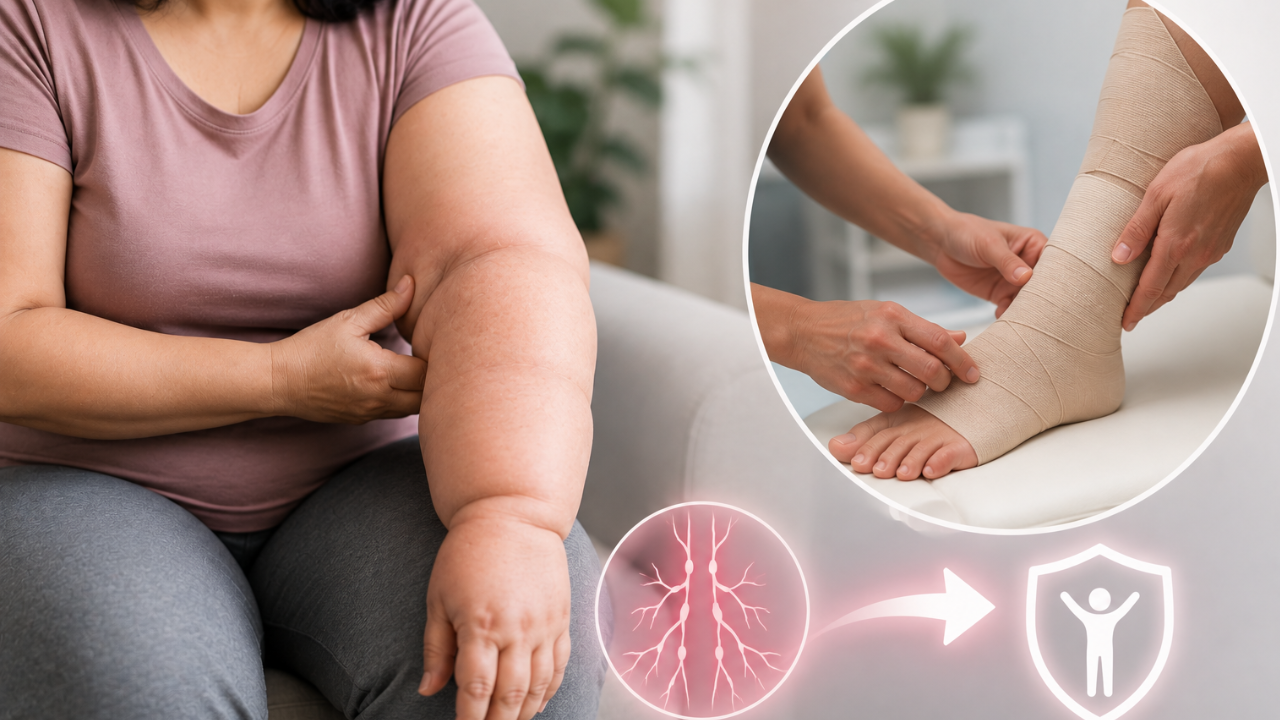
Many people may dismiss swelling in an arm or leg, particularly if it's not painful. But if the swelling continues or keeps coming back, it could be a sign of lymphedema, a condition that affects the body's lymphatic system. The lymphatic system is responsible for draining excess fluid from body tissues. If this system is damaged or is not functioning correctly, fluid will accumulate, and lead to swelling. There are different causes of lymphedema such as some infections, injuries, congenital disorders and cancer therapies. Women who have had breast or gynaecological cancers may be at special risk if they had their lymph nodes removed or if radiation had been used. What are the WARNING SIGNS? Sometimes, lymphedema develops gradually. Signs and symptoms include swelling of one arm or leg, heaviness or tightness in the arm or leg, trouble putting on rings or a watch, and decreased movement in the arm or leg. At times, the skin can also be tight and turn into a hard consistency over time. In certain patients, a second infection of the skin may occur. These symptoms should not just be attributed to "normal swelling. An early evaluation may help determine the root cause and make the condition less complicated to deal with. Also read: Full-Fat Dairy May Actually Be Healthy, Not Harm Weight or Cholesterol, Study FindsWhat Is The Treatment For Lymphedema? Treatment will depend on the severity of the disease and its etiology. Treatment usually involves compression garments, special physiotherapy, gentle lymphatic massage, exercises and skin care. The techniques may be used to help decrease swelling and movement. Surgery may be necessary in some cases of more severe or chronic lymphedema. New pathways can be created to allow the excess fluid to pass, such as in a lymphovenous bypass. For some patients, a transfer of lymph nodes or liposuction may be an option. Additionally, for patients who have an increased risk of developing lymphedema, doctors may also recommend preventive measures for individuals who must have some type of cancer surgery. This implies that measures should be taken to ensure protection of the lymphatic drainage before any appreciable swelling occurs. Also read: NIH Chief Urges Parents To Vaccinate Children As Measles Outbreak Breaks 35 Year RecordWhen To Go To The Doctor? If swelling isn't severe, don't wait to get help. If there is any continued or unexplained swelling, there will be a specialist available to give information about the cause of the swelling and what treatment is appropriate. Patients are provided with a holistic treatment pathway for lymphedema with multiple specialists treating their patients who came together for the diagnosis, rehabilitation and surgical treatment of lymphedema. Treatment of lymphedema is not all about reducing swelling. The overall aim is to maintain a person's function, ease and independence in their daily activities. If diagnosed early, and appropriately treated and followed-up, lymphedema can be managed successfully and patients can lead their life with a growing sense of confidence and comfort.