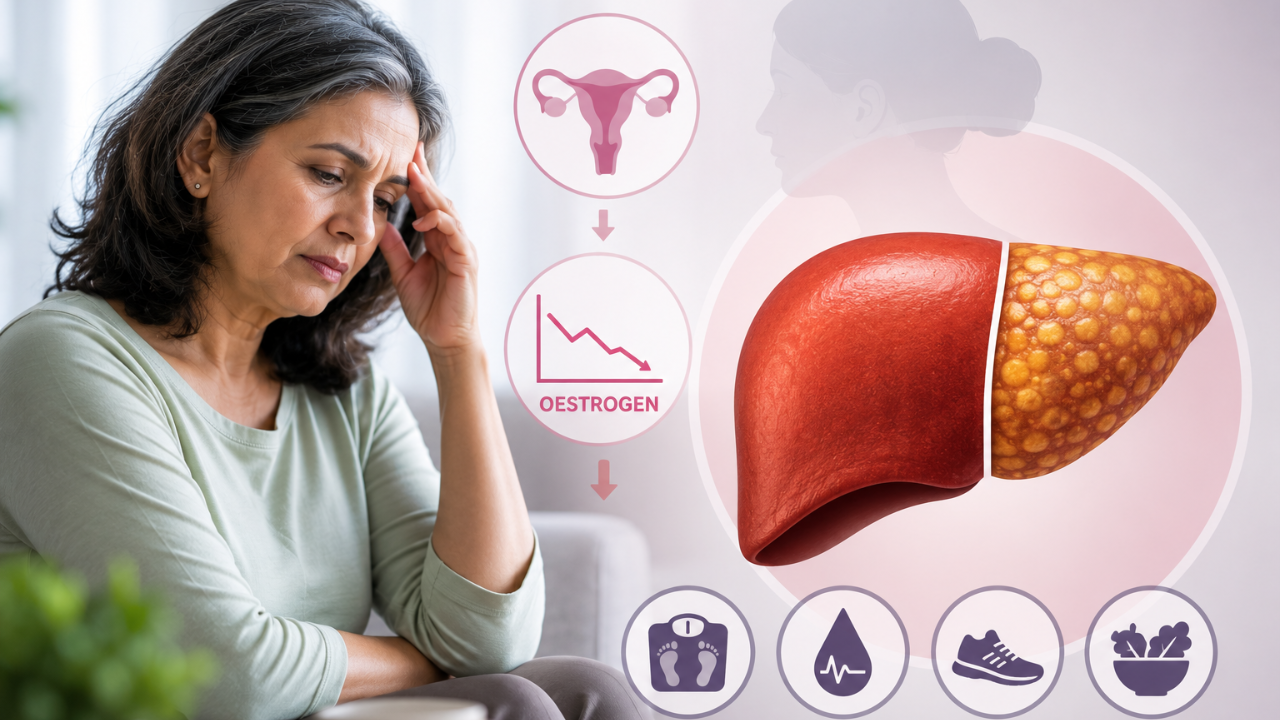
It is a common belief that metabolic dysfunction-associated steatotic liver disease (MASLD)—formerly known as non-alcoholic fatty liver disease (NAFLD)—is primarily associated with diet, sedentary lifestyles, and obesity. However, there are other factors as well affecting this aspect. Post-menopausal women experience a significantly higher incidence and faster progression of fatty liver disease, even when maintaining a stable body weight.Why Menopause Increases Fatty Liver Risk In pre-menopausal women, oestrogen plays a central role in metabolism, by promoting healthy fat accumulation in subcutaneous tissue (below the skin) rather than around internal organs, it also increases insulin sensitivity and suppresses liver inflammation. After menopause when oestrogen levels drop, this protective function is lost, there is redistribution of fat leading to more fat accumulation around internal organs including liver thus leading to increase chances of NAFLD and also increasing insulin resistance, needless to say that with age our metabolic rate also goes down which also plays a role in this.Also read: Decoding The Fertility MarkersEarly Detection Is Key The important part lies not only in understanding above but to go further in early detection and prevention of menopause associated NAFLD. As we know that fatty liver is a silent disease and often does not causes any signs and symptoms till very advanced stage.First and foremost is to change lifestyle with advancing age, changing both the dietary habits and physical activity. Regular screening and monitoring is warranted with blood tests, routine metabolic panels, keeping a tab on weight, sugar and cholesterol levels and a basic ultrasound of abdomen. For someone already diagnosed with 2nd or 3rd stage fatty liver, a simple non-invasive. Fibroscan can help monitor and assess the response to treatment.Also read: How Menopause Changes Heart Health Risks?Understanding The Impact Of Menopause On Liver Health Coming to treatment part of NAFLD in post-menopausal women, it being primary a lifestyle disease so the core of management also lies around managing lifestyle. Medicines are available for treating and controlling NAFLD in conjunction with lifestyle management. Hormone replacement therapy (HRT), when initiated early in post-menopausal women for symptomatic relief may offer secondary benefits by maintaining metabolic health. However HRT should always be initiated after proper evaluation and expert guidance.NAFLD is a silent epidemic and primarily a life style disease, knowing about it and knowing triggering and precipitating factors helps understanding and prevention better. Menopause being a natural biological phenomenon in every female’s life, it becomes essential for us to know how it affects our liver health and overall health as well. By Mr. Ankur Garg, Group Director Liver Transplant & GI Surgery, Paras Health, Gurgaon