
- Health Conditions A-Z
- Health & Wellness
- Nutrition
- Fitness
- Health News
- Ayurveda
- Videos
- Medicine A-Z
- Parenting
Rare Diseases Day: How AI Is Transforming Early Diagnosis
Credit: Canva
For all major diseases, early detection is key to improving treatment outcomes. However, when it comes to rare diseases, it is unpredictable, making it more challenging to diagnose. In such a scenario, Artificial Intelligence (AI) is playing a major role -- from early diagnosis to treatment, said health experts on Rare Disease Day.
Rare Disease Day is annually observed on February 28 to raise awareness about the lesser-known conditions and the underlying challenges for people suffering from them.
While many of the rare disorders are genetic, they often also surface without any prior family history. In some cases, they are diagnosed in infancy, while in others the manifestation is years late.
The advanced AI technology is, however, now enabling clinicians to better understand the patients’ genetic profiles and patterns that were not clearer earlier. The technology is also paving the way for earlier and more accurate diagnoses, bringing hope to thousands of patients worldwide.
“AI is revolutionizing the fight against rare diseases by speeding up diagnosis, research, and development of treatments. Rare diseases often take years to diagnose because of the lack of data, overlapping symptoms, and unclear diagnosis,” Dr. Vinit Banga, Director, Neurology, Fortis Escorts Hospital, Faridabad, told HealthandMe.
“AI algorithms can process medical records, genetic information, and images to identify patterns that may escape human detection, allowing for earlier and more accurate diagnoses,” he added.
AI Simplifying Rare Disease Diagnoses, Drug development
In a February paper published in the journal Nature, researchers from the Shanghai Jiao Tong University in China presented an AI system called DeepRare -- a multi-agent system for rare disease differential diagnosis decision support, powered by large language models, integrating more than 40 specialized tools.
Using the specialized tools and knowledge sources, the agentic AI system generates ranked diagnostic hypotheses for rare diseases. Each of the tools was also accompanied by reasoning that links the conclusions to verifiable medical evidence.
Similarly, Harvard University-based researchers in a paper also published in the Nature journal in 2025 described an AI tool called PopEVE, which can identify genetic variants most likely to cause severe disease or death.
The model was able to identify more than 100 novel alterations responsible for undiagnosed, rare genetic diseases.
"AI is cutting short the diagnostic odyssey from years to weeks. Large-scale genomic projects help create a vital reference architecture for India and the global community,” Dr. Sudheendra Rao N R, MBBS, PhD, Scientific Advisor, Organization for Rare Diseases India, told HealthandMe.
By integrating deep phenotyping with AI, clinicians can decipher unknown genetic variants and accelerate the development of both repurposed and next-generation precision-therapies, the expert added.
AI can also help researchers identify new drug targets for the treatment of rare conditions.
Dr. Banga said that AI is also instrumental in accelerating drug development by processing enormous amounts of biomedical data to discover new targets for drugs and repurpose existing ones. Importantly, AI is cutting down on time and expenses.
“Machine learning algorithms enable the prediction of patient responses to particular treatments, making it possible to develop personalized treatment strategies,” the expert said.
Further, AI-enabled infrastructure is helping to achieve geographic neutrality, delivering the same caliber of healthcare screening to rural villages and Tier-3 cities as to Tier-1 hubs, ensuring a high-quality healthcare gateway that is no longer defined by where the patient lives.
Moreover, AI-based platforms bring together researchers from across the globe, making it easier to share data.
What Is A Rare Disease
The World Health Organization (WHO) defines a rare disease as an often debilitating, chronic, or degenerative condition affecting 1 or fewer per 1,000 population.
Rare diseases do not have epidemiological data, are at high risk of misdiagnosis, and often also lack effective treatments.
According to the WHO ICD-11 (International Classification of Diseases), there are over 5,500 rare diseases. It also assigns unique identifiers (URIs) to them for better tracking.
There are estimated to be over 7,000 distinct rare diseases affecting more than 300 million people globally.
The Fertility Side of Metabolic Health: Why Your Waistline May Not Tell the Whole Story
Credit: AI
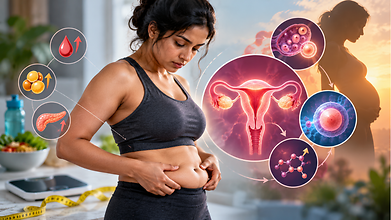
Fertility health is influenced by metabolic health, but body weight or waist size alone cannot show the complete picture.
When people think about metabolic health, weight and waist size are often the first things that come to mind. However, these numbers do not always tell the full story.
A person can have a normal body weight and still have problems such as insulin resistance, high blood sugar, abnormal cholesterol or high blood pressure. These factors can influence hormonal and reproductive health and may affect fertility in some people.
Understanding metabolic health is therefore important not only for preventing diabetes and heart disease, but also as part of overall reproductive health.
Why Metabolic Health Matters For Fertility?
The body's metabolism and reproductive system are closely connected. Problems with blood sugar regulation and insulin sensitivity can affect hormone function and, in some women, may contribute to irregular ovulation or menstrual cycles. Metabolic health can also be relevant to male fertility.
Obesity, diabetes and poor metabolic health may be associated with changes in sperm quality and reproductive function. This means fertility care should consider the health of both partners rather than focusing only on reproductive organs.
Also read: Egg Freezing Is Rising, But Are We Freezing Fertility or Buying Time?
Your Waistline Does Not Tell The Whole Story
Waist circumference and body mass index (BMI) can provide useful information, but they are only part of a health assessment.
Two people with the same weight or waist measurement can have very different blood sugar, cholesterol, blood pressure and fitness levels. Someone who appears slim can still have insulin resistance or other metabolic concerns. This is why health should not be judged only by appearance or a weighing scale.
What Should You Monitor?
Depending on individual risk factors, doctors may recommend checking blood pressure, blood sugar, cholesterol and other metabolic markers. Family history, age, physical activity, diet and existing medical conditions can also influence risk.
Women with irregular periods or difficulty with ovulation may benefit from discussing metabolic health with their doctor. Men with fertility concerns should also consider their overall health and lifestyle.
How Can You Support Metabolic and Fertility Health?
A balanced diet, regular physical activity, adequate sleep and stress management can support both metabolic and reproductive health. Meals should include vegetables, fruits, whole grains, protein sources and healthy fats.
Regular exercise does not have to mean intense workouts. Walking, strength training, cycling or other activities that can be maintained consistently can be beneficial.
Tips for better metabolic health:
• Do not judge health only by weight or waist size.
• Get blood sugar, blood pressure and cholesterol checked when advised.
• Eat a balanced, nutrient-rich diet.
• Stay physically active.
• Get adequate and regular sleep.
• Avoid smoking and tobacco.
• Manage stress.
• Discuss irregular periods or fertility concerns with a doctor.
The connection between metabolic and reproductive health is often overlooked. A healthy-looking waistline does not always mean that metabolism is healthy.
Looking at blood sugar, blood pressure, cholesterol, lifestyle and other individual factors provides a more complete picture. Taking care of metabolic health can therefore be an important part of taking care of fertility health too.
Women After 40: It’s Time to Put Your Health First

Credit: iStock
Turning 40 is an is an important milestone in a woman’s life. Careers are often in full swing, family responsibilities are complex, and the invisible load of emotional caregiving peaks. Amidst these demands, health often takes a back seat.
Many women rely on a cursory annual check-up or only seek medical advice when an undeniable symptom forces their hand. But staying healthy after 40 requires more than reacting to illness. At 25, your body forgives you. At 55, it punishes you. But between 40 and 50, it negotiates. This is the critical window to adopt a proactive, personalized approach that secures your physical independence and cognitive sharpness for the next four decades.
Perimenopause Affects The Hormones, Bones, and the Heart
As women navigate their 40s, they enter perimenopause-the transitional phase leading to menopause. This isn't just about hot flashes and irregular periods; it is a profound biological shift. Before menopause, estrogen acts as a physiological shield. It maintains vascular elasticity, improves glucose metabolism, suppresses inflammation, and preserves bone density by keeping the cells that break down bone in check.
However, when estrogen levels plummet during menopause, this shield drops. The consequences are systemic. The cardiovascular risk gap between men and women narrows rapidly, and heart disease risk skyrockets. Without estrogen’s protective effect, women also face an accelerated loss of bone density, vastly increasing the lifetime risk of osteoporosis and fractures.
Furthermore, this hormonal shift accelerates sarcopenia-the loss of muscle mass and quality. Women often experience a sharp decline in lower body strength during their late 40s, which is pure biology, not laziness. Recognizing these changes early is crucial because the years leading up to perimenopause are the optimal time to build cardiovascular and metabolic resilience.
Prevention: A Structured 40s Dashboard
Preventive care should not be a blind fishing expedition; it should be a targeted dashboard. A standard master health checkup often misses the most critical markers. Women in their 40s must advocate for specific, scientifically recommended screens.
Fasting sugar isn't enough. Ask for Fasting Insulin to catch insulin resistance years before diabetes develops. Track your ApoB (the most accurate marker for plaque-causing cholesterol) and Hs-CRP (a marker for chronic inflammation). Thyroid disorders are 5-10 times more common in women, especially post-pregnancy.
Request a full panel (TSH, Free T3, Free T4) rather than just TSH. Bone Density (DEXA Scan) check is a must to establish a baseline in your 40s. The goal is to catch osteopenia early, while it is still entirely reversible through targeted nutrition and resistance training. Cancer Screening is crucial.
Annual or bi-annual mammograms starting at 40 are essential. Because Indian women often have dense breast tissue, a targeted breast ultrasound may also be necessary. Co-testing with a Pap smear and HPV DNA test every 3-5 years remains the gold standard for cervical cancer prevention.
Everyday Habits Make A Lasting Difference
You cannot out-supplement a sedentary lifestyle. A personalized health plan must be anchored by non-negotiable daily habits. Walking is great for cardiovascular baseline health, but it does nothing to preserve muscle or bone density. Strength training twice a week is the fountain of youth.
Lifting weights forces the body to build bone mass and creates a "glucose sink" that regulates blood sugar and combats the metabolic slowdown of perimenopause. A balanced meal rich in protein and vegetables is a must. The average Indian diet is dangerously deficient in protein. Ensure you are getting 30 grams of high-quality protein at every major meal.
Adopt the "fiber-first" sequencing rule: eat your vegetables/salad first, protein second, and carbohydrates last to drastically blunt post-meal blood sugar spikes. Prioritize sleep with reverence. Deep sleep is the only time your brain flushes out neurotoxins. Protect this phase by enforcing a "digital sunset" 45 minutes before bed and finishing your last meal three hours before sleeping to keep your core body temperature cool.
Mental Wellbeing Deserves Equal Attention
Women routinely balance professional commitments and caregiving, leaving little room for their own emotional needs. The chronic stress of this "invisible load" elevates cortisol, which actively drives abdominal weight gain, sleep disruption, and systemic inflammation.
You cannot eliminate stress, but you can change how your nervous system responds to it. Build small pockets of autonomy into your day-whether it is 10 minutes of box breathing (inhale 4, hold 4, exhale 4, hold 4) before a meeting, or simply a 15-minute walk without your phone.
We are the most digitally connected generation in history, yet modern urban women are increasingly lonely. Social isolation shifts the brain into a hyper-vigilant survival mode, carrying a mortality risk equivalent to smoking 15 cigarettes a day. The antidote is deep, meaningful connection. Maintain your "Third Place" outside of work and home- this could be a library or a badminton court, and please prioritize rituals with friends that don't revolve around digital screens.
Make Your Health Plan A Yearly Conversation
To ensure these screenings and habits don't fall by the wayside, implement the "Birthday Protocol." Schedule your comprehensive health screening during your birthday month every year. Rather than simply asking if your reports are "normal," use the data to have a purposeful conversation with your physician.
Ask three questions: What are my top three health risks based on this data? What specific lifestyle adjustments should I make over the next 12 months? What markers are we monitoring next year? Good health after 40 is not about attempting a flawless, restrictive lifestyle overhaul overnight. It is about the consistency of small, science-backed habits. Start with one or two achievable changes this month, whether that means adding a strength-training session, scheduling a pending screening or establishing an earlier bedtime.
Build on those habits gradually and review your progress with your healthcare professional. The goal of good health after 40 is not simply to prevent illness or add more years to life. It is to preserve strength, independence and the freedom to live those years well. An annual check-up is the perfect starting point to a thoughtful, personalised strategy that can eventually help women stay healthy, strong, active, cognitively sharp and in total control of their entire wellbeing in all the years that lie ahead.
By Dr. Navin Gnanasekaran, MD, Longevity Physician, Head of Radiology - Apollo Hospitals Chennai, Co-founder -LIVF Women & Author of The 100 Year Blueprint
World Polio Day: Why India Must Stay Vigilant Despite Being Polio-Free
Credit: AI
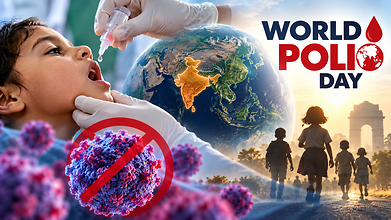
Elimination of wild poliovirus remains a landmark public health achievement for India, but the fight against the disease is not over. With poliovirus still circulating in neighbouring countries like Afghanistan and Pakistan, efforts like continued vaccination, strong surveillance and early detection remain essential to protect children from a debilitating disease that can cause irreversible life-long paralysis.
The last case of wild poliovirus in India was reported on January 13, 2011. The World Health Organization (WHO) declared its South-East Asia Region, which includes India, polio-free on March 27, 2014. More than a decade later, maintaining that status still requires focused efforts to ensure every child is protected.
The latest figures from the Global Polio Eradication Initiative show that Afghanistan had reported 42 cases of wild poliovirus in 2026 as of October 21, while Pakistan had reported six.
The two countries remain the only places where wild poliovirus is endemic. These cases highlight why polio continues to be a global public health concern even in countries that have eradicated it.
Gulam A. Vahanvaty, Chairman of the India National PolioPlus Committee at Rotary International and a former trustee of The Rotary Foundation told HealthandMe that elimination within a country does not mean the risk has disappeared.
“Just because a country is free from polio doesn't mean it is immune to the disease,” he said.
Also read: What Is Vaccine-Derived Polio And How Is It Triggering New Polio Cases In India?
India Must Be Vigilant About Polio Vaccination Efforts
Polio is a highly contagious infectious disease caused by poliovirus. It spreads through the faecal-oral route, when the virus passes from an infected person's stool into another person's mouth, often through contaminated hands, food or water.
It can also spread through oral secretions. Although many infections cause no obvious symptoms, the virus can affect the nervous system and cause permanent paralysis.
Dr Aparna G, Consultant in Paediatrics and Neonatology at Rainbow Children's Hospital, Sholinganallur, Chennai, explains that sustained immunisation is central to preventing the disease from returning.
She said, “While India was declared polio-free on March 27, 2014, by the World Health Organization, the risk of the virus being reintroduced from neighbouring countries where it continues to circulate remains.”
Vaccination builds immunity against poliovirus in children. India uses two types of polio vaccines - the inactivated polio vaccine (IPV), administered by injection, and the oral polio vaccine (OPV), given as drops.
Routine immunisation helps ensure that every child receives their recommended vaccine doses. Dr Aparna explain, “Pulse polio immunization is a strategy of mass immunization by which one can eradicate poliomyelitis.
Extra doses of OPV are given to all children below 5 years of age in an area at a time on a given day. Such pulses are repeated every year. The aim is to achieve 100% coverage.”
These additional doses do not replace routine vaccination. Both approaches are important, especially for reaching children who may have missed doses or live in places where access to healthcare is poor.
Also read: Polio Cases On The Rise Again, WHO Warns The World To A Growing Threat
Surveillance Is As Important As Immunisation
Vaccination is only one part of maintaining India's polio-free status. Public health authorities must also be able to detect any possible circulation of the virus quickly.
One important tool is surveillance for acute flaccid paralysis (AFP), which involves investigating cases of sudden-onset weakness or paralysis in children. Environmental surveillance, which includes testing sewage samples for poliovirus, can also help detect the virus even when no cases have been reported.
Dr Aparna says, “Equally important is strong surveillance to identify suspected cases, monitor acute flaccid paralysis and detect any possible circulation of the virus at an early stage. Timely detection allows public health authorities to respond quickly and prevent further transmission. Active community-based surveillance should also be considered.”
Early detection allows authorities to investigate threats, identify immunity gaps and organise vaccination drives where necessary.
Despite progress, the circulation of wild poliovirus in Afghanistan and Pakistan even today means the global eradication effort remains unfinished. International cooperation, vaccination coverage and effective surveillance will continue to be essential until transmission is curbed everywhere.
For India, the priority is to protect the progress achieved by ensuring that children do not miss routine immunisation, that vaccination campaigns reach vulnerable communities and that surveillance systems remain capable of identifying threats.
- Follow Us :


© $2026 Times Horizon Private Limited