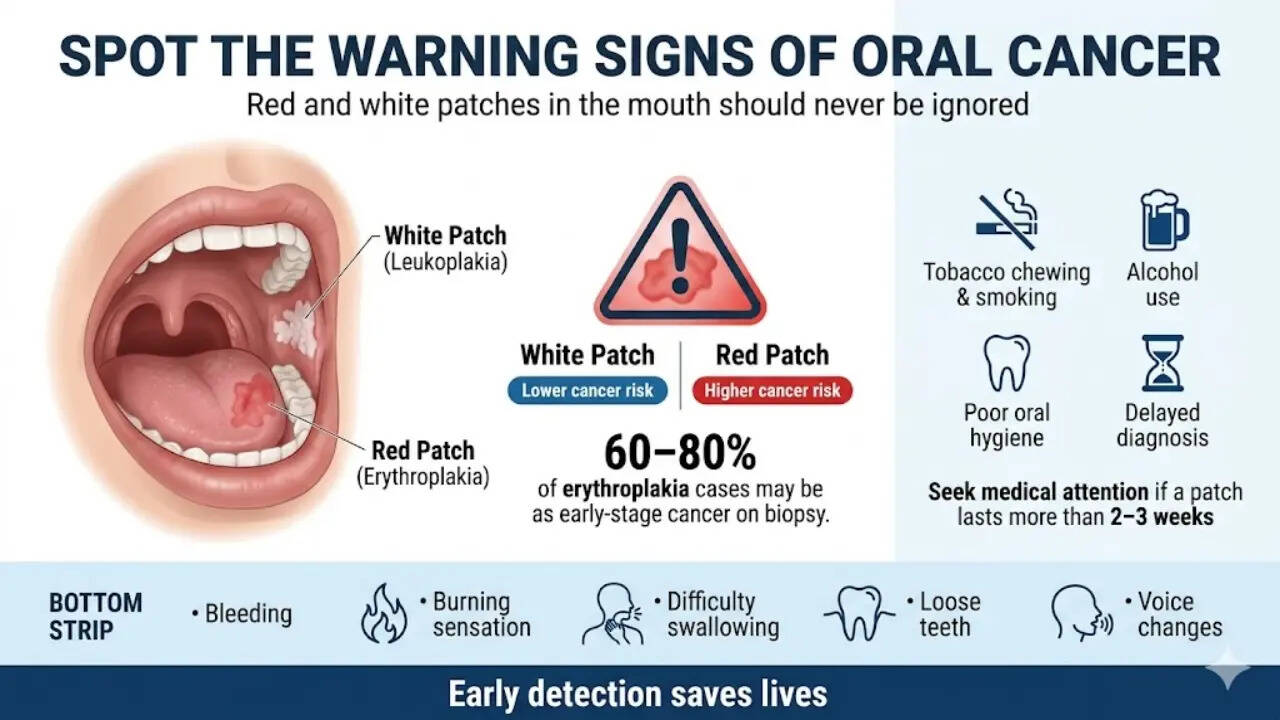
Oral cancer cases are on the rise because of tobacco chewing, smoking, alcohol consumption, poor oral hygiene, and delayed medical attention. Many people ignore small red or white patches, which are early warning signs of cancer and should never be overlooked. There is an average delay of six months in cancer diagnosis, which is the reason patients are diagnosed with stage 3 and 4 cancers.Dr Prathamesh Pai, Senior Consultant Head and Neck Surgical Oncologist, Gleneagles Hospital, Parel, Mumbai, explained the difference between red and white patches in the mouth and what they may indicate about your health.Red vs White Patches in the MouthWhite patches inside the mouth are called leukoplakia, while red patches are known as erythroplakia. Both can occur on the tongue, gums, inner cheeks, or floor of the mouth. Though both need equal attention, red patches are more dangerous, with a higher risk of being cancerous in comparison to white patches. Red patches in the mouth indicate severe abnormal cellular changes, which can develop into precancerous conditions or cancer. Around 60% to 80% of erythroplakias are diagnosed as early-stage cancer on biopsy.What is erythroplakia?Erythroplakia is a fiery red, well-defined patch in the mouth. These lesions are velvety in appearance. They often appear on the floor of the mouth or the retromolar trigone (the area behind the wisdom teeth). Red patches often go unreported, as they are mistaken for traumatic mouth ulcers caused by hard foods or dental irritation.If a red patch does not heal within two to three weeks, it should raise concerns about cancer. Besides the duration, patches that bleed on touch, are painful while eating, are associated with a burning sensation, difficulty swallowing, loosening of teeth, or voice changes should be investigated. Tobacco users should be even more mindful. Ignoring persistent red or white patches can allow the disease to progress silently.So, make sure to seek immediate help and consult a doctor. For anyone presenting with red or white patches, the doctor will carry out a physical oral examination and a biopsy, in which a small tissue sample is taken from the patch for evaluation. A CT scan and MRI may also be advised, depending on the location of the patch and other clinical features.Why early detection of cancer mattersRemember, early detection of cancer is curable. Treatment is also less extensive, often involving minor intraoral surgery and preservation of speech and swallowing functions. As the cancer stage advances, surgery may require the removal of parts of the cheek, jaw, or tongue, as well as postoperative radiotherapy. This affects the face and neck and hampers important functions such as eating, speaking, and swallowing. This has major implications for quality of life. Treatment can also be a financial burden, especially for younger patients.Take charge of your life. Lead a happy, healthy life. Avoid tobacco, alcohol, and other addictions. Visit your dentist regularly and maintain good oral hygiene. Prevention is better than cure. In the case of any non-healing ulcers in the mouth, swelling in the neck, altered speech or swallowing, or altered bowel habits for more than two weeks despite treatment, do visit a doctor. Remember, early detection of cancer is curable.