
- Health Conditions A-Z
- Health & Wellness
- Nutrition
- Fitness
- Health News
- Ayurveda
- Videos
- Medicine A-Z
- Parenting
What Are Colorectal Cancers? Is It Different From Colon Cancer?

Credits: Canva
Not too long ago actor James Van Der Beek announced that he had been diagnosed with colorectal cancer.
"I've been privately dealing with this diagnosis and have been taking steps to resolve it, with the support of my incredible family," he had said in a statement. In a subsequent Instagram post he expressed his intent to leverage his personal medical journey to raise awareness about the disease.
He wrote: "Each year, approximately 2 billion people around the world receive this diagnosis. And I’m one of them. There’s no playbook for how announce these things..."
While to many it seems like another name for colon cancer, the two are actually not the same.
Colorectal Cancer vs Colon Cancer
These terms are not interchangeable. While colorectal cancer is the umbrella term for both colon and rectal cancer. As the name also suggests, colon cancers happens only in the colon, but if it is left untreated, it can spread to different organs in your body. The specifics of colon cancer can be complex, however, understanding it could help you identify the unusual symptoms and could lead to prompt actions too.
ALSO READ: Can Using Seed Oil Cause Colon Cancer?
Colorectal Cancer vs Colon Cancer vs Rectal Cancer
As per the American Cancer Society, colorectal cancer begins inside the rectal tissues or the colon walls. It presents itself in the earliest stages as small masses, known as polyps. However, it does not mean that all small passes or polyps inside colon are cancerous, some are also benign.
Then how can one know? If a polyp becomes cancerous, it can spread cancer from the inner part of the colon to the lymph nodes or bloodstream. If this happens, cancer can then quickly move throughout the system. There are signs that one can notice, including lower stomach discomfort, losing weight, bloody stools, constipation, and loose stools. These signs are noted as per the Centers for Disease Control and Prevention (CDC).
While colon and rectal cancer fall under colorectal cancer, the latter begins when cancerous cells emerge in the rectum. The distinction is important from a medical care giving approach.
What are the approaches and therapies?
READ MORE: Colon Cancer Is The 8th Most Common Among Indian Men, Know Its Symptoms
Spreading awareness about colorectal cancer is crucial because many people with the condition aren’t even aware they have it. Regular screening tests, like stool tests and colonoscopies, play a vital role in detecting cancer early, reducing the risk of it spreading. If you or someone you know is diagnosed with colorectal or colon cancer, the treatment plan will be tailored to the specific type of cancer and its location relative to other parts of the body.
As per the National Cancer Institute, to stop the spread of either of the cancer, a surgery may be recommended. It may or may not be accompanied with chemotherapy, as it depends on the stage of the disease. Radiation therapy too may be considered, and could be more commonly recommended for rectal cancer, as it helps in reducing the size of the tumor and make it easier to operate on than colon cancers. While chemotherapy may be appropriate for both cancers, the prescribed medications may differ.
Study Reveals The Worrying Reason You Should Protect Yourself From Scrub Typhus
Credit: Pixabay
In 2025, Andhra Pradesh reported 1,566 scrub typhus cases, and nine suspected deaths, according to data from the Integrated Health Information Platform, Integrated Disease Surveillance Programme (IDSP-IHIP) on 8 December. Followed by Karnataka with 1,870 cases, Tamil Nadu 7,308 cases, and Telangana, 309 cases. Scrub typhus cases have significantly increased from previous year. It is one of the deadliest infections affecting multiple organs, or even death. Early it was relevant to poeple working in fields, new studies show it migrating to human settlements.
What Is Scrub Typhus?
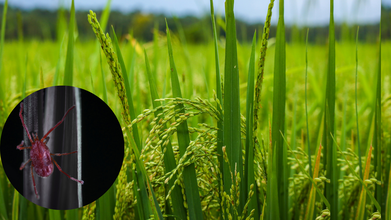
Scrub typhus, also known as bush typhus, is a bacterial infection caused by bacteria infection, caused by bacterium Orientia tsutsugamushi. It is spread through bites of infected larval mites, Chiggers.
Most cases of scrub typhus occur in rural areas of Southeast Asia, Indonesia, China, Japan, the Indian subcontinent and northern Australia. Until now, it was believed that chiggers only lurked in the tall grasses of remote paddy fields or dense forests. Due to this, it is commonly known as "farmers' disease", only confined to the fields.
However, new PLOS study data revealed the opposite. The study is led by researchers from Christian Medical College (CMC) Vellore and international collaborators and suggests that the bulk of infections are now even occurring within human settlements.
The study monitored over 32 000 people in Tamil Nadu, which led to the conclusion that agricultural activities, long considered the primary risk factor, were only weakly associated with the disease in high-prevalence areas.
How are Human Settlements A Prime Factor?
Risk for scrub typhus is significantly higher for those living in clustered houses or homes with fewer rooms. If the micro environment around the residence is unmaintained, gardens are patched, or even the damp corners of a courtyard, it could lead to breeding ground for the mites and the rodents that carry Chiggers.
Who Is At Most Risk?
It was once believed that working-age men were the most affected, but the new study tells otherwise. According to the new data, women over 60 are at the highest risk of infection.
As women spend most of their time in and around the home, due to household work, from the kitchen to the laundry, these activities are now the primary cross point of contact with infected mites.
What Is the Risk Factor Of Infection?
As initial symptoms of infection, such as fever, headache, and muscle pain, are the same as viral flu or dengue, many first seek help from untrained practitioners or local pharmacies.
By the time they reach the hospital, the disease has already progressed to severe complications like acute respiratory distress syndrome (ARDS), Kidney failure, or Meningoencephalitis, which is inflammation of your meninges and brain at the same time, a life-threatening condition.
Not only this, the researchers revealed that nearly 10 percent of affected households exceed 25 percent of their income in the treatment.
For severe cases, the cost of treatment can be up to approximately INR 110,000, a staggering sum for rural and peri-urban families earning a fraction of that monthly.
Prevention
- Do not let the grass grow tall around your house
- Tightly maintain kitchen gardens and remove piles of wood or debris where rodents (the primary hosts for mites) might nest.
- As chiggers are usually found close to the ground, do not sit directly on the grass or soil. Use chairs or mats. For children, make them wear socks and full- length trousers while playing in the yard.
- If you notice a small, dark, cigarette-burn-like mark, it is usually left behind by mites. It is most likely "Eschar". It is an important critical clue. As the bite is painless, it often goes unnoticed.
- Do a thorough skin check for an eschar, especially in warm, moist areas like the armpits, groin, or behind the knees.
Early intervention is necessary, as if a fever lasts more than two days, don't just treat it as "seasonal fever".
Consult a qualified doctor and specifically ask about scrub typhus. Infection can be treated with doxycycline common antibiotic, in the early stages. The case fatality rate in this study was 1.5 percent, hospital based studies in South India have previously recorded mortality rates as high 30 percent when treatment is delayed
WHO Updates Flu Shot: What Does It Mean For US After Exit?
Credits: Canva
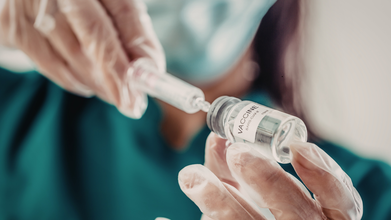
The World Health Organization (WHO) recommended that vaccine manufacturers must completely change the three viral strains included in the vaccines for the Northern Hemisphere's next influenza season. This is in the backdrop of the new strain called the influenza A (H3N2) or the subclade k, also known as the super flu. This flu season's vaccine was manufactured before the new strain was detected, which is why there was a mismatch. However, this does not mean that the vaccine was ineffective. In order to achieve better immunization, the WHO has asked manufacturer to consider the viral strain for newer vaccines.
The United States also saw a hike in the numbers of flu patients, including hospitalization. As per the Centers for Disease Control and Prevention or the CDC data, the country saw a 48 per cent hospitalization increase in every week.
However, with the US exiting out of the WHO could be a hurdle for the US Foods and Drugs Administration or the FDA to approve the WHO updates. Furthermore, the vaccine overhaul too have removed influenza vaccine from the mandatory coverage.
What Does The New WHO Influenza Vaccine Mean For The US?
The latest flu vaccine recommendations from the World Health Organization come at a politically sensitive moment. They are the first issued since the United States formally withdrew from WHO on January 22. The US has long been one of WHO’s largest contributors, providing more than $680 million annually in recent years, according to the Department of Health and Human Services.
Despite the withdrawal, NPR reported that scientists from the Centers for Disease Control and Prevention attended the strain selection meeting virtually. The gathering took place in Istanbul, Turkey.
Daniel Jernigan, former head of the CDC’s National Center for Emerging and Zoonotic Infectious Diseases, said the newly announced vaccine composition underscores why continued engagement with WHO is essential. He noted that flu prevention depends on global cooperation. Through WHO’s network, the CDC gains access to virus samples from around the world, while WHO-affiliated labs benefit from the CDC’s specialized testing capabilities. According to him, the collaboration strengthens both sides.
Concerns had surfaced about how the US exit might disrupt flu vaccine production. Andrew Pekosz, a professor at the Johns Hopkins Bloomberg School of Public Health, acknowledged that many researchers were worried about potential ripple effects.
However, two of the strains selected for next fall’s flu vaccines are based on virus samples collected in Missouri and Pennsylvania. That detail suggests that US scientists remain actively involved in surveillance and strain identification. Jernigan pointed out that this is particularly important for improving protection against recently circulating flu B viruses, especially in children. He added that if the CDC were ever prevented from participating in WHO’s network, both the US and international partners would lose valuable data and expertise.
Pekosz explained that the global flu monitoring system was intentionally designed with redundancy. Independent laboratories worldwide collect and analyze viral samples before submitting them to centralized databases. Multiple facilities can grow and test these viruses, ensuring backup capacity if one lab encounters problems. This structure helps safeguard vaccine development from single-point failures.
Danuta Skowronski, MD, a flu researcher at the British Columbia Centre for Disease Control in western Canada, emphasized that these lab networks enable researchers to monitor the genetic makeup of circulating viruses in near real time. Academic centers and vaccine effectiveness networks also contribute data, reinforcing the global surveillance web.
Countries typically look to WHO guidance when deciding their own vaccine formulations. In the United States, the Food and Drug Administration has historically aligned its recommendations with WHO’s selections. The FDA’s Vaccines and Related Biological Products Advisory Committee is scheduled to meet March 12 to discuss upcoming flu shot recommendations.
Still, uncertainty remains over how US regulators will proceed. Jernigan questioned whether the FDA will follow WHO’s updates without introducing additional hurdles for manufacturers preparing this fall’s vaccines.
Over the past year, several public health decisions have surprised experts, including shifts in vaccine-related policies. Earlier this month, the FDA initially declined to consider Moderna’s mRNA flu vaccine, a technology that could potentially reduce production time from six months to as little as six to eight weeks. Such speed could allow manufacturers to respond more quickly to late-emerging viral strains. The agency reversed that decision a week later.
Further uncertainty surrounds Health and Human Services Secretary Robert F. Kennedy Jr., who has previously expressed skepticism about vaccines. He has made claims linking flu shots to his own spasmodic dysphonia, though there is no scientific evidence supporting that assertion.
Against this backdrop, experts stress that global coordination remains central to effective influenza prevention, regardless of shifting political landscapes.
Over 40% Prostate Cancer Patients in India Diagnosed After Cancer Has Spread: ICMR study

Credit: Canva
A recent study by the Indian Council of Medical Research (ICMR) showed that more than 40 percent of prostate cancer patients in the country are diagnosed after the cancer has spread.
The 43 percent of late diagnosis cases indicates the significant burden of late detection of prostate cancer in the country. This can not only limit treatment options but also lead to poorer survival outcomes.
The study, published in the Indian Journal of Surgical Oncology, revealed that while more than 80 per cent began treatment within two months, but referral patients experienced longer delays.
Researchers from the ICMR’s National Centre for Disease Informatics and Research, in Bengaluru, stressed the need to strengthen referral pathways to ensure timely, stage-appropriate care.
“Our study indicates that over 80 percent of patients commence treatment within two months of diagnosis, but referral systems and delays in care persist,” said corresponding author Prashant Mathur, Director, ICMR-NCDIR, in the paper.
“To address these challenges, the healthcare system must prioritize improving referral efficiency, reducing administrative bottlenecks, enhancing coordination through digital health records, and multidisciplinary tumor boards,” the authors added.
Age, The Strongest Risk Factor For Prostate Cancer
The ICMR study is based on an analysis of 9,347 cases from 96 hospitals under the National Cancer Registry Program.
The researchers found that 75.6 percent of total prostate cancer cases occurred in the age group of 60–80 years, indicating that advanced age remains the biggest risk factor for the condition.
As life expectancy increases, more men reach the higher-risk age group, but awareness and screening practices have not scaled proportionately.
Adenocarcinoma was the most common pathology, constituting 77 percent of cases.
It is the most common form of prostate cancer, accounting for over 95 per cent of all cases. It develops in the gland cells that produce prostate fluid and typically grows slowly over several years.
Further, the ICMR researchers noted that about 57 percent of cases were diagnosed with localized (29.9 percent) or locoregional (27 percent) cancer.
Thirty percent underwent surgical treatment, and 22 percent received radiation therapy. Systemic therapy was the most common single modality treatment.
“Early detection and streamlined referral pathways are essential to improve prostate cancer outcomes in India,” the researchers said.
Prostate Cancer And Its Prevalence In India
Prostate cancer forms in the cells of the prostate -- a gland found only in males and a part of the male reproductive system. It lies below the urinary bladder and in front of the rectum.
Nearly all prostate cancers develop from glandular cells (adenocarcinomas).
Globally, prostate cancer is the most frequently diagnosed cancer among men in 112 countries and the leading cause of cancer death in 48 countries. In 2020, an estimated 1.4 million new cases of prostate cancer and 0.37 million deaths were reported worldwide.
In India, it is the second most common cancer among men, accounting for more than 60 percent of the prostate cancer burden in South-Central Asia. As per the ICMR data, the country reported 34,540 incidences of prostate cancer and 16,783 deaths.
Prostate cancer symptoms include urinary difficulty, a weak stream, or blood in the urine.
As prostate cancer is a slow-developing disease, it often causes no symptoms during the early-stage, leading to delayed medical consultation.
Other reasons for late detection in India include low awareness, limited routine screening -- PSA (prostate-specific antigen) programs; social stigma and hesitation due to embarrassment or cultural taboos.
Lack of access to specialist care, diagnostic facilities, and cancer centers, especially in rural populations, coupled with cost and referral gaps, also leads to delay in diagnosis.
- Follow Us :


© 2024 Bennett, Coleman & Company Limited