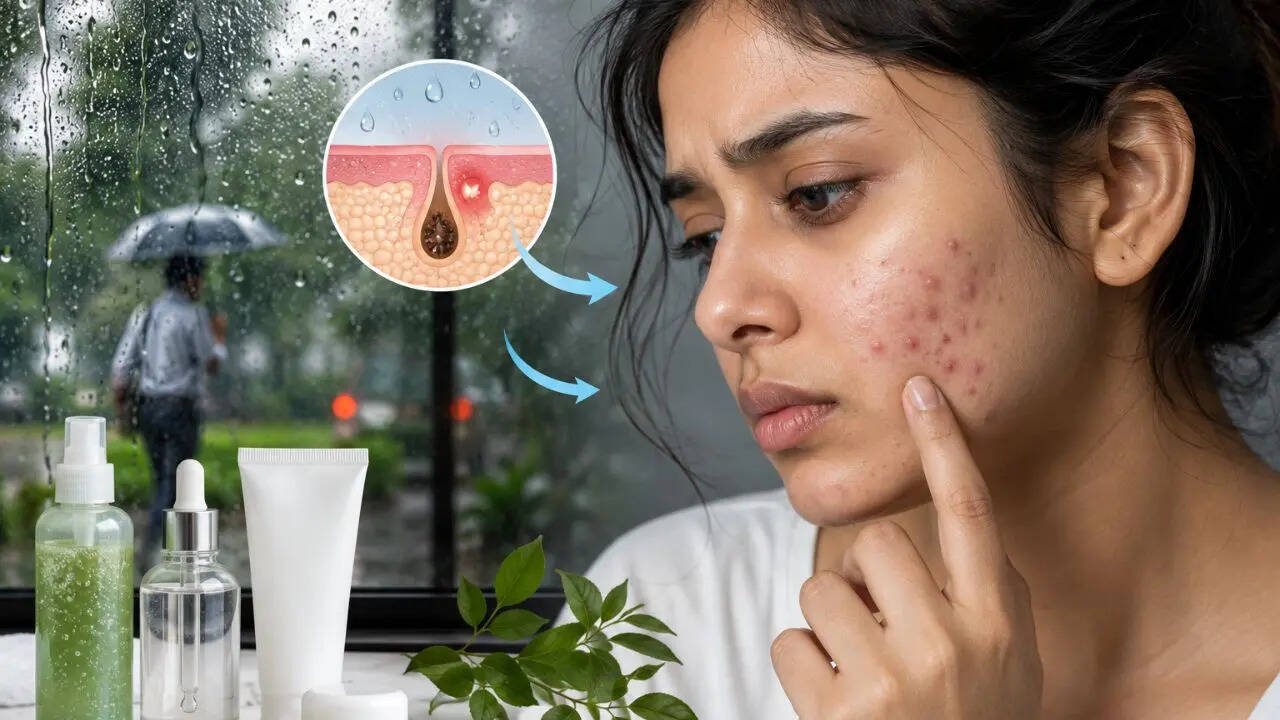
The arrival of the monsoon often brings sudden skin problems. The face feels greasy within hours, fresh breakouts appear overnight, and products that worked perfectly a month ago seem to do very little. This can be very frustrating, especially when you have been following your routine religiously, but the issue is not with your skincare regimen. It is the constant humidity, sweat, and moisture buildup which make you prone to breakouts and give your skin an oily look. Why Does Acne Get Worse During the Monsoon? Monsoon weather creates the perfect conditions for acne to flare up. As humidity levels rise, the skin begins producing excess oil as well as sweat, which takes more time than usual to evaporate. All this, mixed up with dead skin cells, sun block, makeup products, and pollution, results in clogged pores.Many people assume the solution is washing the face repeatedly, but over-cleansing can strip away the skin's protective barrier, which in return produce even more oil, ultimately creating a cycle that makes breakouts harder to control. Instead of changing your entire routine, it often helps to switch to lightweight, non-comedogenic products that suit the season while keeping the skin barrier healthy. What Triggers Acne During the Monsoon? It is often the little things we don't pay much attention to that end up making monsoon acne worse. Sweat sitting on the skin for hours, makeup or sunscreen that isn't removed properly at the end of the day, or even constant touching of the face, can all make it easier for pores to become clogged. When this happens alongside high humidity, the chances of developing acne naturally increase. Another common mistake is skipping moisturiser because the skin already feels oily. In reality, if the skin is dehydrated, it will get irritated easily and secrete more sebum, making acne harder to manage.Also read: Cosmeticorexia: The Dark Side Of Teenagers' Obsession With Flawless Skin Expert Treatments That Actually Work When seasonal breakouts become frequent or start leaving marks behind, professional treatments can help manage both active acne and its after-effects. Harmony XL Pro for Recurring Acne and Redness For many people, monsoon brings inflamed acne, redness and repeated flare-ups that don't always improve with skincare alone. In such cases, dermatologist-led treatments like Harmony XL Pro can make a big difference. The procedure utilises targeted laser energy that penetrates deeply into the skin, which not only addresses the acne-causing bacteria but also calms inflammation and improves skin texture from within. Hydration-Focused Treatments for Dull Monsoon Skin Oily skin isn't the only concern during the monsoon. Many people also notice that their skin looks dull and feels dehydrated despite the humidity. While hyaluronic acid serums, lightweight moisturisers and barrier-repair creams can help to some extent, they may not provide the deeper hydration some people need. When the skin needs a deeper boost, skin boosters can help improve hydration from within, leaving the surface looking healthier and more refreshed.Also read: Acne Vs Fungal Acne During Monsoon: How To Tell The Difference Facial Peels for Clogged Pores and Post-Acne Marks If the skin feels congested during the rainy season, facial peels can be another helpful option. They gently exfoliate the surface, clear clogged pores and gradually improve post-acne marks. They are especially useful when humidity makes the skin look dull and uneven, since they help refresh the skin while also supporting better texture over time. Wrapping Up Every season brings specific challenges for your skin, and the monsoon is no different. While a standard skincare routine can manage mild breakouts, persistent acne, redness, or frequent flare-ups often require professional attention. Understanding when your skin needs expert care is crucial to skin health, as it prevents long-term marks and helps maintain healthier skin throughout the season. By Dr Nupur Warge, Dermatologist at DermaElite Clinic, Thane