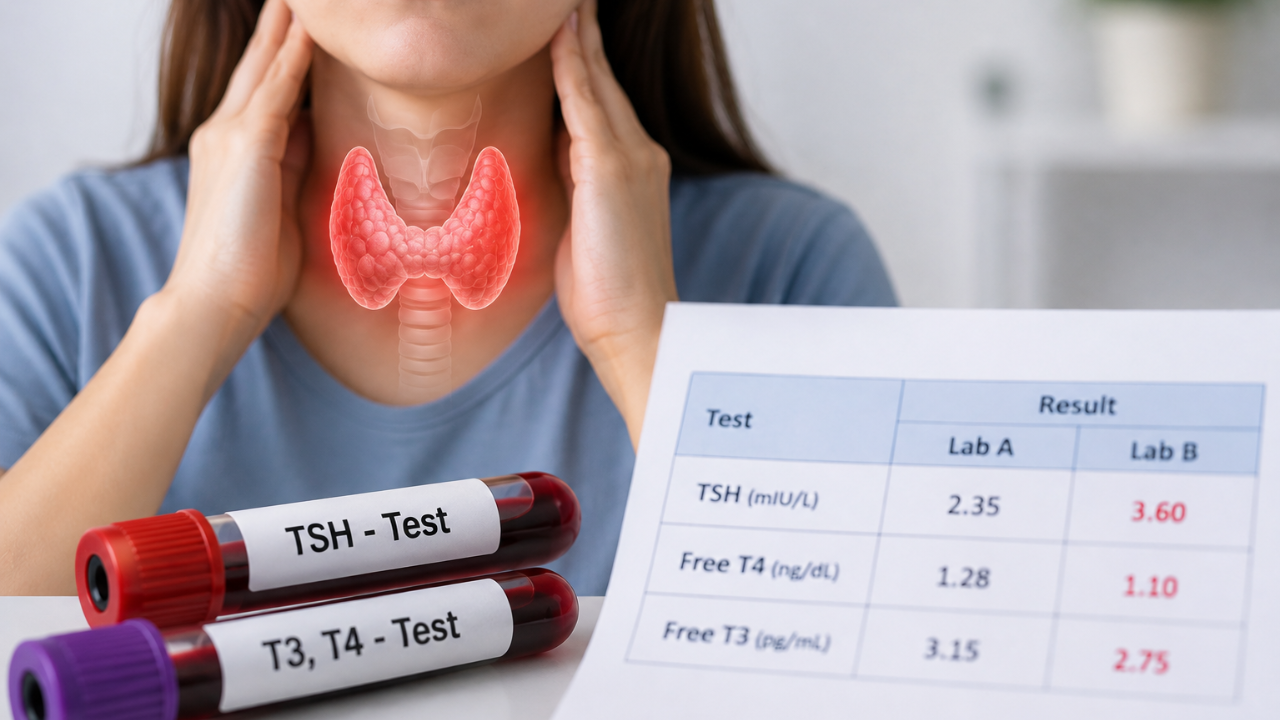
It can be confusing and sometimes alarming to receive different thyroid test results from two different laboratories, especially when both tests are done on the same day. A slight difference in values does not necessarily mean that your thyroid function has suddenly changed. In many cases, the variation is due to differences in how the tests are performed rather than a change in your health.The Laboratory Can Make A DifferenceOne of the biggest reasons for varying results is the laboratory itself. Accredited laboratories, such as NABL-certified labs, follow stringent quality-control measures, use standardised testing protocols and have trained personnel to handle samples correctly. Laboratories with less rigorous quality standards may produce results that are less consistent.Different Equipment Can Produce Different ResultsThe equipment and testing methods used can also differ from one laboratory to another. Different analysers, calibration techniques and testing kits can produce slightly different values for thyroid hormones such as TSH, T3, T4, Free T3 and Free T4.Even the reference ranges printed on reports may not be identical because each laboratory establishes its own normal range based on the equipment used and the population it serves.Also read: UK Approves Eli Lilly’s Foundayo: Is the GLP-1 Pill Better Than Wegovy, Mounjaro?The Time Of Your Test MattersThe timing of the test is another important factor. Thyroid-stimulating hormone (TSH) naturally fluctuates throughout the day. It is generally higher during the early hours of the morning and gradually falls as the day progresses.As a result, a blood sample collected in the afternoon may show a lower TSH level than one collected early in the morning.Stress, Sleep And Medication Can Affect ResultsLifestyle and biological factors can also influence thyroid hormone levels. Stress, poor sleep, recent illness, medications and even eating before the test may affect the results.For people taking thyroid medication, blood samples should ideally be collected in the morning on an empty stomach and before taking the daily dose. Testing after medication may temporarily alter hormone levels and make interpretation more difficult.Also read: Why Women Want Hormonal Health Care, Not Just Pregnancy Care Biotin And Other Medicines Can Interfere With Thyroid TestsCertain supplements and medications can interfere with thyroid tests as well. Biotin, commonly found in hair and nail supplements, can falsely lower TSH levels while increasing Free T3 and Free T4 values.Medications such as amiodarone, glucocorticoids, dopamine and heparin may also affect thyroid hormone measurements. During pregnancy, hormonal changes, particularly increased levels of human chorionic gonadotropin (hCG), can naturally alter TSH values.Even Sample Handling Can Affect The ReportLaboratory handling also plays a role. Delays in processing, improper storage temperatures, differences in centrifugation timing or sample-handling errors can influence the final result.In some individuals, thyroid autoantibodies may interfere with laboratory assays, potentially leading to inaccurate Free T3 and Free T4 measurements.Also read: Silent Neck Swellings: Why An Unusual Lump Should Never Be Ignored Should You Repeat A Thyroid Test? Because of these variables, experts recommend getting thyroid tests done at the same accredited laboratory whenever possible. This allows doctors to compare results more reliably over time.If a thyroid value is only mildly abnormal or falls within a borderline range, it may often be advisable to repeat the test before making a diagnosis or starting lifelong medication.Ultimately, thyroid test reports should never be interpreted in isolation. Doctors consider the patient's symptoms, medical history, physical examination and repeat test results before deciding on treatment.Consistency in where and how the test is performed can help avoid unnecessary anxiety and support more accurate clinical decisions.By Dr Shaheen Guy, General Physician, Saifee Hospital, Mumbai