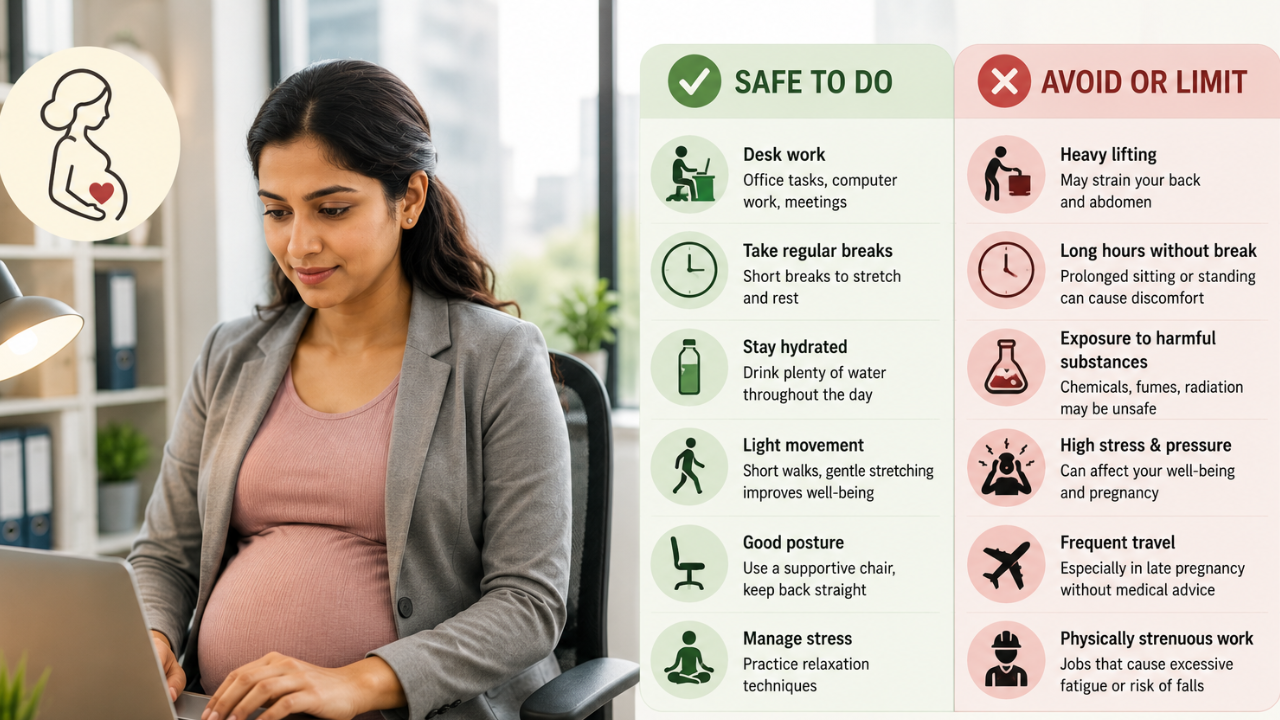
Most women can safely continue working during pregnancy. However, understanding physical limits, managing stress, and recognising warning signs are essential for protecting both mother and baby Pregnancy is an exciting phase in a woman's life, but, it does not mean putting their career on hold. Whether working from an office, teaching in a classroom, running a business, or working from home, most healthy pregnancies allow women to continue working safely. However, every pregnancy is different, and the type of work, working hours, and overall health of the mother play an important role in determining what is safe. Listening to your body, taking regular breaks, and following your doctor's advice can help you maintain a healthy balance between work and pregnancy. What's safe during pregnancy? For women with a healthy pregnancy, normal office work and routine daily activities are generally safe. Sitting at a desk, attending meetings, using a computer, travelling short distances for work, and performing light physical activities are usually not harmful. It is important to stay hydrated, eat healthy meals on time, and take short breaks to stretch or walk every hour to improve blood circulation. Avoid sitting continuously for prolonged periods, as long hours of immobility can increase leg swelling and may increase the risk of blood clots during pregnancy. Simple stretching and short walks every 30-60 minutes can help improve circulation. Wearing comfortable footwear and maintaining good posture can also help reduce back pain and leg swelling. Moderate exercise recommended by your doctor, such as walking or prenatal yoga, can improve energy levels, reduce stress, and support overall health during pregnancy. An ergonomic workstation with proper chair support, correct screen height, and adequate lumbar support can reduce strain on the back, neck, and pelvis as pregnancy progresses.Also read: Maternal Anemia: Why It’s A Major Pregnancy Risk For Indian Women And How to Prevent It What isn't safe? Some jobs may require extra precautions. Pregnant women should avoid lifting heavy objects, standing continuously for long hours without breaks, climbing ladders, working in extreme heat, or being exposed to harmful chemicals, radiation, pesticides, or infectious diseases. Night shifts, excessive overtime, and highly stressful work environments may also affect physical and emotional well-being, especially if the pregnancy is considered high-risk. Women experiencing complications such as high blood pressure, gestational diabetes, bleeding, preterm labour, or carrying twins may need work modifications or temporary leave, depending on their doctor's advice.Women with conditions like shot cervix, placenta previa, fetal growth restriction, recurrent pregnancy loss, history of preterm birth may require additional monitoring and individualised advice regarding work schedules and physical activities. Long daily commutes are generally safe in uncomplicated pregnancies, but pregnant women should avoid prolonged standing in crowded public transport, stay well hydrated, wear seat belts correctly (below the belly and across the shoulder), and take breaks during long-distance travel to improve circulation.Also read: Parents Sue Surrogate For 100,000 After She Refused Abortion Following Baby’s Heart Defect Diagnosis When should you stop working? There is no fixed time when every pregnant woman should stop working. Many women continue working safely until the last few weeks of pregnancy, while others may need to stop earlier because of medical conditions or the physical demands of their job. Decisions should always be made in consultation with the treating obstetrician. Seek immediate medical attention if you experience vaginal bleeding, leaking of fluid, severe abdominal pain, regular contractions, dizziness, persistent headaches, blurred vision, reduced baby movements, or swelling of the face and hands.Employers can also contribute by providing flexible work arrangements , opportunities for regular breaks and comfortable work environments helping pregnancy employees remain healthy and productive. Working during pregnancy is safe for most women when proper precautions are taken. A healthy lifestyle, regular prenatal check-ups, adequate rest, and a supportive workplace can make a significant difference. Every pregnancy is unique, so instead of comparing yourself with others, follow your doctor's guidance and make choices that protect both your health and your baby's well-being. By Dr. Preety Aggarwal, Medical Director of Obstetrics and Gynaecology at Motherhood Hospitals, Gurgaon