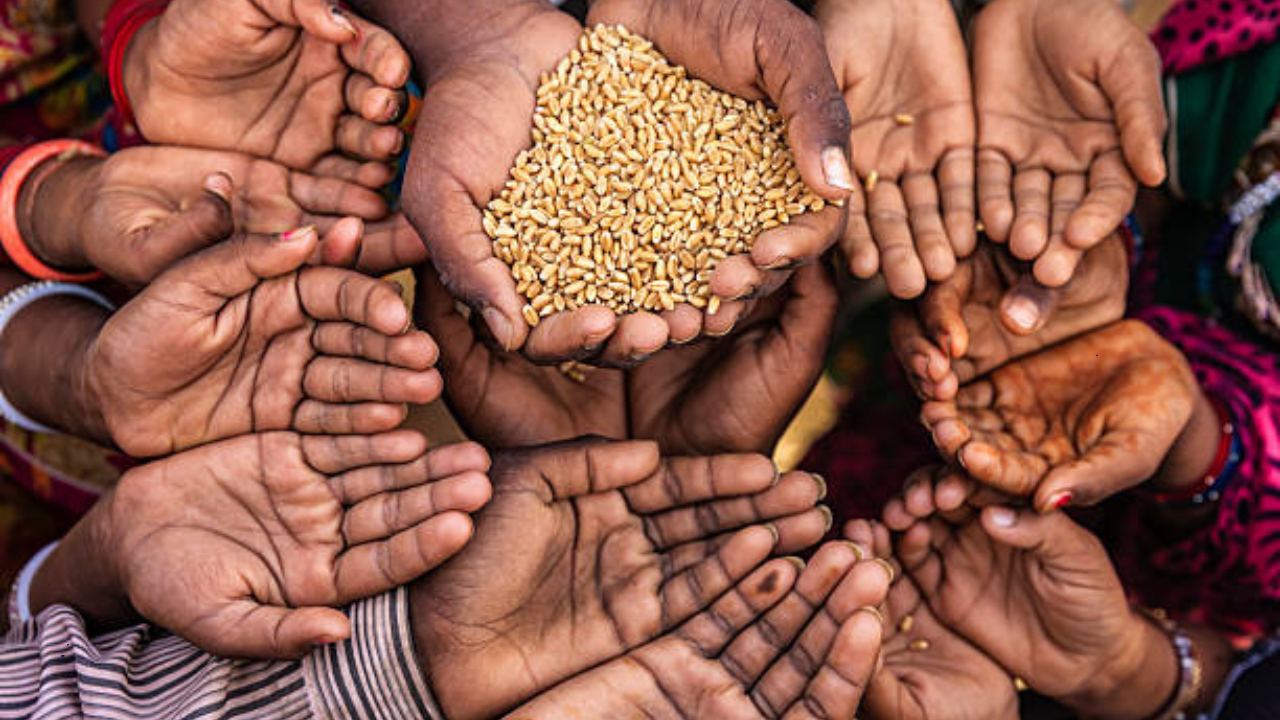
Global hunger declined for the third consecutive year in 2025, but an estimated 645 million people still went hungry, while rising food prices linked to the Middle East conflict threaten to slow progress, according to a new UN report.An estimated 7.8 percent of the global population—around 645 million people—were affected by hunger in 2025, down from 8.1 percent in 2024 and 8.6 percent in 2022, according to The State of Food Security and Nutrition in the World 2026 (SOFI 2026) report released on Tuesday by five UN agencies—FAO, IFAD, UNICEF, WFP and WHO.The figure represents 14 million fewer hungry people than in 2024 and 43 million fewer than in 2022, marking the third consecutive year of improvement."While we welcome the clear progress we have made in reducing hunger, a healthy diet still remains unaffordable for one in three people globally. Obesity is rising and progress on maternal and child nutrition is stalling," said WHO Director-General Dr Tedros Adhanom Ghebreyesus.Over 2 Billion People Still Face Food InsecurityAlso read: Want Healthier Lungs? Add More Kale And Spinach To Your Plate, Suggests StudyDespite the decline in hunger, 25.8 percent of the world's population—around 2.1 billion people—experienced moderate or severe food insecurity in 2025, meaning they were forced at times to compromise on the quality or quantity of the food they consumed.This is down from 27.1 percent in 2024 and 28.7 percent in 2020, equivalent to 86 million fewer people than in 2024 and 135 million fewer than in 2020, although levels remain above those seen before the COVID-19 pandemic.Progress Uneven Across RegionsAfrica is now home to the largest number of hungry people, with 309 million affected.More than half (56.6 percent) of Africa's population experienced moderate or severe food insecurity in 2025, compared with:20.3 percent in Asia22.9 percent in Latin America and the Caribbean8.7 percent in North America and EuropeFood insecurity remains more prevalent in rural areas than in urban and peri-urban areas.Women continue to be disproportionately affected by food insecurity, although the gender gap narrowed slightly in 2025.Middle East Conflict Could Slow Progress The report warned that the ongoing Middle East conflict could delay global efforts to end hunger by driving up food prices through higher energy and fertilizer costs.Depending on how long the crisis affects food inflation, 510–520 million people could still face hunger by 2030, compared with 503 million projected before the conflict, the report said.It also noted that other risks—including extreme weather events such as El Niño in 2026 and 2027—were not included in these projections and could further worsen the outlook.The report warned that the conflict, combined with extreme weather and declining humanitarian funding, threatens to reverse recent gains in reducing global hunger."This report is a stark reminder that food systems fail millions of children and families. Food, health, education and social protection must go hand in hand to protect the most vulnerable children and women from global shocks," said UNICEF Executive Director Catherine Russell.Healthy Diet Now Costs 25% MoreNutritious food has become up to 25 percent more expensive over the past five years, leaving 2.69 billion people—nearly one in three globally—unable to afford a healthy diet.The average global cost of a healthy diet rose to US$4.28 (PPP) per person per day in 2025, up from US$3.44 in 2021 and US$2.94 in 2017.Dr Ghebreyesus urged governments to adopt policies that make "healthy food the easy choice," including promoting breastfeeding, front-of-pack nutrition labelling, taxing unhealthy products, and protecting children from harmful food marketing."Healthy diets are not a luxury—they are the foundation of health and must be within everyone's reach," he said.