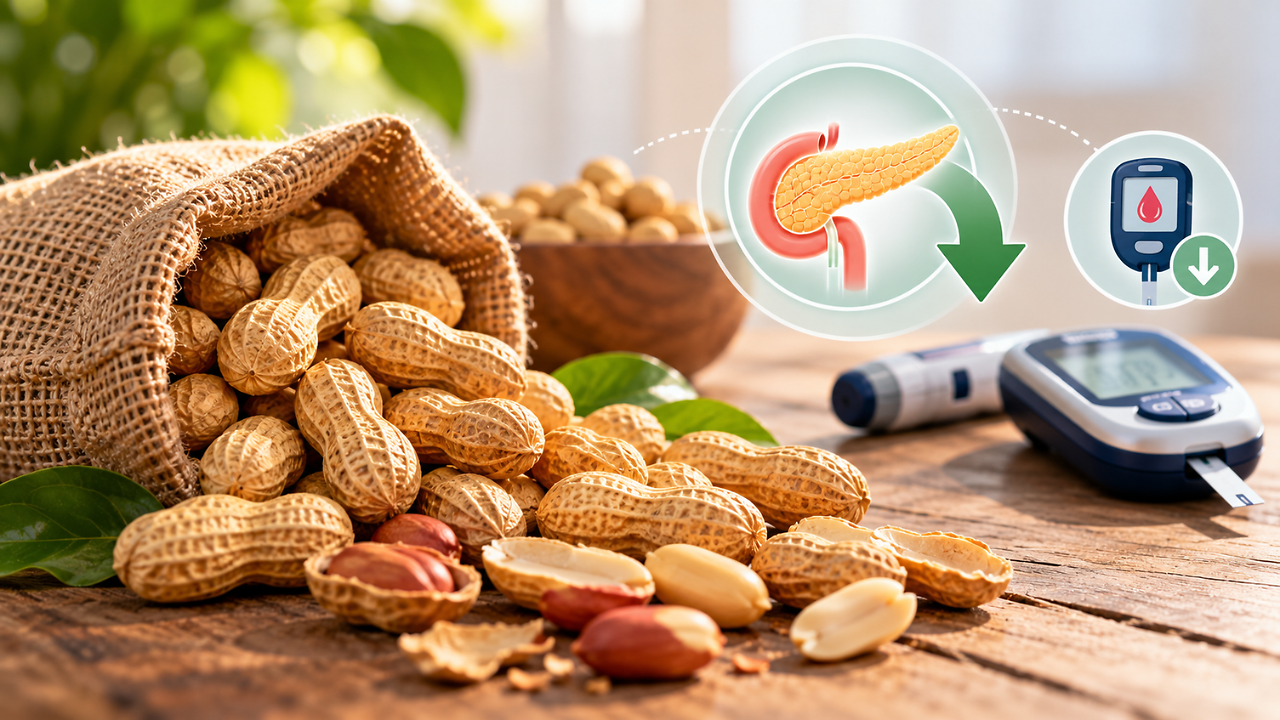
Eating peanuts may help lower the risk of developing type 2 diabetes. Researchers have identified changes in blood fats that could help explain the association. The findings indicate that peanuts may impact the body’s lipid metabolism. The body weight also plays an important role in the association. The study, published in The American Journal of Clinical Nutrition in 2026, combined a dietary intervention of six months with data from a large cohort to investigate how eating peanuts changes circulating lipids and how these changes relate to cardiometabolic disease risk. Link Between Peanut Consumption & Cardiometabolic Disease Risk Researchers from the German Institute of Human Nutrition Potsdam-Rehbruecke and the University of Barcelona analysed data from two studies. The first was the ARISTOTLE clinical trial, which involved 63 healthy adults aged 18 to 33. Participants were randomly assigned to consume one of three options daily for six months: 25 grams of skin-roasted peanuts, 32 grams of peanut butter or 32 grams of control butter made with peanut oil. Researchers measured changes in participants’ blood lipids before and after the intervention. They then examined data from the EPIC-Potsdam cohort, which followed more than 27,000 people and included information on 774 cases of newly developed type 2 diabetes and 545 cases of cardiovascular disease. Using a technique called lipidomics, which analyses fats circulating in the blood, the team identified a pattern of lipid changes associated with peanut consumption. They called this the “peanut lipidomic signature”Also read: World Sight Day: The Hidden Link Between Diabetes & Blindness - Why Good Vision Doesn't Mean Healthy EyesWhat Were The Findings?Peanut consumption altered 51 groups of fatty acids within different lipid classes, especially lipids containing very-long-chain saturated fatty acids (VLCSFAs). These included changes involving C22:0 and C24:0 fatty acids. Researchers found that these fatty acids were incorporated into specific lipid classes, including ceramides, suggesting that peanut consumption was linked with restructuring of the blood lipid profile rather than simply an increase in fat levels. “This is not merely a simple increase in fat levels, but a complex 'remodeling' of the lipidome,” said first author Dr. Inés Domínguez-López. Professor Matthias Schulze explained the significance of the findings, “By characterizing this specific peanut lipid signature, we have uncovered a potential biological marker that links dietary fat quality to metabolic outcomes.” When researchers examined the relationship between these lipid changes and disease outcomes in the larger cohort, they found that a higher PeLS was associated with a modestly lower risk of type 2 diabetes. For every one-standard-deviation increase in the signature, the estimated risk was 11% lower. But the signature was not associated with a lower risk of cardiovascular disease in this analysis.Also read: World Sight Day: How Technology & Community-Based Care Can Bring Retinal Screening Closer To Patients Body Weight's Role Body mass index (BMI) emerged as a possible explanation for much of the association between the peanut-affected lipid signature and type 2 diabetes risk. Researchers estimated that BMI could explain approximately 89% of the observed association, although the estimate was inaccurate. This suggests that body weight or related metabolic processes may help understand the relationship. Domínguez-López said, “This suggests that the positive metabolic effects of these specific peanut-derived lipids may be linked to their ability to support a healthier body weight or stabilize metabolic processes related to adiposity.” Peanuts contain unsaturated fats, fibre, protein and several micronutrients, making them essential in a balanced diet. Replacing foods rich in saturated fats or highly processed snacks with unsalted peanuts may help improve overall dietary quality.However, the findings do not prove that peanuts directly prevent diabetes. The intervention involved only 63 young, healthy adults, while the association with disease risk was assessed using a separate observational cohort. The analysis cannot establish that the lipid changes themselves caused the lower risk.