
- Health Conditions A-Z
- Health & Wellness
- Nutrition
- Fitness
- Health News
- Ayurveda
- Videos
- Medicine A-Z
- Parenting
Is Bubble Tea Putting Your Health at Risk? Experts Warn About Lead Exposure

Credits: Canva
A trendy drink that’s become a social media favorite may now have fans thinking twice, after questions were raised about one key ingredient.
Bubble tea, also called boba or pearl milk tea, first appeared in Taiwan in the 1980s. It’s usually made with tea, milk or creamer, a sweetener, and, of course, the signature chewy tapioca pearls.
While its colorful, Instagram-worthy appeal has made it popular around the world, recent safety tests from Consumer Reports suggest there could be reason for concern.
Also Read: mRNA COVID Vaccines Found To Help Cancer Patients Live Longer: Can This Be The Ultimate Cancer Cure?
Boba Tea Contains Lead?
Bubble tea, the Taiwanese drink made of black tea, milk, sugar, and chewy tapioca pearls, has won fans worldwide since its debut in the 1980s. But recent findings suggest it may deserve a closer look.
A Consumer Reports investigation in the US found high lead levels in some bubble tea products, echoing earlier concerns about cassava-based foods. The tapioca pearls, the drink’s signature “bubbles,” are made from cassava starch, which can absorb lead and other heavy metals from the soil as the plant grows.
Why Are Tapioca Pearls Harmful?
Lead is naturally present in the Earth’s crust, and much of the world’s soil contains significant contamination. Many fruits and vegetables, including cassava, can absorb heavy metals during growth.
Consumer Reports tested tapioca pearls from popular bubble tea chains, Gong Cha and Kung Fu Tea, as well as packaged boba products from Trader Joe’s and WuFuYuan. Every sample contained some lead. Thankfully, none exceeded the levels that Consumer Reports considers concerning, and none had dangerous levels of arsenic, cadmium, or mercury in a single serving.
Also Read: World Polio Day: How the Polio Vaccine Became a Lifesaving Shield Against a Global Disease
“These levels weren’t high enough for us to advise people to completely avoid bubble tea,” said James E. Rogers, PhD, director of food safety research and testing at Consumer Reports.
“However, this wasn’t a comprehensive survey of the boba and bubble tea market. The fact that three out of four samples contained more than half of our level of concern for lead in a single serving is a strong reminder that bubble tea should be enjoyed occasionally, rather than as an everyday drink.”
Beyond heavy metals, the starchy composition of tapioca pearls can pose other risks. Eating large amounts may slow stomach emptying, a condition called gastroparesis, or even cause blockages. Symptoms can include nausea, vomiting, and abdominal pain, and people with already slow digestion may be particularly affected.
Bubble Tea and Kidney Health
Bubble tea can also impact kidney health. In 2023, Taiwanese doctors removed more than 300 kidney stones from a 20-year-old woman who reportedly drank bubble tea in place of water. Ingredients such as oxalate and high phosphate levels can contribute to stone formation, though this extreme case likely reflects unusually high consumption.
Jason Tsou, General Manager at WuFuYuan’s parent company, Shanghai ZhouShi Foodstuffs, said the company routinely tests its products for lead through an accredited laboratory. Following these recent findings, they have introduced stricter standards to ensure safety, as per New York Post.
Are Mangoes Safe for Oral Cancer Patients?

Oral cancer patients must go for only ripe mangoes. (Photo credit: AI generated)
Have you been diagnosed with oral cancer? Wondering if you can have your favourite fruit, mango? Then make sure to consult your doctor before having it. Though mangoes are rich in vitamins and antioxidants, oral cancer patients should consume them carefully, depending on their treatment stage and mouth condition. It is not a good idea for oral cancer patients to eat mangoes in large quantities.
Can oral cancer patients eat mangoes?
In an interaction with Health and Me, Dr. Amit Chakraborty, Head and neck onco-surgeon, Mumbai, shared some simple guidelines to help oral cancer patients satisfy their mango cravings healthily.
Everyone, including oral cancer patients, eagerly waits for the mango season. After all, it is difficult to resist mangoes, right? As summer and mangoes go hand in hand, even oral cancer patients may be tempted to eat them. Mangoes are packed with vitamins, antioxidants, and natural sweetness, but they should be eaten in moderation. However, oral cancer patients and those undergoing cancer treatment often wonder whether mangoes are safe for them. Understand that the answer depends on the patient’s condition, stage of treatment, and symptoms affecting the mouth and throat.
What happens when oral cancer patients eat mangoes often?
In many cases, ripe mangoes can be safely consumed by oral cancer patients because they are soft, nutritious, and easy to swallow. However, they should have only two to three small slices of mango per day. It is not advisable to eat an entire mango. Mangoes contain vitamins A, C, and E, along with antioxidants that help support immunity and overall health. They may also provide energy to patients who struggle with appetite loss during treatment. However, oral cancer patients can suffer from mouth ulcers, pain, burning sensations, dry mouth, difficulty chewing, or sensitivity due to chemotherapy, radiation, or surgery.
In such situations, very sweet, fibrous, or slightly sour mangoes may irritate the mouth and increase discomfort. Sticky mango pulp can also sometimes remain inside the mouth, making oral hygiene important. It is necessary to avoid sour and unripe mangoes. Mango pulp, smoothies, or mashed mango can be chosen by patients who have difficulty swallowing. Again, the expert will decide the quantity. If the expert does not allow it, then it is better not to eat mangoes. Maintaining proper oral hygiene after eating is equally important to prevent infections and irritation.
Conclusion
If you have oral cancer and want to eat a mango, choose a soft, ripe mango. Moderation is key, and maintaining oral hygiene is essential. As every patient’s condition is different, follow your doctor’s advice regarding cancer treatment. All you need to do is to ensure that you do not go overboard with the fruit, as it can do more harm than good if eaten mindlessly, especially with comorbidities.
World Thyroid Day: Iodine-Rich Indian Foods to Support Thyroid, Ovulation
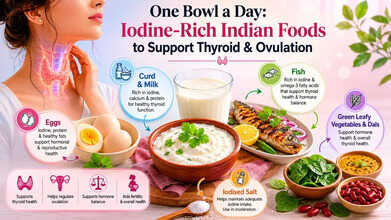
World Thyroid Day: The thyroid gland regulates metabolism. (Photo credit: AI generated)
Many women pay attention to iron, calcium, and vitamin D, but don’t consider iodine. Did you know? Iodine is an essential nutrient that supports thyroid function, hormone balance, and ovulation, making it important for women planning pregnancy or managing fertility issues. It is essential for women to make sure they add iodine-rich foods to their diet to enhance thyroid health and regulate ovulation. Make sure to consult an expert who will tell you what to eat and avoid. Women, take charge of your health right away, and you will surely notice the difference.
Also Read: Ebola Cases Cross 900, Death Toll Tops 200; 10 Countries On High Alert
In an interview with Health and Me, Dr Sandeep Talwar, Fertility Specialist, Nova IVF Fertility, East of Kailash, Delhi, said, "The thyroid gland plays a pivotal role when it comes to controlling metabolism, energy levels, hormones, and even reproductive health. When thyroid hormone levels become imbalanced, a large number of women experience signs and symptoms such as irregular periods, difficulty with ovulation, weight changes, fatigue, or fertility problems. You will be surprised to know that one of the key nutrients needed for proper thyroid function is iodine. Yes, you heard that right! However, many women don’t know much about it and fail to include it in their daily diet. So, by adding simple iodine-rich Indian foods to everyday meals, it is possible to improve thyroid and reproductive health. A balanced diet, along with regular medical check-ups, can make a positive difference, especially for women who are planning a pregnancy."
Iodine-Rich Indian Foods For Thyroid Health
These iodine-rich foods will be beneficial for Indians in maintaining thyroid health and supporting ovulation:
- Curd and milk are commonly available iodine-rich foods in Indian households. They also provide calcium and protein, which support overall health during fertility planning. Try to have a bowl of curd or a glass of milk for healthy thyroid function.
- Eggs contain iodine, protein, healthy fats, and vitamin D, which support hormonal and reproductive health. Have boiled eggs or egg-based dishes for breakfast. Also, the yolk contains iodine, so eating whole eggs in moderation is fine. Make sure to consult an expert before including them in your diet.
- Fish such as tuna, sardines, and mackerel are rich in iodine and omega-3 fatty acids, which support thyroid health and hormone balance. People who consume non-vegetarian food can include fish once a week as part of a balanced diet.
- Green leafy vegetables and dals support hormone health. Spinach, rajma, moong dal, and chana can be included in the diet. Though they may not contain very high iodine levels, they support overall reproductive and thyroid health.
- Iodised salt helps maintain adequate iodine intake. Be cautious and consume it in moderation, as excess salt can increase blood pressure.
Including iodine-rich foods in daily meals, exercising regularly, and undergoing regular thyroid check-ups help improve reproductive health. On World Thyroid Day, it is advised to follow a balanced and healthy diet that will help you manage disorders while also meeting basic nutrition requirements.
Natural VS Processed: Expert Decodes The Impact Of Sugar On Your Body

Sugar is often called "empty calories" as it offers no nutritional value. (Photo credit: AI generated)
Sugar is bad for health, and we have heard this several times, on loop. But little do people realise that not all forms of sugar are bad for your body - some sugars are naturally occurring and might actually be the sweet treat you need. Fructose, for instance, found in fruits, is not as bad as processed sugar. But it is still important to know when to stop. In an interview with Health and Me, Dr Nimitt Nagda, Consulting Physician, Zynova Shalby Hospital, Mumbai, explained how natural sugar is different from processed sugar.
What is natural sugar?
Natural sugars present in fruits and milk tend to have nutrients and fibre, while processed sugar often adds empty calories that can harm health when consumed excessively. This article helps to explain how natural sugars impact the body differently when compared to processed sugars. Read on to know more about this and make sure to avoid excess processed sugar. So, adhere to healthy eating habits.
Sugar is a part of many foods that are eaten by people on a daily basis. However, not all sugars affect the body in the same way. Natural sugars are present in foods such as fruits, vegetables, and milk, whereas processed or added sugars are found in sweets, soft drinks, packaged snacks, bakery products, and desserts. While both types provide energy, the body handles them differently. It is the need of the hour to understand the difference between the two, as excessive intake of processed sugar is linked to obesity, diabetes, heart disease, and fatty liver disease. So, be cautious when it comes to your well-being.
Is natural sugar better?
Natural sugars are usually accompanied by fibre, vitamins, minerals, antioxidants, and water content. Fruits contain fructose, but they also provide fibre that slows down sugar absorption into the bloodstream. This helps maintain stable energy levels and prevents sudden spikes in blood sugar. Milk contains lactose along with protein and calcium, making it more nutritionally balanced. When it comes to processed sugar, it is quickly absorbed by the body because it lacks fibre and nutrients. This can lead to rapid increases in blood sugar and insulin levels. Frequent consumption of sugary foods and beverages may increase cravings, weight gain, fatigue, diabetes, obesity, and fatty liver disease. Processed sugar also contributes to inflammation, tooth decay, and unhealthy fat accumulation in the body. Moreover, natural foods are more filling, whereas processed sugary foods often encourage overeating because they do not satisfy hunger for long.
Natural sugars consumed through whole foods like fruits and milk are generally healthier because they come with essential nutrients and fibre that support overall well-being. Processed sugars, when consumed in excess, can negatively affect health and increase the risk of several chronic diseases. Choosing natural food sources and limiting added sugars can help maintain better energy levels, weight control, and long-term health. So, make sure to pay attention to your health without fail and limit processed sugar.
- Follow Us :


© 2024 Bennett, Coleman & Company Limited