
- Health Conditions A-Z
- Health & Wellness
- Nutrition
- Fitness
- Health News
- Ayurveda
- Videos
- Medicine A-Z
- Parenting
Oncologists' Food Guide To Keep Cancer Cells At Bay
Credits: Canva
Cancer cells do use oxygen to metabolize sugar(glucose) to generate energy for their sustenance. They use anaerobic respiration i.e. glycolysis. Cancer still remains a prominent cause of mortality across the globe. Despite recent breakthroughs in the treatment strategies, the understanding of how cancer begins inside a cell remains elusive.
Traditional treatment pathways such as chemotherapy, radiation therapy and even surgery, although inevitable, are still falling short in effectively eradicating certain malignancies. In many cases, they aren’t fully able to restrict the disease progression, causing systemic toxicity which further can have its own complications.
However, we find ourselves in an interesting place where growing research is making us look at cancer in newer ways. For the first time, cancer is being considered as having metabolic irregularities as a major cause in addition to genetic aberrations. This might change the way we treat the disease in the coming days.
Cancer cells breathe differently
Interestingly, new age theories are observing some commonality among all cancers, the affected cells generate energy differently.
Cancer cells are not using oxygen to generate energy. Instead, they are fermenting glucose and glutamine (an amino acid found in the body) to fuel their growth. This impaired cellular respiration might be at the core of disease formation.
Dr Thomas Seyfried (a leading proponent of the metabolic theory of cancer) has gone ahead in saying that infected mitochondria (powerhouse of the cell) is the propeller of the disease and not the nucleus (where genetic material is stored inside a cell). It might be the kitchen of the cells that is calling the shots.
Starving cancer cells could be a way forward
Healthy human cells can use liver-generated ketone bodies for energy production in the absence of glucose. However, cancer cells are incapable of fermenting ketone bodies.
If tumors thrive on glucose and glutamine, removing these fermentable fuels can enable starvation of cancer cells. They can easily shrink or even disappear. On the flip side, chronically elevated blood glucose can contribute to the progression of the disease.
Growing research propagates the induction of a ‘calorie-restricted’ diet for both prevention and management of cancer.
It is being observed that therapeutic ketosis using carbohydrate-restricted diets alongside traditional treatments (chemotherapy, surgery et al) is showing clinically positive results in cancer patients. In my own office, I have seen similar experiences where my patients benefitted from a holistic approach to cancer treatment which included tailored low glycemic diets.
The standard treatment in form of chemotherapy, radiation and surgery are cytotoxic methodology; dietary interventions and Indian traditional medicine break the resistance of cancer cells and make them amenable to cytotoxic treatment simultaneously decreasing the adverse effects of cytotoxic treatment.
While aggressive keto diets can be a late-stage intervention, maintaining a moderately calorie-restricted diet can be adopted as a preventive measure against the rise of cancer.
Finding a middle path
Cancer researchers might have theoretical disagreements but most of them agree on the fact that there are multiple factors involved in conversion of a normal cell into a tumour. Hence, having a holistic approach to the treatment is the way forward.
While standard treatments like chemotherapy, radiation therapy and surgery are not replaceable, the systemic toxicity caused by these aggressive treatments is reduced as well as response to them is augmented using holistic approach with dietary intervention and Indian traditional medicine, under the supervision of skilled professionals.
Note: Conventional treatments like chemotherapy, radiation therapy and surgery are not replaceable, and must be continued as per the instruction of the supervising practitioner
37 Notices, 206 Samples Tested, Substandard Oil Worth Rs 6.43 Crore Seized Across UP Ahead Of Holi

Credits: FSSAI and Canva
Ahead of Holi and Eid, and during Ramadan, when demand of cooking oil spikes for meal preparation, every year, substandard quality items hit the market. This year too this happened and to curb this practice, the Uttar Pradesh Food Safety and Drug Administration (UPFSDA) issued 37 notices for non compliance to sellers selling substandard oil. The Food Safety Department also seized oil worth Rs. 6.43 crore.
The UPFSDA inspected 64 manufacturing units across Uttar Pradesh and seized 4,16,494 litres of suspicious edible oil.
What Is Substandard Oil?
Substandard cooking oil refers to edible oils that are adulterated, improperly refined, reused, or of low quality, often containing harmful compounds due to poor manufacturing, such as high-heat processing or chemical contamination. FSSAI reports have indicated that up to 30.7% of edible oils in some markets are of poor quality or adulterated.
As per a 2024 study published in the International Journal of Biochemistry and Molecular Biology, common oil sources shows that most edible oils are extracted from seeds, while certain fruits such as olives, coconuts, and palm fruits are also used to produce oil. However, adulteration remains a major concern. Oils like Argemone oil, mineral oil, castor oil, karanja oil, olive oil, cottonseed oil, and paraffin oil are often blended with edible oils and ghee. Some adulterated products may even contain toxic substances such as cyanide and banned colouring agents.
Mustard oil and soybean oil are particularly vulnerable to adulteration through the deliberate addition of substances such as cyanide, mineral oil, karanja oil, Argemone oil, and linseed oil—practices that pose serious risks to consumer health and safety. Similarly, sesame oil is frequently mixed with other oils including avocado, olive, canola, walnut, peanut, and perilla oils.
Argemone oil, in particular, is derived from the seeds of the Argemone mexicana plant and is commonly mixed with mustard oil. Its seeds are spherical, blackish-brown, and have a net-like surface, closely resembling mustard seeds, which makes detection more difficult.
What Happens When You Consume Adulterated Edible Oils?
Adulteration, in general, makes edible oils and ghee unsafe for consumption and significantly reduces their nutritional value. According to the Indian Council of Medical Research, many adulterants can cause permanent organ damage. History offers stark warnings: in Spain, the sale of non-edible rapeseed oil falsely marketed as olive oil led to more than 600 deaths in what became known as the Spanish toxic oil syndrome.
Argemone-contaminated oils have triggered major outbreaks in several countries, including a severe epidemic dropsy crisis in New Delhi in 1998. Reported symptoms included retinal haemorrhages, anaemia, kidney dysfunction, and severe protein deficiency. Some adulterated oils may also contain carcinogenic substances such as polycyclic aromatic hydrocarbons (PAHs), increasing long-term cancer risk.
Other adulterants pose additional dangers. Castor oil contamination can cause severe gastrointestinal distress. Mineral oil adulteration is linked to liver toxicity and cancer risk. Cottonseed oil, when improperly blended, increases exposure to high levels of polyunsaturated fats, potentially contributing to obesity, diabetes, and other lifestyle-related diseases. In some alarming cases, soybean and mustard oils have been found adulterated with burnt mobil oil containing polychlorinated biphenyls (PCBs), toxic chemicals associated with liver damage, neurological changes, dehydration, respiratory irritation, and systemic organ harm.
Adulteration can also trigger allergic reactions. If peanut oil is used as an undeclared adulterant, it may cause severe allergic responses in susceptible individuals.
The most concerning aspect is that loose or unpackaged edible oils are more prone to contamination and adulteration. What may appear to be a simple cost-cutting practice can, in reality, expose consumers to life-threatening toxins, chronic disease risks, and irreversible organ damage.
Blueberry-Rich Diet Linked to Higher Happiness Levels, Here's Why

(Credit : Pinterest)
In a world where stress, anxiety and declining mental well-being are becoming increasingly common, many people are looking for simple lifestyle habits that can promote positive mood and psychological resilience.
New research suggests that eating around three servings of flavonoid-rich foods everyday, especially fruits such as blueberries, strawberries, apples and citrus fruits, may be linked with higher levels of happiness and optimism over time.
A large-scale observational study utilized data from the US Nurses Health Study 2026, one of the largest and longest running health studies focused on women. Scientists at Queens University Belfast and Harvard T.H. Chan School of Public Health analyzed the eating habits and mental health of tens of thousands of women aged 60 and over for a period of up to 18 years.
Participants who consumed about three servings per day of flavonoid-rich foods were found to be three percent more likely to maintain sustained happiness over time and about six percent more likely to maintain long-term optimism
According to the authors, greater consumption of particular fruits such as blueberries and strawberries in some instances correlated with an 8-16 percent higher probability of being psychologically well over time.
Although the percentage increments may seem minor, the team of researchers point out that tiny effects at the population level can have a significant impact, particularly when the observation period is as long as almost twenty years.
The results were additionally featured in a press release of the International Blueberry Organization, which stressed the public health impact of regularly eating flavonoid-rich fruits.
Why Are Flavonoids Important?
Flavonoids are plant compounds that occur naturally in plants. They can be found in a variety of colorful fruits and vegetables as well as in some beverages, including:- Berries (blueberries, strawberries)
- Apples and pears
- Citrus fruits (oranges, grapefruit)
- Tea and red wine
How Does Diet Affect Happiness?
Researchers propose several biological explanations that might explain this phenomenon:1. Reduced Inflammation: Chronic low-grade inflammation has been associated with depressive symptoms. Flavonoids may help dampen inflammatory pathways in the body.
2. Antioxidant Protection: One of the most dangerous byproducts of metabolism is oxidative stress and the damage it causes to our cells, including neurons involved in emotional regulation. Flavonoids are effective in the neutralization of free radicals.
3. Improved Vascular Function: Better blood vessel function may enhance cerebral blood flow, supporting optimal brain performance.
Surprisingly, the researchers also retained that an individual with higher levels of optimism was more likely to maintain healthy diets over time, hence, the possibility of a "virtuous cycle" mood and nutrition may reinforce one another.
A Simple, Actionable Takeaway
Incorporating three daily servings of flavonoid-rich foods could look like:- Blueberries with breakfast
- An apple as an afternoon snack
- Citrus slices in a salad
- A cup of tea in the evening
While research keeps delving into the complex connection between diet and mental health, the takeaway message that emerges is: our diet not only supplies energy to our bodies but it also influences the quality of our mood and outlook on life.
Mediterranean Diet Can Protect Against Adult-Onset Asthma, Study Finds
Credit: Canva
Asthma is usually associated with children. However, a large number of adults are diagnosed with asthma later in life, known as adult, onset asthma. A sharp contrast to childhood asthma, adult cases can be more long, lasting, difficult to control and very much influenced by environmental and lifestyle factors.
Smoking, air pollution, and workplaces are three known risk factors, but experts in the field are opening up the research to include diet as a possible factor that can be changed. New research indicates our diets may play a big role in asthma development and following a Mediterranean diet may significantly lower overall risk by nearly 50 percent.
The World Health Organization estimates that over 260 million individuals globally suffer from asthma.
What Is the Mediterranean Diet?
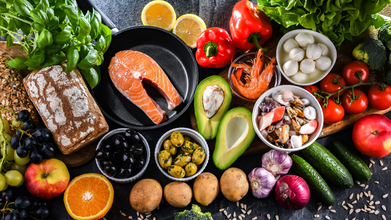
The Mediterranean diet is inspired by traditional eating patterns in countries bordering the Mediterranean Sea, particularly in places like Spain, Greece and Italy. It recommends eating:
- Fruits and vegetables
- Whole grains
- Legumes and nuts
- Olive oil as the primary fat source
- Moderate fish consumption
- Limited red and processed meats
This diet is well known for its cardiovascular benefits and its strong anti-inflammatory and antioxidant properties have prompted scientists to explore its impact on respiratory health.
The Study That Sparked Attention
A large, scale prospective study through the Seguimiento Universidad de Navarra (SUN) Project aimed at finding out if a Mediterranean diet could lower asthma in adults. The project, done by the team at Universidad de Navarra, included data from more than 17,000 university graduates who were tracked for almost 13 years in Spain.
The study participants did not have asthma at the time of registration. Their food intake was assessed through a validated Mediterranean Diet Score (scale of 0 to 9), and incidences of asthma were recorded with the help of follow, up questionnaires.
The study showed that people sticking to the Mediterranean diet the most became adults with asthma 42 percent less than those who followed the diet the least. Additionally, after changing for confounders like age, smoking, physical activity and BMI, this protective effect was still significant from the statistical viewpoint.
The study results were covered by EMJ Reviews and appeared among respiratory research publications, thus attracting the attention of the makers of the next major public health policy measure.
Why Does Diet Affect Asthma?
Essentially, asthma is an inflammatory disease as chronic inflammation of the airways causes the narrowness of the bronchi which results in symptoms. The Mediterranean diet is rich in:- Omega-3 fatty acids from fish, which help regulate inflammatory pathways
- Polyphenols and antioxidants from fruits and vegetables, which reduce oxidative stress
- Healthy monounsaturated fats from olive oil, which may support immune balance
What To Remember
The results are promising but one should keep in mind that this was an observational study. This means that the researchers found associations but not direct cause, and, effect relationships. Diet was self, reported, and although the researchers made adjustments for various confounding factors, there is always a possibility of residual bias.Some previous cohort studies have yielded inconsistent results, and experts concur that randomized controlled trials would produce more reliable evidence.
The Bigger Picture
Despite the different restrictions, the investigation still contributes to the increasing volume of literature indicating that diets affect not only cardiac health or body weight but could have impacts on lung health as well. Since diet is a changeable element by an individual, encouraging Mediterranean, type eating habits might be considered among the comprehensive approaches for forestalling chronic inflammatory diseases, such as asthma.Though additional research is necessary to be sure, the main idea is increasingly conspicuous: our diet today might determine our respiratory health over the next several years.
- Follow Us :


© 2024 Bennett, Coleman & Company Limited