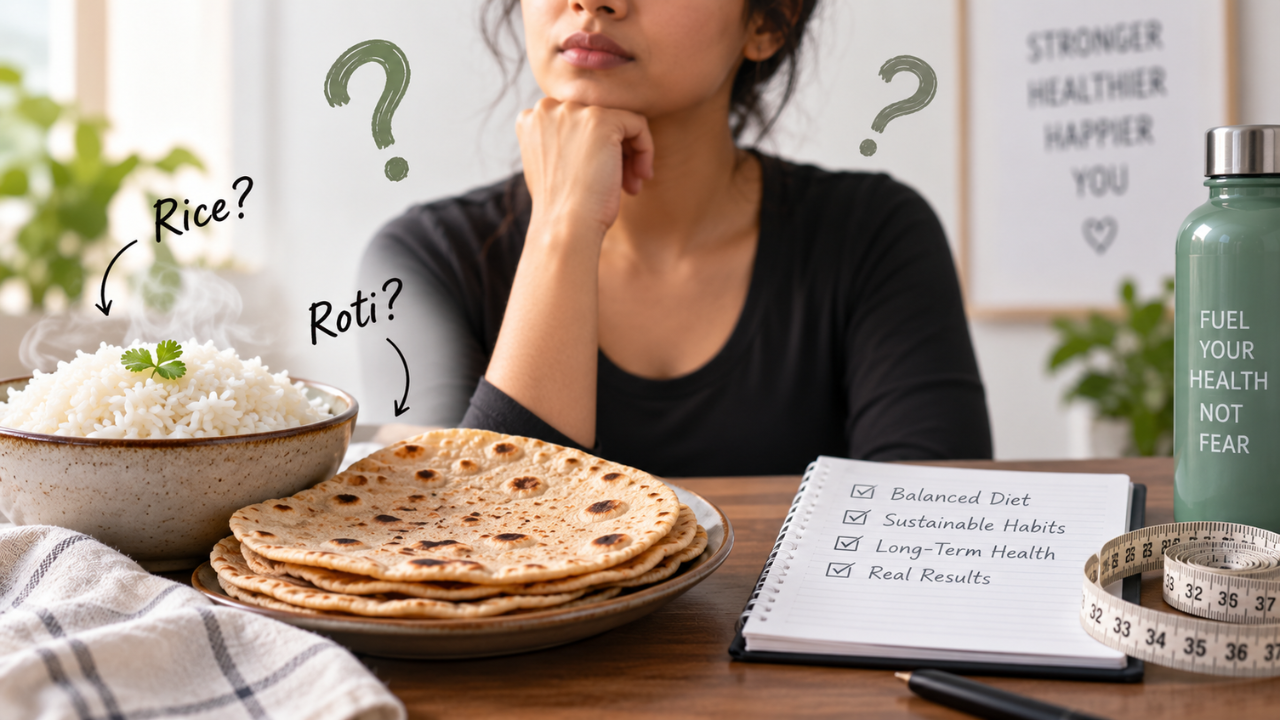
Carbohydrates have unfortunately become one of the most misunderstood parts of the diet, particularly when it comes to weight loss. Cutting out rice, roti or other carbohydrate-rich foods completely is not necessarily the answer. Carbohydrates are an important source of energy, and the issue is more about the quality, quantity and overall balance of the diet than the nutrient itself.Why Cutting Carbs Completely May Not Be The AnswerFor Indians, this becomes particularly relevant because staples such as rice, roti, poha, idli and other grain-based foods are an integral part of our traditional diets. Removing them completely can sometimes make a diet unnecessarily restrictive and difficult to sustain. It may also mean missing out on foods that provide fibre, vitamins, minerals and other nutrients, particularly when whole grains and minimally processed sources are chosen.Also read: The New Nutrition Gap: Why Knowing What To Eat Doesn't Mean We Actually Eat ItNot All Carbohydrates Are Created EqualWhat matters is understanding the difference between refined and high-quality carbohydrate sources. A diet dominated by refined flour, sugary foods, sweetened beverages and highly processed snacks is very different from one that includes whole grains, millets, legumes, vegetables and appropriately portioned rice or roti.The Bigger Picture Behind Weight LossAnother common mistake is replacing carbohydrates with excessive amounts of protein or fat without considering the overall nutritional balance. Weight loss ultimately depends on overall energy intake, dietary quality, physical activity, sleep and several other factors—not simply whether carbohydrates are present on the plate.Also read: Protein Is In Everything, But Is Every Source Actually Healthy? Experts ExplainHow To Build A More Balanced Indian Plate A practical approach is to focus on portions and pair carbohydrates with protein, vegetables and healthy fats. For example, roti with dal and vegetables or rice with dal, vegetables and curd can form a balanced meal. Choosing less-refined carbohydrate sources and paying attention to portion sizes can make the diet both nutritious and sustainable.Carbohydrates do not need to be feared or completely eliminated. The goal should be to eat the right kind, in appropriate portions, as part of a balanced diet rather than following the latest anti-carb trend.