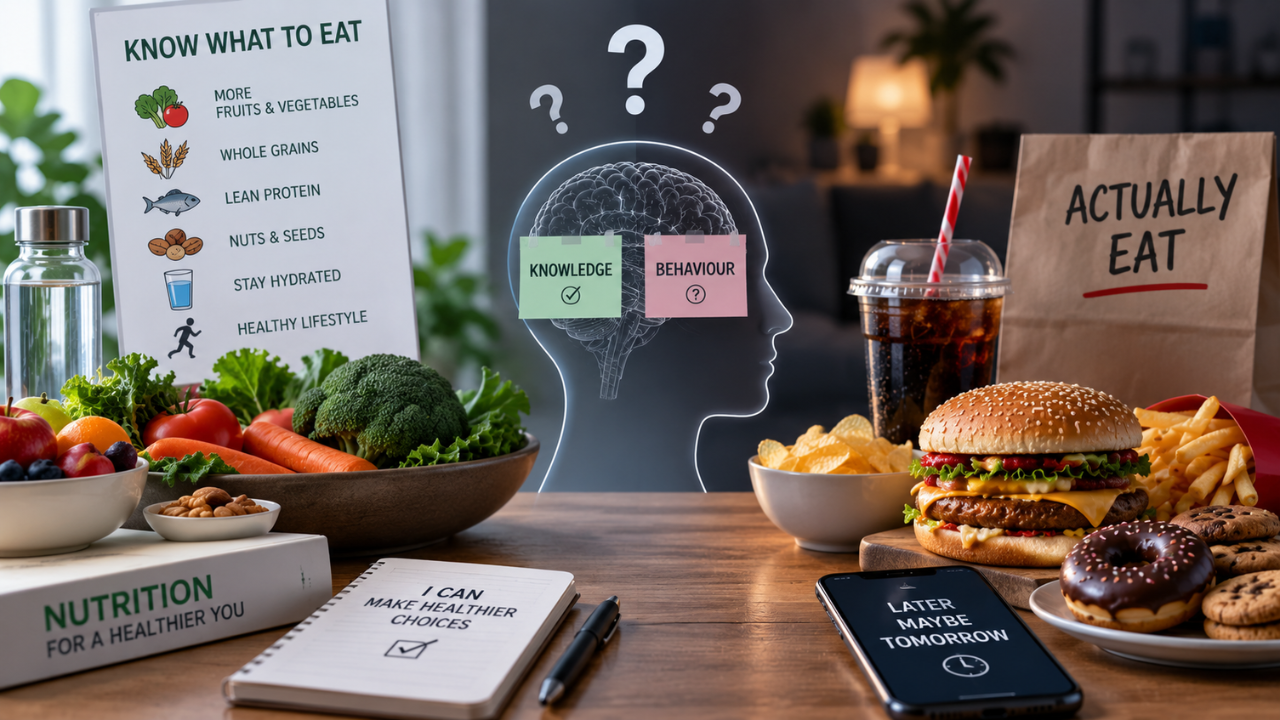
Healthy eating is something every individual is aware of, not only because of various online conversations around it but also because it is one of the subjects that is being discussed widely amongst individuals today. From taking up diet charts with the help of AI to taking details from social media reels shared by several wellness influencers – information about food and health is readily available for all age groups at any time and it is customised according to their preferences, thanks to our algorithms. Most people are aware that a healthy diet includes vegetables, fruits, home cooked meals, adequate water intake, and most importantly, limited consumption of outside food like fried and processed foods.Unhealthy Eating Habits Continue To Rise Despite Awareness Also read: From Pickles to Papad: Which Everyday Indian Foods Could Be Worth Rethinking for Cancer Prevention?Despite growing awareness amongst the population, unhealthy eating habits continue to rise, which is eventually contributing to various lifestyle diseases like obesity, diabetes, cardiovascular diseases, and other health issues. For most people, lack of information and knowledge about nutrition is not a challenge anymore, but the inability to act on that knowledge and consistently following through the habits and incorporating them into day-to-day life is. This growing gap between knowing what to eat and not being able to follow through is called the new nutrition gap. Many individuals understand what a healthy diet is? yet struggle due to busy schedules, long working hours, and stress. Also, the convenience of ordering food often leads to dietary choices, that do not support long-term health. It is common for individuals to skip meal preparation, rely heavily on packaged food and snacks or food from restaurants, and beverages during stressful times despite being aware of their harmful impact on health. “Social settings” add another challenge to sticking to one’s diet as planned. Office celebrations, family gatherings, and social outings are often centred around calorie dense foods and sugary treats. In addition, many people follow an all or nothing approach to eating, believing that a single indulgence has undone all their progress. This mindset can also make healthy eating feel difficult and unsustainable in the long run.Also read: Protein Is In Everything, But Is Every Source Actually Healthy? Experts Explain Closing this gap does not require restrictive diets or unrealistic rules. It is about building small, practical and healthy habits that can follow consistently over time. To maintain the same, some of the following small habits can be helpful: 1. Make healthy the easy option Healthy foods are more likely to be consumed when they are easily available. Stocking fruits on weekends and washing them in advance, soaking chana or moong or pulses at night, keeping homemade curd or buttermilk in the office fridge can significantly improve dietary choices. As it is rightly said, “If healthy food is ready and available, you will certainly choose it.”2. Stop punishing yourself A healthy lifestyle is not determined by a single meal. Occasionally eating a vada pav or enjoying a dessert, festive treats are not going to harm long-term health when it is balanced with nutritious meals throughout the day. Instead of feeling guilty after eating an unhealthy food and worrying over its impact your progress, one should simply focus on continuing the prioritising balanced eating habits with their next meal. 3. Make it personal Don't eat healthy because an influencer said so. Eat healthy because you want to feel lighter, sleep better, and not feel acidity every evening. It is important to take guidance from a professional like a Certified Registered Dietiian when you are not able to follow through with your diet or are facing any other challenge instead of depending solely on unreliable nutrition advice and social media trends. Healthy eating becomes easier when one makes conscious choices of maintaining a balanced diet, regular meal planning, mindful eating, and realistic lifestyle changes. By Vidisha Parekh, Chief Dietician at Lilavati Hospital and Research Centre, Mumbai