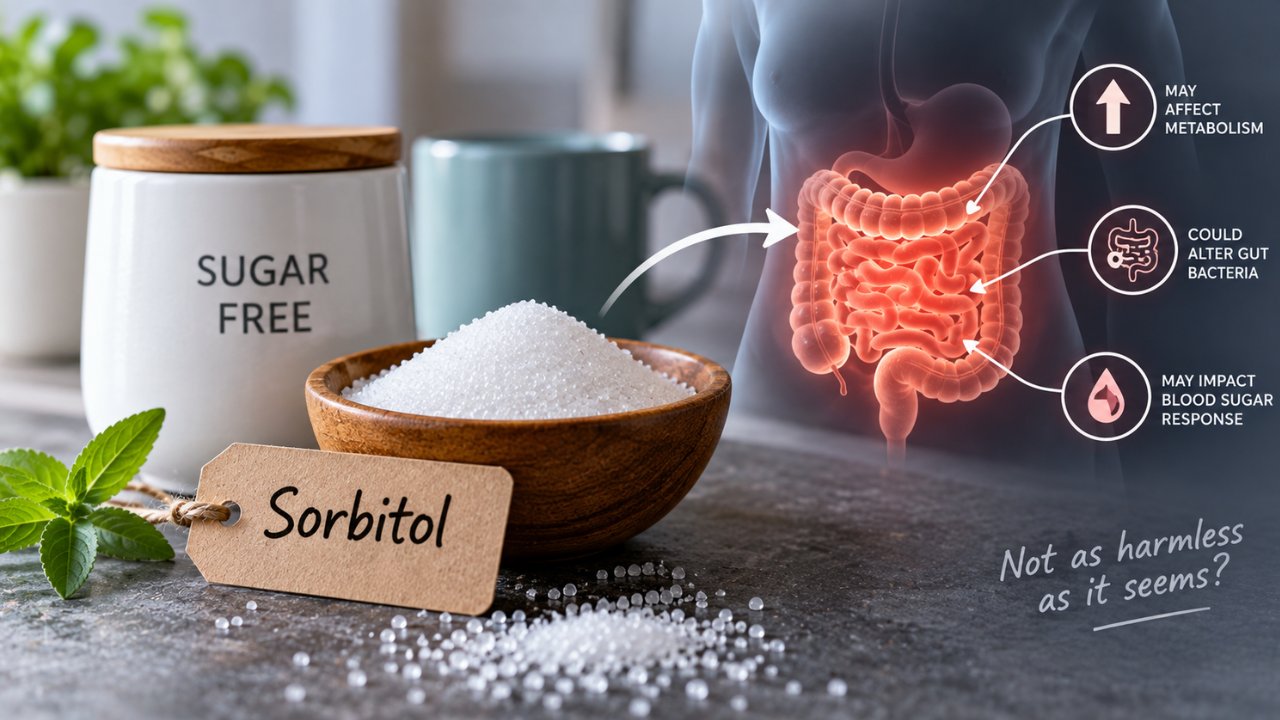
Sorbitol is often seen as a healthier alternative to sugar. The sugar alcohol is widely used in sugar-free chewing gum, candies and other low-calorie foods, offering sweetness with fewer calories than regular sugar. But new research suggests that sorbitol may not just pass through the digestive system as it was previously assumed. Scientists have found that after reaching the liver, sorbitol may be converted into a compound related to fructose, where it could trigger metabolic changes associated with fatty liver disease. How Sorbitol Interacts With The Body? Researchers from Washington University in St. Louis used zebrafish models to analyse what happens to sorbitol after it enters the body. They found that after eating a meal, sorbitol can be produced naturally in the intestine from the glucose. What happens next depends partly on the bacteria residing in the gut. Certain bacteria, including Aeromonas strains that degrades sorbitol, can consume sorbitol and convert it into a harmless bacterial byproduct. This may act as a protective filter, preventing the compound from reaching the liver. But when those bacteria are absent, more sorbitol may pass through to the liver. Researchers found sorbitol can be converted into a derivative of fructose. The researchers describe sorbitol as being “one transformation away from fructose”, because of how closely the two compounds are connected through metabolism.Also read: Should You Really Cut Out Rice And Roti To Lose Weight? Expert Explains The Truth About Carbs Could Sorbitol Affect Liver Health? The metabolism of fructose in the liver has been linked to steatotic liver disease, a condition in which excess fat accumulates in liver cells. The new findings suggest that sorbitol may have some of the same metabolic effects. The researchers found that sorbitol could contribute to processes linked with liver fat accumulation when the gut's ability to break it down was impaired. However, this does not mean that eating sugar-free gum or food containing sorbitol will automatically and mandatorily cause fatty liver disease. The research was conducted in zebrafish, and the study is exploring a biological mechanism rather than demonstrating that ordinary dietary sorbitol causes liver disease in humans.Also read: Bill Ackman’s Daughter Gets Experimental Treatment For Vision Loss: When Can Mitochondrial Transplants Help? Gut Bacteria May Make A Difference One of the more unexpected findings was the potential role of the gut microbiome in preventing this scenario. At relatively low levels, including amounts naturally obtained from fruit, researchers found that bacteria appeared capable of breaking down sorbitol. Problems may surface when the amount of sorbitol becomes too high for these microbes to process efficiently. That could happen through consuming large quantities of products that contain sorbitol. High glucose intake may also increase the amount of sorbitol produced inside the intestine. The researchers therefore suggest that how much sorbitol is consumed and the composition of an individual's gut bacteria could influence what happens to the compound and thus shape the risk of liver disease. The study does not establish that sorbitol is harmful for humans even when consumed in moderate amounts. In fact, sorbitol occurs naturally in fruits such as stone fruits, and the researchers noted that relatively low amounts are generally handled effectively by gut bacteria. The findings challenge the assumption that sugar substitutes are automatically metabolically healthy simply because they contain less sugar or fewer calories.