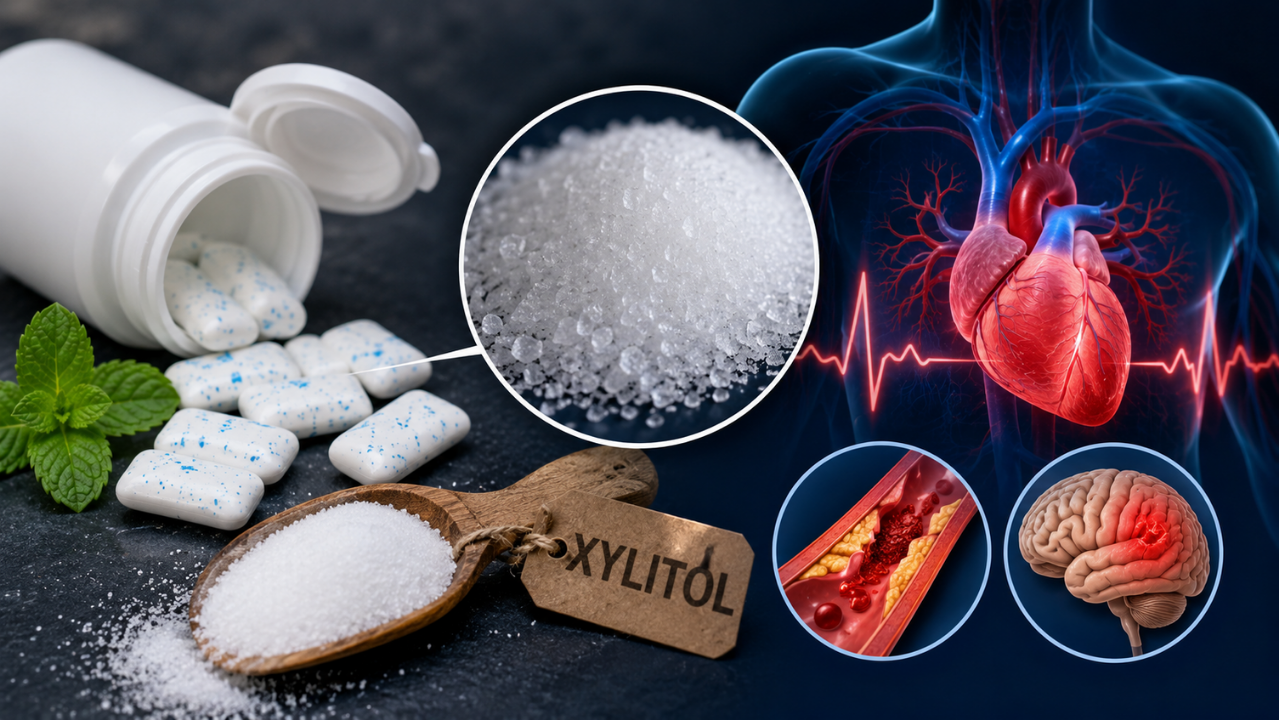
piece of sugar-free chewing gum may seem like a healthier choice. But new research is putting one of its most excessively used ingredients under the microscope: xylitol. It is a sugar alcohol used in sugar-free chewing gum, mints, toothpaste, jam, yoghurt, and other products. The sugar-free sweetener has been linked with a significantly higher risk of heart attack, stroke and cardiovascular death in a large new study. Researchers found that people with the highest blood levels of xylitol had a 57% higher risk of a major cardiovascular event over six years than those with the lowest levels. The findings were presented at the European Society of Cardiology (ESC) Congress 2026. It was based on 17,710 people from two long-running population studies. The researchers also found an 18% higher risk over 30 years in the European group. But before you throw every packet of sugar-free gum into the bin, remember that the study only found an association, not definitive proof that consuming xylitol directly increases the risk of heart attacks or strokes. What Is Xylitol? Xylitol is a sugar alcohol, also known as a polyol. It occurs naturally in tiny amounts in some foods and is also produced by the human body during glucose metabolism. Xylitol tastes almost the same as sugar but contains fewer calories, and it does not promote tooth decay in the same way ordinary sugar does. That's why it has become a popular ingredient in sugar-free gum, mints, and other oral-care products. According to the ESC, the concerning part is that commercially added amounts of xylitol can be more than 1,000 times higher than the tiny quantities naturally present in foods and the body.Also read: FSSAI Proposes Red Front-Of-Pack Warning Labels On Junk Food: How Will This Benefit Consumers’ Health? How Was Study Conducted? Researchers divided participants according to their blood xylitol levels and compared the highest quarter with the lowest quarter. In the Canadian cohort, those with the highest levels had a 57% greater risk of major adverse cardiovascular events over six years after adjusting age, sex, smoking, diabetes, blood pressure and cholesterol. In the European cohort, the association remained visible over a much longer period, with an 18% higher risk over 30 years. One of the most important findings is that 57% does not mean that eating a piece of xylitol gum makes your personal risk of a heart attack jump by 57%. The researchers measured xylitol circulating in the blood, rather than asking participants how much xylitol-containing food they consumed.Also read: Everest Hing Sale Prohibited By FSSAI; 3 Other Masalas Flagged For Violations Xylitol May Enable The Formation Of Blood Clots The researchers had previously investigated how xylitol might influence blood clotting. Their laboratory work suggested that xylitol can make platelets more reactive, equipping them to form clots. Dr Marco Witkowski of Charité University Hospital in Berlin, who presented the research, said, "Xylitol can enhance the ability of platelets to form clots." When a blood clot blocks an artery supplying the heart, it can trigger a heart attack. If a clot blocks blood flow to part of the brain, it can cause an ischaemic stroke. Witkowski added, "Our long-term findings highlight how little we know about the cardiovascular safety of xylitol." The study does not establish that ordinary consumption of products containing xylitol causes heart attacks or strokes, and it does not mean that replacing sugar with xylitol is automatically dangerous.