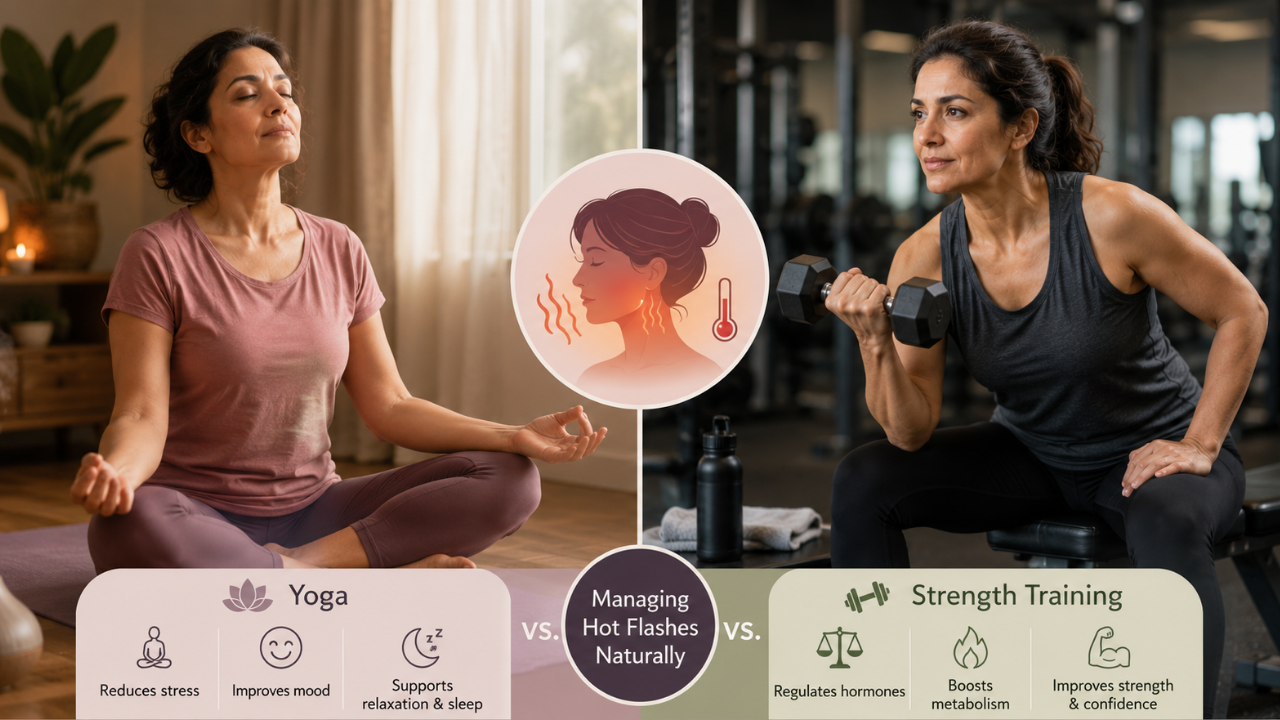
Perimenopause is a natural transition in a woman’s reproductive life, but the hormonal fluctuations during this phase can bring several uncomfortable symptoms. Hot flashes—sudden episodes of intense warmth, sweating, flushing and sometimes palpitations—are among the most common. They can interfere with sleep, work, mood and overall quality of life. While hormone therapy and non-hormonal medications can be considered for women with bothersome symptoms, lifestyle measures and exercise also play an important role. Two commonly discussed approaches are yoga and strength training. But which one is more helpful for hot flashes? Yoga and strength training Both help—but in different ways, and the evidence leans toward strength training for the vasomotor symptoms themselves, with yoga excelling at symptom management and distress reduction. The physiological backdrop Perimenopausal estrogen decline destabilizes the hypothalamic thermoregulatory "set point," narrowing the thermoneutral zone — the window in which the body doesn't trigger sweating or shivering. This narrowing is why small temperature fluctuations suddenly provoke a hot flash. Exercise-related improvements in insulin sensitivity, vascular tone, and fat distribution appear to help widen that zone back out, which is part of why both modalities show benefit, though through different mechanisms. What The Evidence Shows? Strength training: Strength training: More than just building muscle Strength or resistance training is another valuable component of exercise during perimenopause. Declining oestrogen levels during the menopausal transition can contribute to loss of muscle mass, changes in body composition and progressive reduction in bone density. Resistance exercise helps preserve muscle strength and supports bone health. It can also improve metabolic health, physical function and confidence. However, unlike some mind-body practices, strength training does not have strong evidence to suggest that it directly reduces hot flashes in every woman. Regular resistance exercise improves body composition, bone density, and insulin sensitivity — all relevant since declining estrogen affects metabolic and skeletal health. Several studies show reduced frequency and severity of hot flashes with consistent resistance training, likely mediated through better thermoregulatory control and reduced visceral fat, which is independently linked to more frequent flashes.Also read: Working Throughout Pregnancy: What's Safe And What Isn't? Yoga: Yoga combines physical movement, controlled breathing and relaxation. Although yoga should not be considered a replacement for medical treatment when hot flashes are severe, it may be particularly useful for women whose symptoms are accompanied by stress, anxiety or poor sleep. Breathing and relaxation practices may help reduce sympathetic nervous system activation and promote a sense of calm. Regular yoga may also improve sleep, flexibility, mood and general well-being, which can indirectly make menopausal symptoms easier to cope with. Gentle forms of yoga, stretching and mindfulness-based practices can be especially suitable for women who are new to exercise. Strong evidence supports yoga's role in reducing the bother-and distress of hot flashes, sleep disruption, and mood symptoms — even in trials where flash frequency itself doesn't change much. The parasympathetic activation from slow breathing and mindful movement appears to lower the sympathetic overactivation that seems to trigger flashes. Yoga also directly targets anxiety and sleep quality, both of which commonly amplify perimenopausal symptom burden.Also read: THIS Is What Happens To Your Body When You Do Yoga Everyday Bottom line yoga is better studied for symptom perception and coping, strength training is better for the underlying physiology— weight, bone loss, cardiometabolic risk — that worsens with estrogen decline. Practical takeaway Rather than choosing one, combine both: Strength training 2–3x/week, focused on compound movements (squats, deadlifts, presses) for bone and metabolic protectionYoga or slow-flow/restorative practice 2–3x/week, especially in the evening, for sleep quality and hot flash distress Nuance Worth Flagging Not all yoga is equal here — restorative or yin styles have better evidence for symptom relief than vigorous vinyasa or power yoga, which can transiently spike core temperature and sympathetic activation, occasionally triggering a flash rather than easing one. Pacing and breathable clothing matter more than intensity per se. Women should also identify individual hot-flash triggers. Common triggers can include excessive heat, spicy foods, alcohol, caffeine, stress and smoking. Wearing breathable clothing, maintaining a cool sleeping environment and maintaining a healthy weight may also help. Most importantly, persistent or severe hot flashes should not simply be accepted as something a woman has to “live with.” If symptoms are affecting sleep, daily functioning or quality of life, consultation with a gynaecologist can help identify appropriate treatment options. One must also never forget that exercise is adjunctive, not a replacement for MHT (menopausal hormone therapy) in women with significant vasomotor symptoms. The goal during perimenopause is not merely to control hot flashes, but to maintain muscle, bone health, cardiovascular fitness, mental well-being and overall quality of life.By Dr. Asha Dalal, Director, Obstetrics and Gynecology, Sir H. N. Reliance Foundation Hospital