
- Health Conditions A-Z
- Health & Wellness
- Nutrition
- Fitness
- Health News
- Ayurveda
- Videos
- Medicine A-Z
- Parenting
These Steps Will Wash Blueberries The Right Way And Remove Pathogens And Pesticides Residue
Credits: Canva
On Tuesday, the US Food and Drug Administration (FDA) announced a recall of 12,000 pounds of organic bulk blueberries which was distributed by Alma Pal International LLC. According to the agency, the blueberries have been tested positive for Listeria monocytogenes, a potentially dangerous bacteria known to cause foodborne illness.
READ: FDA Recalls Blueberries Over Listeria Risk Ahead of July 4th Festivities
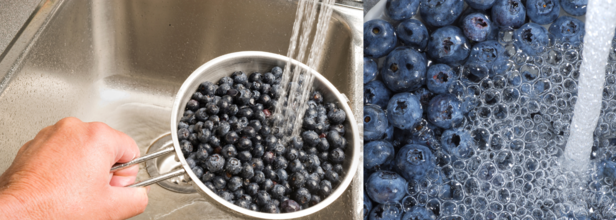
Amid all this, one question that concerns many is how to wash blueberries the right way?
While water alone can remove debris, food scientist Bryan Quoc Le, Ph.D., says, as reported in marthastewart.com that it is not enough to eliminate pathogens or pesticide residue.
However, there are tips and tricks that can remove such residue. For this, your household staples like white vinegar or baking soda can work.
Vinegar's low pH makes it very effective at dissolving certain pesticide residues and inhibiting bacterial growth. Baking soda too works well when it comes to neutralizing bacteria through its alkaline nature. However, it may leave a bitter residue if it is not rinsed properly.
Also Read: Healthier Popcorn Alternatives You Can Try For Your July 4 Movie Nights
Why Isn't It Enough To Just Rinse Blueberries With Water?
Simply rinsing blueberries with water may wash away visible dirt, but it’s not enough to tackle bacteria, mold, or pesticide residues. According to Le, using vinegar or baking soda is more effective, as both alter the pH of the berry’s surface—creating an environment that disrupts microbial growth and helps extend shelf life better than neutral water.
Washing Trick: Why Do Baking Soda and Vinegar Work?
Baking Soda
As an alkaline cleaner, baking soda is effective against a different range of bacteria. However, it may leave a slightly bitter residue if not rinsed off thoroughly.
Vinegar
White distilled vinegar is ideal for cleaning produce. Its acidity helps break down certain pesticides—especially those with a basic pH—and inhibits bacterial growth. “It’s the pH that matters, not the vinegar type,” says Dr. Le. Apple cider vinegar works too, but white vinegar is more affordable and equally effective.
How To Clean Blueberries The Right Way?
For vinegar wash, follow these steps:
- Start with mixing 3 parts cold water to 1 part white vinegar. Use a large bowl to mix properly.
- Now, add blueberries and let it soak for 5 to 10 minutes.
- Wash your hands and then you can then wash the blueberries thoroughly, rub it with your hands to help loosen debris.
- Once done, drain the water and wash the blueberries again with running cold water to remove any vinegar residue
- Dry completely on a clean dish towel or paper towel before you store it in the refrigerator.
For baking soda wash, follow these steps:
- In a large bowl, dissolve 1 teaspoon of baking soda in 2 cups of cold water. Stir well until fully mixed.
- Gently add the blueberries to the solution and let them soak for 5 to 10 minutes. This helps loosen dirt, bacteria, and pesticide residues.
- Drain the berries and rinse them well under cool running water to remove any remaining baking soda.
- Spread the blueberries out on a clean dish towel or paper towels and pat them dry. Let them air dry completely before storing in the refrigerator to prevent mold growth.
Note: Make sure you do not soak the blueberries for longer than 15 minutes. Food scientist warns that the skin can begin to degrade if the blueberries are soaked for too long and it can cause flavors to dissolve in the cleaning solution.
E. Coli Outbreak Linked To Cheddar Cheese, 7 People In 3 States Affected
Credits: Canva/FDA
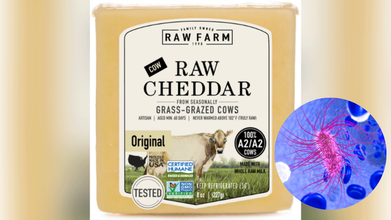
E. coli outbreak was linked to raw cheddar cheese. This has allegedly sickened seven people across multiple states. Federal regulators on Sunday announced that an E. coli outbreak infected seven people in three states and it has been traced to raw cheddar cheese product. Individuals who have been affected are children, ages 3 or younger across California, Texas, and Florida. The US Food and Drug Administration (FDA) noted that out of the seven cases, fiver were in California, one in Florida and another in Texas.
FDA said, "The FDA and CDC, in collaboration with state and local partners, are investigating a multistate outbreak of E. coli O157:H7 infections. As of March 14, 2026, a total of 7 confirmed infections have been reported from three states."
The officials have been able to trace the California producer RAW FARM, which is a family-owned company and is recognized as nation's largest producer of raw dairy products. FDA also noted that RAW FARM has declined to issue a voluntary recall despite agency's recommendation.
What Is RAW FARM's Response To The E.coli Outbreak?
The dairy farm denied any such allegations on its social media page. On Monday, it claimed that the health agency has made "false allegations" against the brand and that no tests have confirmed a positive match for the E.coli strain.
The statement by RAW FARM noted: "We disagree 100% with the allegations made by the FDA and CDC," the company said. "All of our products have been CONFIRMED to be negative for all harmful bacteria, including Ecoli 0157-H7. FDA has found NO Raw Farm products to be tested positive for Ecoli in the marketplace."
"Inaccurate statements made by the FDA and CDC linking our brand to an outbreak is egregious and extreme harassment towards our brand," it added.
Read: Does Heating Food Kill E.Coli?
What Have The Tests Shown?
However, the FDA confirmed that no RAW FARM-brand cheddar cheese products have been tested positive for E.coli. State partners have begun collecting product samples. FDA added that the investigators were able to track the infections using epidemiological data, which is a scientific method that analyzes the distribution, patterns, and causes of health-related events.
"Epidemiologic evidence indicates that RAW FARM-brand raw cheddar cheese products made by RAW FARM, LLC are the likely source of this outbreak," the agency said.
Of the three individuals who were interviewed, all reported eating RAW FARM-brand cheese, noted the federal regulators. They also added that local officials are working to gather more information for the other four cases.
As of now, two patients have been hospitalized, and no deaths have been reported.
While the company denied FDA's allegations, the agency released a notice urging consumers and retailers to exercise caution with the cheese and to sanitize any surface to prevent cross-contamination.
What Is E. Coli?
Escherichia coli, or E.coli is a bacterium that lives in the human intestine and is one of the most common causes of foodborne illness in the US and the UK. In June 2024, the UK Health Security Agency (UKHSA) warned that E.coli cases reported across the UK were part of a single outbreak. It also issued a list of recalled products to parents as the outbreak spread.
There are multiple species of E.coli, and some of them are also harmless. However, there are others that can result in mild symptoms, including nausea, fatigue, and diarrhea, while some can be even more serious and can lead to life-threatening symptoms.
Is Pasta Actually Unhealthy? Experts Say It’s All About Balance

Credits: Canva
Few foods feel as comforting as a warm bowl of pasta. Yet, despite its popularity across the world, pasta often gets a bad reputation when people talk about healthy eating.
For years, it has been labelled as the villain of many diets. People blame it for weight gain, bloating, and that sleepy feeling that sometimes follows a heavy meal. Because pasta is rich in carbohydrates, many assume it is automatically unhealthy or something that must be avoided while trying to lose weight.
Nutrition experts say that idea is far from the truth.
In reality, pasta can absolutely fit into a balanced diet. The key lies not just in the pasta itself but in how it is cooked, served, and paired with other foods.
Understanding What Pasta Really Offers
At its core, pasta is a source of carbohydrates. These carbohydrates break down into glucose in the body, which provides energy for everyday functions. This energy fuels the brain, supports muscle activity, and keeps the nervous system running smoothly. That is one reason athletes and physically active people often include pasta in their meals.
Wholewheat pasta brings additional benefits to the table. Because it uses the entire grain, it contains more fibre than refined white pasta. Fiber helps slow digestion, keeps you feeling full for longer, and supports healthy digestion.
There are also newer alternatives now widely available. Pasta made from chickpeas, lentils, or split peas often contains higher levels of protein and fiber than traditional wheat pasta. These options can be particularly helpful for people looking to increase plant based protein in their diet.
Even regular white pasta contains nutrients that many people overlook. During production, some varieties are fortified with important vitamins and minerals such as iron and B vitamins including thiamine and folate.
Portion Size and Balance Matter
When it comes to including pasta in a healthy diet, portion size plays an important role. A typical serving is around 75 grams of dried pasta per adult, which becomes roughly 180 to 200 grams once cooked.
The bigger issue often lies in how pasta dishes are prepared. Creamy sauces, excessive cheese, butter, and processed meats can quickly push the calorie count much higher. In contrast, pairing pasta with vegetables, lean protein, and healthy fats creates a far more balanced meal.
Simple additions like tomatoes, spinach, mushrooms, beans, lentils, seafood, or grilled chicken can transform pasta into a nutrient rich dish. A drizzle of olive oil and a generous portion of vegetables can make the meal satisfying without making it overly heavy.
Why Some People Feel Bloated After Pasta
Bloating after eating pasta is fairly common, but the cause can vary.
For some people, gluten may be the trigger. Individuals with coeliac disease cannot tolerate gluten, a protein found in wheat, and eating wheat based pasta can cause serious digestive issues.
In other cases, the problem may be certain carbohydrates found in wheat known as FODMAPs. These compounds can be difficult for some people to digest. When they reach the large intestine, bacteria ferment them, producing gas that may lead to bloating, cramps, or discomfort.
The way pasta is cooked can also make a difference. Pasta cooked al dente, meaning slightly firm to the bite, is digested more slowly than overcooked pasta. Cooling pasta after cooking, such as in pasta salads, can also increase resistant starch. This type of starch digests more slowly and may support gut health.
In the end, pasta itself is not the problem many people believe it to be. When eaten in sensible portions and paired with nourishing ingredients, it can be a satisfying and perfectly healthy part of everyday meals.
Fact Check: Is Water Stacking A Healthy Way To Stay Hydrated?
Credits: Instagram
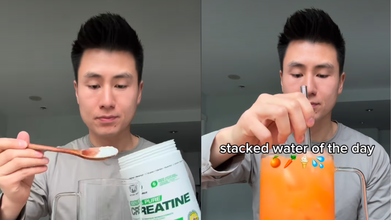
Water Stacking trend that went viral on TikTok, with the hashtag trending #WaterTok is a creative way to ensure that you drink enough water a day. Health and Me previously reported on the trend going viral and how it was the food scientist and content creator Jeffrey Ma who tarted this.
However, is it really a healthy way to hydrate yourself? Health and Me did a fact check and spoke to doctors to know the truth behind it.
Read: What Is the Viral Water Stacking Trend?
What Do Doctors Say About Water Stacking?
As per Dr Prabhat Ranjan Sinha, senior consultant - Internal Medicine at Akash Health care, "The concept might seem helpful, the procedure might lead to issues once the supplements are taken without the appropriate understanding about the needs of the body."
The increasing popularity of the so-called stacked water is a trend, explains Dr Sinha, where people use supplements in their drinking water. The supplements include collagen, creatine, electrolytes, vitamins or herbal powder. Dr Sinha explains that "The human body needs nutrients in a certain proportion and any additional intake can have undesirable results."
Edwina Raj, who is the Head of Services - Clinical Nutrition and Dietetics at Aster CMI Hospital, Bengaluru pointed out that while some of these supplements may offer benefits when used correctly, "adding multiple nutrients without understanding what the body actually needs can sometimes cause harm."
Ms Raj points says, "Every person’s body has different nutritional requirements, and excessive intake of certain supplements may lead to side effects such as stomach discomfort, kidney strain, or imbalance of nutrients in the body. For example, taking high amounts of creatine without proper guidance may affect kidney health in some individuals, especially if they already have underlying health issues."
Both experts highlight that taking unnecessary supplements may not provide any extra benefits if the person is already getting it through their diet. Dr Sinha also points out that when someone consumes an excessive amount of nutrients, it could overstrain organs like the kidney or liver.
"Several interactions can also be formed when several supplements are used together which can cause imbalances in electrolytes and metabolism or the interactions can interfere with the absorption," he says.
How Can One Stay Hydrated?
Both experts say that one can stay hydrated by drinking enough water and eating a balanced diet. Dr Sinha notes: "Supplementation is preferably to be taken when the deficiency is known to be medically or there is a certain health need. Following the trends of social media without necessarily knowing the state of the personal health can result in excessive consumption of specific substances or unneeded dependence on supplements."
Stay Hydrated In A Creative Way
Dr Sinha says that maintaining a healthy drinking habit is not an additive based habit that involves the use of additives, but a simple and consistent lifestyle choice.
Ms Raj points out a simple way is by starting the day by drinking a glass of water as soon as you wake up. This helps body rehydrate after sleep. "Keeping a water bottle nearby at your desk, in your bag, or in your car can remind you to drink water regularly throughout the day." She also says that setting small goals help, for instance - drinking a glass of water every hour, or setting reminders on phones.
What to do if water feels boring? "Those who do not like plain water may use the natural alternatives of adding lemons, mint leaves, or cucumber to improve the taste without putting any extra supplement," points out Dr Sinha, and seconded by Ms Raj.
Note: Please consult your nutritionist and doctor before adding any extra supplements or nutrients to your daily water intake. Health and Me Does NOT promote a user-generated content as a substitute for medically verified hydration techniques.
- Follow Us :


© 2024 Bennett, Coleman & Company Limited