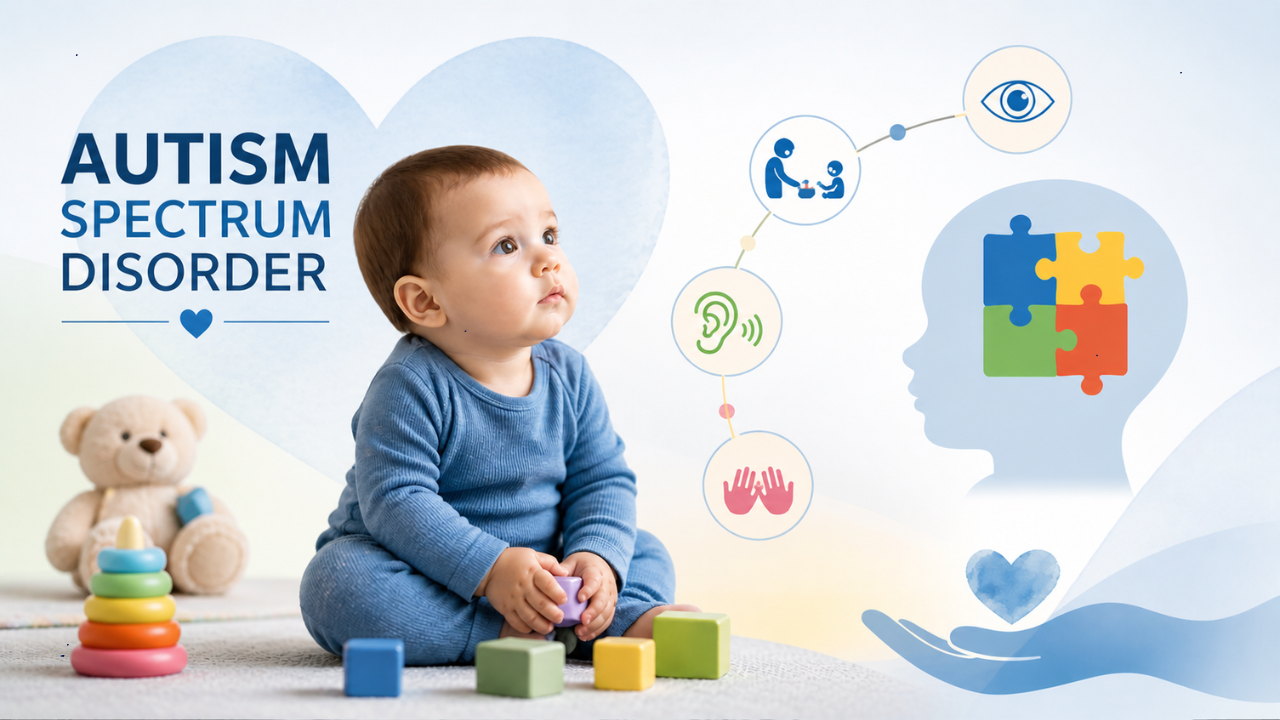
Early detection of autism in the first 1,000 days of life—covering pregnancy and the first three years—is crucial as the brain develops rapidly in this crucial window, according to Dr Shefali Gulati, Professor, Department of Pediatric Neurology at AIIMS. During a recent media interaction, Dr Gulati noted that autism spectrum disorder (ASD) is increasingly identified in children worldwide. She stressed that early detection and timely intervention can significantly improve developmental outcomes.“Early detection is crucial because the brain develops rapidly in the first 1000 days, including pregnancy and the first three years of life. Maximum neuronal connections are formed during this period. If autism is diagnosed early, intervention is more effective. Global data support that early intervention leads to better outcomes,” the pediatric neurologist said. What Is Autism? Autism spectrum disorder is a neurodevelopmental disorder in which social interaction and communication are affected, and it can be seen in the early developmental period. Dr Gulati said that the disorder can now “be identified even in the first year of life. Tools have been developed for children aged 1 to 18 months. At 12 months, sensitivity is about 90 per cent, and at 18 months, it is about 98.7 per cent,” Dr Gulati said. Further, the expert explained that autism is a spectrum disorder, which means that not everyone has all the symptoms. Every symptom or sign will not be present in every individual, she said, adding that the severity also differs from person to person. So, two children can be completely different. The symptoms seen in autism, such as difficulties in social interaction, can also be present in neurotypical individuals. “Earlier, terms like 'normal' and ‘abnormal' were used, which were later replaced with ‘neurotypical’ and ‘special needs’. Now, the concept is neurodiversity. Just like our five fingers are different, individuals also fall along a spectrum. This means we accept that variation as part of normalcy,” the neurologist said. Autism: What Are The Red flags The expert clarified that autism is diagnosed clinically through developmental history and behavioral observation, and does not require complex laboratory tests. Parents, she said, play a key role in identifying early developmental delays. Red flags include: lack of response to name, absence of meaningful words by 15–16 months, failure to form two-word phrases by 24 monthsShe emphasized that these signs must be persistent and consistent to warrant clinical attention. The expert noted that children with autism may prefer to play alone rather than with others. It also “involves restricted, repetitive patterns of behavior and interests, such as moving hands repeatedly, flapping hands, or toe walking”. “What happens is that these children may be preoccupied or super-focused on a particular part of a toy,” she said. Dr Gulati pointed to a combination of genetic, epigenetic, and environmental factors associated with autism, including air pollution, pesticide exposure, parental age, and early screen exposure. Autism: Why Prevalence Is Rising Highlighting global data, Dr Gulati said autism prevalence has risen sharply, with CDC estimates suggesting about 1 in 31 children affected in recent reports, while WHO estimates indicate about 1 in 100 globally. She noted that while improved screening and awareness contribute significantly to rising diagnoses, there is also evidence of a genuine increase in cases. Autism prevalence is higher in boys, though rates in girls are increasing. The neurologist cautioned that autism is a multifactorial condition with no single identifiable cause. Causes include genetic, epigenetic, and environmental factors. Genetic factors show high concordance in identical twins (60–90 per cent). Recurrence risk varies depending on family history. Environmental factors are significant, including air pollution, pesticide exposure, and parental age. Advanced paternal and maternal age may affect genetic expression. Epigenetics—how genes are expressed based on environment—may play a key role. Screen time is another factor. Studies show that higher and earlier screen exposure is associated with increased autism risk. Calling for greater awareness, Dr Gulati urged a shift in focus from labelling to early support and structured intervention. “The goal is not the label, but helping the child reach their full potential through timely and appropriate care,” she said. With advancements, early detection tools are improving, including video-based assessments and AI-supported tools. Prevention strategies include primary, secondary, tertiary, and primordial levels. Currently, there is no clear primary prevention, so early diagnosis (secondary prevention) is key, the expert said.