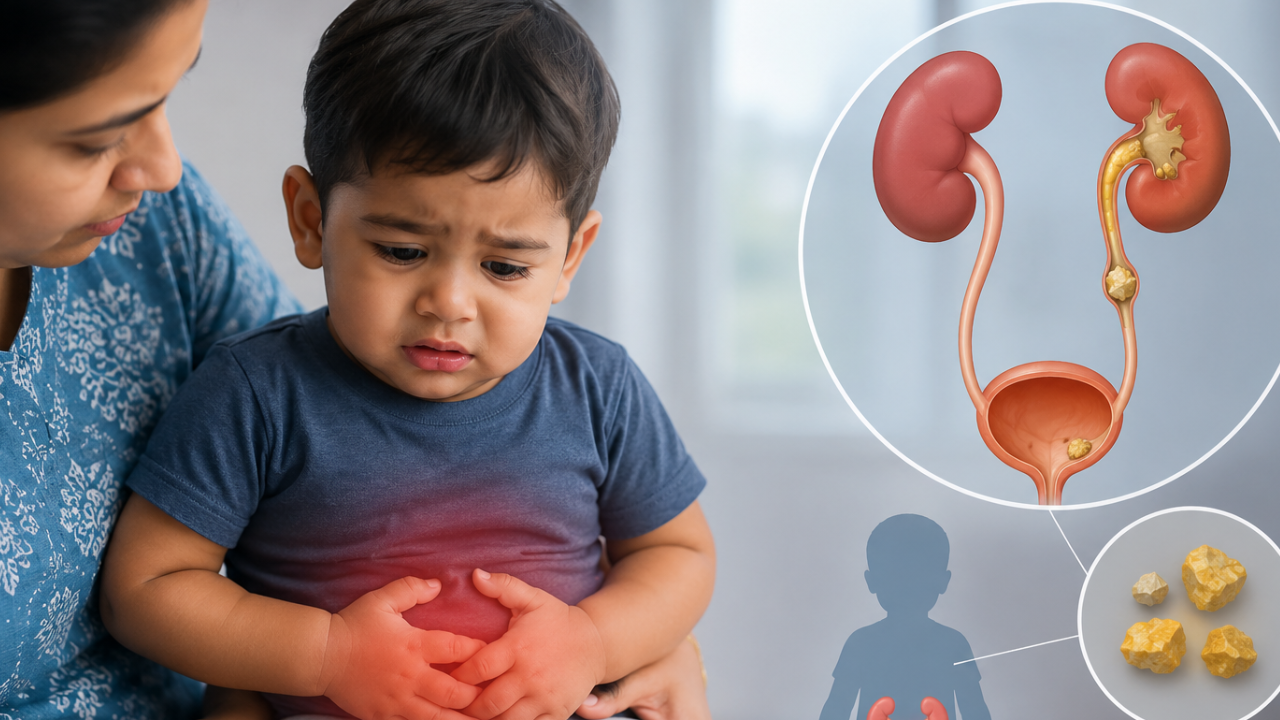
A 20-month-old toddler from West Bengal who suffered from recurring urinary tract infections (UTIs) for six months was eventually diagnosed with cystinuria, a rare inherited metabolic disorder that causes recurrent kidney stone formation. About The Case The diagnosis came after the toddler experienced persistent UTIs over a period of six months. After multiple episodes of infection couldn’t be solved despite treatment, the doctors discovered the rare condition. Initially, the doctors believed that it could be vesicoureteral reflux, a condition in which urine flows backward from the bladder towards the kidneys. However, more investigations revealed an unusual kidney stone caused by cystinuria, an inherited disorder that leads to excessive amounts of the amino acid cystine in urine. As cystine dissolves poorly in urine, it can crystallise and form stones, which may block urine flow, trigger recurrent UTIs, and damage the kidneys if left untreated for a long time. Doctors at a Bengaluru hospital treated the child using a minimally invasive procedure to remove the stone. Read more: New Blood Test May Predict Alzheimer's Symptoms At Least 4 Years In Advance What Is Cystinuria? Cystinuria is a rare inherited metabolic disorder caused by mutations in genes that are responsible for transporting certain amino acids in the kidneys. Usually, the kidneys reabsorb cystine after filtering blood. In individuals with cystinuria, this process does not work well. Large amounts of cystine pass into the urine. As cystine does not dissolve in urine, it forms crystals and eventually stones in the kidneys. The condition is caused when the child inherits one faulty gene from each parent. Parents who carry one altered gene usually have no symptoms themselves. Read more: Vitiligo Myths Debunked: It's Not Contagious or Caused by Food Symptoms & Treatment Unlike most kidney stones, which are more common in adults, cystinuria presents during childhood or adolescence. Parents must look out for the following symptoms in their children: Recurrent urinary tract infections Pain while passing urine Blood in urine Abdominal or flank pain Kidney stones at an unusually young age Difficulty passing urine if stones obstruct the urinary tract Although cystinuria has no cure, effective treatment and management can reduce stone formation and protect kidney function. It includes: Drinking large amounts of water to dilute urine and reduce the formation of stones Reducing salt intake Limiting consumption of excessive animal protein Medications that make urine less acidic (urine alkalinisation) Drugs that reduce cystine stone formation in severe cases Surgical or minimally invasive procedures to remove stones when necessary Parents must seek medical attention when the child faces the following: Two or more UTIs within six months or repeated infections over a year Recurrent fever without an obvious cause Intense pain during urination Blood in the urine Difficulty in gaining weight Persistent irritability Recurrent abdominal or back pain While most recurrent UTIs are caused by common anatomical or behavioural factors, persistent or unusual infections can occasionally point to rare inherited disorders like cystinuria that warrant medical attention. Early diagnosis and timely treatment can help prevent permanent kidney damage and significantly reduce the frequency of stone formations.