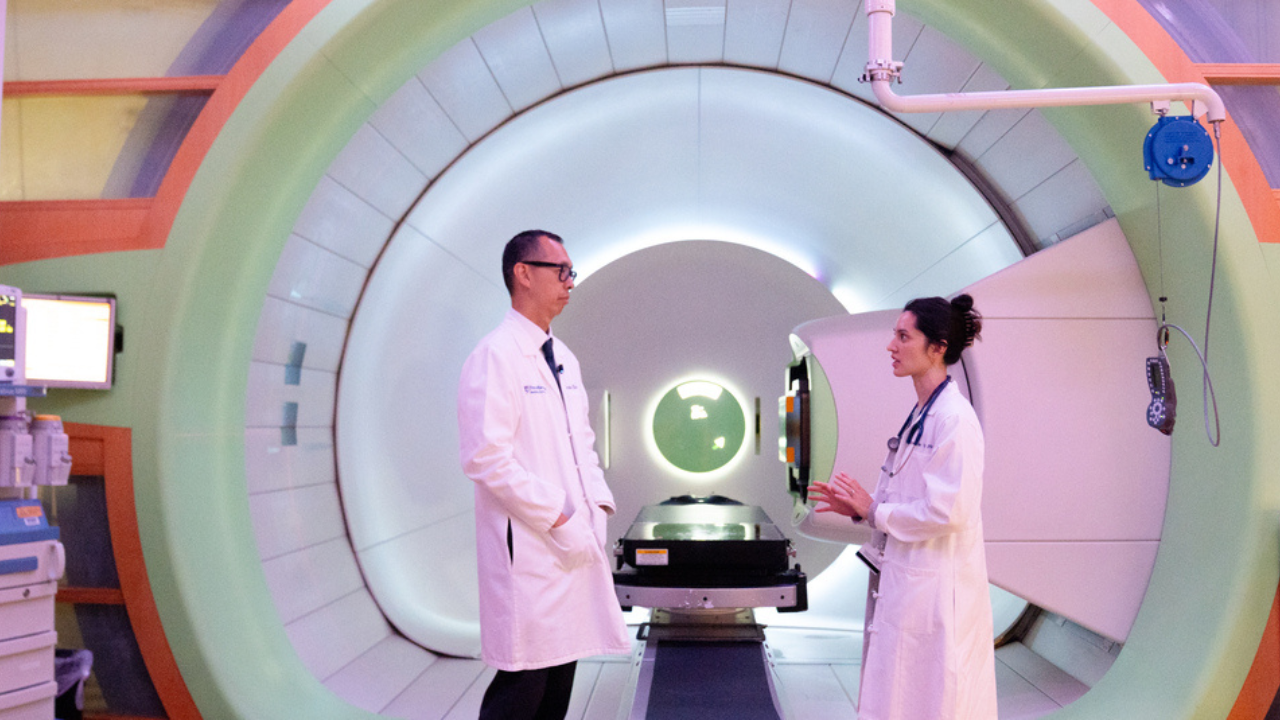
A team of US scientists is beginning a human trial of a new form of proton therapy that could potentially deliver cancer-killing radiation in less than a second.Known as FLASH proton therapy, the treatment requires fewer sessions — just five over about 10 days — and could potentially reduce the risk of treatment-related side effects.FLASH Proton Therapy: The First Human TrialThe Phase I clinical trial at the Abramson Cancer Center of the University of Pennsylvania represents the first time the “conformal,” or precise 3D-targeting, version of the technique is being tested in human patients in the United States.According to the University, the study will enroll 10 patients with recurrent head and neck cancer who have previously received radiation treatment and are not candidates for surgery.Patients with recurrent head and neck cancer typically face a difficult prognosis. While radiation therapy can help treat the cancer, it can also cause side effects in areas involved in important functions such as eating, drinking and swallowing.Patients in the trial will receive FLASH proton therapy five times in total, with each exposure lasting less than a second. They will complete all five sessions in less than two weeks.Penn Medicine recently completed a FLASH proton therapy clinical trial in pet dogs with cancer. The canine study used the same technology for head and neck cancer that will be used in the human trial.How Does FLASH Proton Therapy Work?Proton therapy is an advanced form of radiation therapy that uses high-energy protons, or positively charged particles, to damage the DNA of cancer cells and destroy them.Conventional radiation therapy is typically delivered in smaller doses, or fractions, over several weeks to target the tumour while limiting exposure to healthy tissue.For patients with head and neck cancer, this typically means 25–35 radiation fractions, delivered once a day, five days a week, over five to six weeks.Constantinos Koumenis, Professor of Radiation Oncology at Penn Medicine, explained that FLASH uses a larger dose and reduces the amount of time the patient is exposed to radiation.The total effective radiation dose remains the same, but it is divided into fewer fractions, with each delivered in a large, lightning-fast dose.What Is ConformalFLASH Proton Therapy?The type of FLASH proton therapy being tested in this clinical trial is known as ConformalFLASH proton therapy.The Penn clinical trial is designed to test the safety and feasibility of the approach. Researchers hope it could improve patients’ quality of life by reducing the time they spend in hospitals and travelling for treatment.If successful, the approach could be expanded to other cancer types and studied in larger Phase II and Phase III clinical trials focused on treatment outcomes, the researchers said.