
- Health Conditions A-Z
- Health & Wellness
- Nutrition
- Fitness
- Health News
- Ayurveda
- Videos
- Medicine A-Z
- Parenting
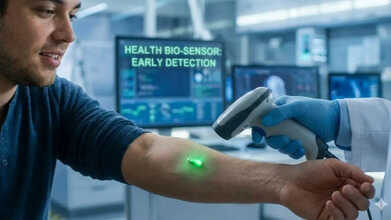
Skin Implant That Glows Green May Help Detect Illness In Advance, Scientists Reveal
Credits: AI Generated
Japanese researchers have developed a new form of wearable health technology that could reshape how illness is detected. The innovation takes the form of a “living skin” implant that emits a green glow when the body begins to show early signs of disease. Designed to sit within the skin, the implant offers a visible warning when internal health markers shift, potentially alerting users before symptoms become obvious.
How The Glowing Implant Works
The implant works by monitoring internal biomarkers, which are proteins linked to inflammation, stress, and disease processes. When these biomarkers move outside their normal range, the implant responds by glowing green. Rather than depending on a smartwatch or fitness tracker, this approach would allow people to see changes in their health directly on their skin, offering continuous feedback throughout the day and night.
The project was developed by scientists from Tokyo City University and the University of Tokyo, with technical support from engineers at RIKEN and Canon Medical Systems. The team has already tested the concept in mice, where the implant functioned as a living sensor display embedded in the skin.
Why Researchers Sought a New Approach
The idea behind the technology grew out of the limitations of current health monitoring tools. According to Professor Hiroyuki Fujita, who was involved in the study, many existing methods are either invasive or provide only brief snapshots of a person’s health. “Conventional approaches are often invasive or provide only snapshots in time,” he explained. “Our goal was to explore a biologically integrated system that enables continuous sensing and intuitive interpretation, even at home.”The research was also featured in the Daily Star as part of The Weird Science Drop newsletter, which highlighted a range of unusual scientific developments alongside this project.
No Batteries, No Replacements
One of the most striking aspects of the implant is what it does not need. The sensor is made from living epidermal stem cells, allowing it to survive through the skin’s natural regeneration process. Because it is maintained by the body itself, the implant does not require batteries or external power sources, as per Express UK.
Professor Fujita noted that this makes the technology fundamentally different from traditional devices. “Unlike conventional devices that require power sources or periodic replacement, this system is biologically maintained by the body itself,” he said. In laboratory experiments, the sensor remained functional for more than 200 days, with the engineered stem cells continuously renewing the skin while keeping the implant active.
Potential Uses Beyond Human Health
As per Express UK, while the technology is still being tested, the researchers believe its applications could extend well beyond human healthcare. They suggest it may be especially useful in animal research and veterinary medicine. Since animals cannot describe how they feel, a visible signal on the skin could help detect illness earlier and allow for faster intervention.
Although the implant is not yet ready for everyday use, it offers a glimpse into a future where health monitoring becomes part of the body itself, quietly working in the background and providing clear visual cues when something is not right.
UK NHS To Offer Weight-loss Jab Wegovy For People At Risk Of Heart Attacks, Stroke
Credit: iStock
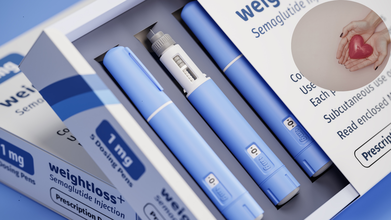
The UK National Health Service (NHS) is soon expected to roll out free weight-loss Wegovy jab to over a million people in England at risk of heart attacks and strokes.
The move is based on the recommendation of the National Institute for Health and Care Excellence (NICE), which said that overweight people with heart problems, or serious circulation problems in their legs, should have the weekly jab "as an extra layer of protection".
Developed by Danish drugmaker Novo Nordisk, Wegovy is primarily an antidiabetic medication used to treat Type 2 diabetes. People receiving the weight-loss drug Wegovy sustained weight loss for up to four years.
"We know that people who have already had a heart attack or stroke are living with real fear that it could happen again. The evidence from the clinical trial is compelling. It showed that people taking semaglutide alongside their existing heart medicines were significantly less likely to have another heart attack or stroke,” said Helen Knight, from NICE.
"Today's decision gives thousands of people in that situation an extra layer of protection, on top of the medicines they are already taking," she added.
Also read: Foundayo: US FDA Approves Eli Lilly’s GLP-1 Weight Loss Pill
Wegovy and Heart Risk
A November 2023 study, published in the New England Journal of Medicine, elicited a randomized clinical trial of tens of thousands of people, in which Wegovy - alongside existing heart medicines - was linked to a 20% reduced risk of heart attacks and strokes.
Importantly, benefits were seen early in the clinical trial, before significant weight loss occurred, suggesting the drug works directly on the heart and blood vessels, not just through weight loss, as per the NICE
The BBC reported that the UK faces a significant heart disease burden, and every year:
100,000 people get hospitalized due to heart attacks,
100,000 people experience a stroke
350,000 people live with peripheral arterial disease.
Sharon Hodgson, the health minister, said weight-loss drugs were a “gamechanger” and giving them to people at risk of heart attacks and strokes would be a “lifesaver”.
Also read: India To Strictly Inspect GLP-1 Drugs To Curb Misuse: Govt Flags Risks Amid Weight-loss Hype
Wegovy Is Top Weight-Loss Choice for US Teens
Only Wegovy has been approved by the US FDA for children aged 12 and older who are living with obesity. Since the approval in late 2022, the prescriptions have surged.
According to health data company Truveta, which reviewed medical records from 30 US health systems, prescriptions for Wegovy among teens jumped by 50 percent in 2024—rising from 9.9 per 100,000 adolescents in 2023 to 14.8 per 100,000 in 2024.
The first quarter of 2025 showed another increase, with the rate reaching 17.3 per 100,000.
Measles Again On The Rise Globally: Is India At Risk?
Credit: Canva
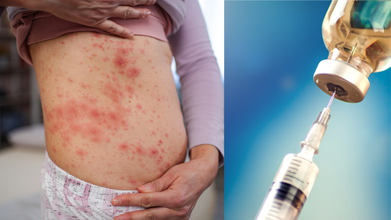
From Europe to Africa to North America to Australia, measles cases are rising across continents. The main driver: declining vaccination rates and immunity gaps.
As of March 26, 1,575 confirmed measles cases were reported in the United States in 2026, according to the latest data published by the US Centers for Disease Control and Prevention.
There have been 16 new outbreaks reported in 2026, and 94% of confirmed cases (1,483 of 1,575) are outbreak-associated (359 from outbreaks starting in 2026 and 1,124 from outbreaks that started in 2025). In 92 percent of cases, measles occurred among those with no vaccination.
Mexico's Ministry of Health recently reported a significant increase in measles cases in 2026, with more than 7,400 confirmed infections recorded since the beginning of the year.
A PAHO report in February shared a 43-fold increase in measles cases across seven countries — Bolivia, Canada, Chile, the United States, Guatemala, Mexico, and Uruguay — with no deaths reported.
Active outbreaks have been reported in London and Birmingham in the UK. In Europe, recurring outbreaks have been reported in Italy, Spain, France and Romania.
A measles alert has also been issued for the Gold Coast area after two cases were confirmed to have been contracted by people overseas and then brought home to Australia.
Earlier this week, Bangladesh reported a measles outbreak that reportedly led to the death of at least 38 children, leading health authorities to roll out a vaccination program for younger children in a bid to halt the outbreak.
Official data show that in 2026, more than 2,300 children were admitted to hospital with suspected measles, of whom 684 have tested positive so far.
Amid these outbreaks, HealthandMe spoke to public health experts to understand whether these cases can increase the risk of the highly contagious disease in India. While India has a better vaccination rate with the Measles and Rubella (MR) Vaccine, some pockets in rural areas may increase the risk.
"In India, the catch-up vaccination drive named Mission Indradhanush was intensified in 2024, successfully rectifying the vaccination gaps that occurred during the COVID pandemic. But the disease can still spread among pockets of the population where vaccination coverage remains low,” Dr. Rajeev Jayadevan, Ex-President of IMA Cochin and Convener of the Research Cell, Kerala, told HealthandMe.
"The proven method to stop measles is to build an 'immunity wall' within the community—by vaccinating at least 95 percent of people—so that the virus repeatedly runs into 'road blocks' and eventually dies out, instead of getting a free ride infecting everyone. When vaccination coverage drops due to many reasons, outbreaks happen, and complications follow," he added.
Also read: Measles In Oahu Visitor Sparks Exposure Risk In Hawaii: Report
What Is Measles?
Measles is a highly contagious virus that spreads through direct contact or through the air when an infected person coughs or sneezes.
Symptoms typically appear seven to 14 days after exposure and may include:
high fever,
cough,
runny nose,
red eyes,
rashes across the body.
Measles And Vaccination
Measles is a vaccine-preventable disease that can cause devastating complications, including blindness, pneumonia, encephalitis, and long-term immune dysfunction.
The reports of deaths from Bangladesh indicate the presence of a significant 'immunity gap,” allowing the virus to take hold, said Dr. Jayadevan. He added that among the unvaccinated, measles is one of the most contagious viruses on Earth—spreading even faster than COVID-19.
Dr Neha Rastogi, Senior Consultant - Infectious Diseases, Fortis Gurugram, told HealthandMe that although the Measles-Rubella (MR) vaccination campaign has played a major role in reducing cases and preventing large-scale outbreaks by building community immunity in India, "there is still some risk of Measles spread in India".
"Although cases have declined significantly, outbreaks can occur due to gaps in vaccination coverage, especially in rural or densely populated areas. Migration, low awareness, and missed immunization doses also contribute to the risk,” she added.
How Does Measles Spread
"Measles spreads rapidly because it is a highly contagious viral disease transmitted through respiratory droplets when an infected person coughs or sneezes," Dr Rastogi told HealthandMe.
She noted that crowded living conditions, poor ventilation, and low immunity levels increase the risk of transmission.
"Lack of awareness, malnutrition (especially vitamin A deficiency), and incomplete or missed vaccination also contribute to outbreaks. The virus can remain active in the air or on surfaces for several hours, making it easy to infect others,” the infectious disease expert said.
The CDC noted that measles transmission may also occur during travel.
"Travelers with fever and other overt signs of transmissible illness, such as coughing or malaise, should be strongly encouraged to delay travel while symptomatic,” it said.
Dr. Jayadevan said that the rising global measles cases are "a reminder that no one is safe until everyone is safe. India must strive to identify those pockets where vaccination coverage is low and undertake intensive corrective measures, taking the community into confidence through effective awareness campaigns".
How To Stay Safe
To safeguard against measles, individuals should ensure timely vaccination, especially for children.
Maintaining good hygiene, such as frequent handwashing and covering the mouth while coughing or sneezing, helps reduce transmission.
Avoiding close contact with infected individuals and ensuring proper nutrition to boost immunity are also important.
Public awareness and community health programs play a crucial role in prevention.
US Woman In Active Labor Forced to Face Court Over Refusal Of C-Section

Credit: ProPublica
In a disturbing case from the US state of Florida, a pregnant woman in active labor was forced to attend a virtual court hearing via Zoom from her hospital bed for refusing a Cesarean delivery, also known as C-section — a common method of childbirth.
ProPublica reported that Cherise Doyley was in her 12th hour of contractions at the University of Florida Health facility, when she was, without her consent, made to sit in front of a host of people — a judge in a black robe and several lawyers, doctors, and hospital staff — for the Zoom proceeding.
While in active labor, a nurse came in with a bedsheet and told her to cover up, and a supervisor followed with a tablet.
“It’s a real judge in there?” Doyley asked the nurse at the beginning of what would be a three-hour hearing.
What Was The Case?
The mother of three, and a professional birthing doula, Doyley had arrived at the facility after her water broke.
While her doctors expressed concerns about the risk of uterine rupture —a potentially deadly complication for her and her baby — Doyley wanted to try for a vaginal delivery, as the risk was less than 2 percent, unless there was an emergency.
She told doctors she wouldn’t consent to a cesarean without trying to have a vaginal delivery first.
While the doctors initially relented, after several hours, she had to face a virtual court hearing, where the hospital and state attorney’s office forced Doyley to undergo a cesarean section.
Doyley has her own reasons to avoid a C-sec. She already had three prior C-sections, and one that resulted in a hemorrhage. She feared that a C-sec would lead to another serious complication and a lengthy recovery, and her kids would suffer.
However, the hospital was worried that her medical decisions may cause harm to the fetus, and that the courts may help decide which one mattered more, the report said.
Also read: Maternal Vaccination During Pregnancy Can Prevent COVID-related Hospitalization In Babies: Study
After three hours of testimony — all while Doyley lay in her hospital bed — the judge ruled that she could keep laboring unless there was an emergency. If that happened, the hospital could operate, whether she wanted it or not.
Overnight, doctors said the baby’s heart rate dropped for seven minutes. Doyley woke to her hospital bed being wheeled into surgery. The baby girl was delivered by C-section, the report said.
What Happens In A C-section?
It is a surgical procedure that is used to deliver a baby through an incision made in the abdomen and uterus.
The method is preferred, especially in cases with complications during labor or breech presentation, or multiple births.
Unlike the popular conception, it hurts. In a vaginal delivery, the pain is experienced during labor and pushing, especially if done without an epidural.
Whereas, in a C-section, a surgery is performed that numbs the body from the chest down. However, the recovery could be painful and prolonged. It is also because in a C-section, it involves healing from a major abdominal surgery, while vaginal birth recovery may be quicker, more complicated, or traumatic.
Also read: 'Husband Stitch': A Medical Necessity Or Just A Tool To Objectify Women's Bodies?
Does A C-sec Affect The Baby?
Usually, it does not harm the baby, but there could be potential risks to the baby, including:
- Surgical injury, which is very rare; however, the baby may be accidentally nicked during the incision.
- Respiratory issues: Babies born via C-section may have a higher risk of breathing, since they miss the natural compression during the vaginal birth that helps expel the amniotic fluid from their lungs
- Delayed bonding: Immediate skin-to-skin contact may take longer due to the surgical process.
- Feeding challenges: Some newborns may initially struggle with breastfeeding.
Risks Of A C-section Birth?
- Excessive blood loss
- Infection
- Blood clots in the legs, lungs, or pelvis
- Damage to nearby organs
- Adverse reactions to anesthesia
The American College of Obstetricians and Gynecologists (ACOG) advises against elective C-sections due to these potential complications.
- Follow Us :


© 2024 Bennett, Coleman & Company Limited