
- Health Conditions A-Z
- Health & Wellness
- Nutrition
- Fitness
- Health News
- Ayurveda
- Videos
- Medicine A-Z
- Parenting
Top Indian Medical Body Declares Stem Cell Therapy For Autism Illegal
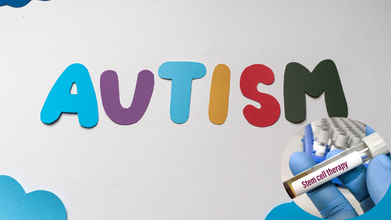
After a recent Supreme Court of India order banning the use of stem cell therapy to treat autism -- a neurodevelopmental condition affecting communication, social interaction, and behavior -- the country's National Medical Commission has issued a clear warning to doctors and hospitals not to use the therapy to treat autism in routine medical practice.
The National Medical Commission, in a new advisory, asked all medical colleges, hospitals, and doctors to strictly follow the rules.
In a letter sent to the regulator, Indian Council of Medical Research Director-General Dr. Rajiv Bahl stated that the stem cell treatment can now be used in regular medical practice only for 32 diseases that are officially approved by the government. These include blood cancers and serious blood disorders such as:
Acute myeloid leukemia
Multiple myeloma
Aplastic anemia
Myelofibrosis
Germ cell tumors.
The letter asked doctors not to offer stem cell therapy for any other disease outside this list.
Notably, the Ethics and Medical Registration Board (EMRB), under the National Medical Commission (NMC), had, in December 2022, constituted the Committee on Stem Cell Use in Autism Spectrum Disorder (ASD).
It had stated that none of the current international guidelines recommend stem cell therapy as a treatment for ASD and added that the therapy is not recommended as a treatment for ASD in clinical practice.
Also read: Japan Approves First-Ever Stem Cell Therapies For Parkinson’s And Heart Failure
What Was The Supreme Court Ruling On Stem Cells?
Earlier this year, in January, a bench comprising Justice JB Pardiwala and Justice R Mahadevan noted that stem cell therapy lacks “scientific support and has not been recognized as a sound medical practice backed by empirical evidence”.
The Bench ruled that “every use of stem cells in patients outside an approved clinical trial is unethical and shall be considered as malpractice.”
The apex Court, however, added that the advanced therapy, which holds promise in several medical fields, can still be approved for monitored clinical research trials. It added that the patients have the liberty to participate in approved and regulated clinical trials.
What Is Stem Cell Therapy
Stem cell therapy, also called regenerative medicine, is a medical treatment that uses stem cells to repair or replace damaged tissues.
While the therapy is useful and effective for blood cancers and autoimmune diseases, for the treatment of autism, there is no proof or scientific evidence of its utility.
As stem cell therapy is vastly unregulated in India, many private labs have been minting money over the promise of treatment for autism.
“Most stem cell therapies are unregulated in India and are promoted based on no evidence, and fake advertisements. While these disorders have no cure, many people are falsely lured by these companies,” Dr. Manjari Tripathi, Head of Department, Neurology, AIIMS Delhi, had told IANS, after the SC verdict.
Also read: New Stem Cell Transplant Breakthrough Could Replace Chemo In Cancer Treatment
Stem Cells Permissible Only For Research
The NMC warned that any doctor or institution offering stem cell therapy for autism will face regulatory and legal action.
The top medical regulator, however, stated that stem cell therapy is permissible only for research purposes.
Such studies must follow strict rules set by the government and must be approved by ethics committees and national regulatory bodies.
Researchers must also ensure that patients give written consent, that treatment is provided free during the trial, and compensation is offered if injury or death occurs during research.
Florida Restores H.I.V. Drug Access With 31 Million Emergency Funding
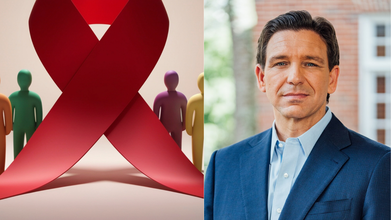
Credits: Canva and Wikimedia Commons
Florida on Tuesday approved nearly $31 million in short-term funding for H.I.V. medication for residents This is a reverse course after the state health officials restricted the access to a program that helps only those who could afford costly medications.
What Happened In The Past?
The Florida Department of Health had imposed tougher eligibility rules on March 1 that left 12,000 residents with H.I.V. without the access to medication covered by the state's AIDS Drug Assistance Program. This deprived them of life saving drugs, noted a nonprofit advocacy group - AIDS Healthcare Foundation.
The foundation also sued the department over these changes with protestors rallying in opposition at the State Capitol in Tallahassee. The department cited a projected $120 million state budget that restricted eligibility for the program.
Read: HIV vs. AIDS: What You Should Know About These Commonly Confused Terms
Yet, the Florida House of Representatives and State Senate, both led by Republicans, unanimously approved legislation that provides $30.9 million to fund the program through June 30 and restore the eligibility rules. Gov. Ron DeSantis, a Republican, signed the bill into law on Tuesday.
“Lawmakers on both sides understood the urgency of the crisis,” State Senator Carlos Guillermo Smith, a Democrat from Orlando who spoke out in support of the bill on the floor, said in an interview on Wednesday. “It is a matter of life and death. People had already lost access to their medications.”
Restriction On AIDS Drug Assistance Programs
As per an analysis by KFF - a health research group, Florida was one of the nearly 20 states, led both by Republicans and Democrats that imposed restrictions on AIDS Drug Assistance Programs.
The programs cover the cost of H.I.V. medications, which can run into thousands of dollars each month. They provide drugs free to some individuals and help others by paying their insurance premiums. Overall, they support about a quarter of the 1.2 million people living with H.I.V. in the United States.
However, these programs are under growing pressure. The cost of H.I.V. medications continues to rise, and the expiration of health care subsidies has led to a sharp increase in insurance premiums. Despite this, federal funding for these programs has remained largely unchanged for more than a decade.
In Florida, the Department of Health had reduced eligibility for the state’s AIDS Drug Assistance Program to 130 percent of the federal poverty level, which is about $20,748 a year for an individual, down from 400 percent or $63,840. A new law has now reversed this change, restoring eligibility back to the 400 percent threshold.
“For 10 weeks, 12,000 Floridians living with H.I.V. did not know if they could fill their next prescription,” Esteban Wood, the director of advocacy and legislative affairs at the AIDS Healthcare Foundation, said in a statement on Tuesday. “Today, they can.”
US FDA Approves Drug To Treat Rare Childhood Syndrome
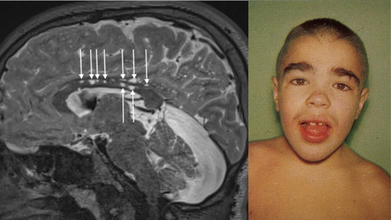
Credit: Wikimedia Commons
The US Food and Drug Administration (FDA) has approved a drug therapy to address neurologic symptoms of a rare genetic disorder — Hunter syndrome.
The X-chromosome-linked disease, occurring predominantly in males, has an estimated 2,000 affected individuals worldwide.
The drug Avlayah, developed by pharma company Denali Therapeutics, targets certain individuals with Hunter syndrome (Mucopolysaccharidosis type II or MPS II).
It is the first therapy to address the neurologic complications of Hunter Syndrome, such as
- progressive cognitive decline,
- behavioral problems,
- hydrocephalus,
- spinal cord compression,
- seizures,
- carpal tunnel syndrome.
“Today is a milestone day for children and their families battling Hunter syndrome,” said FDA Commissioner Marty Makary, in a statement.
“Avlayah is the first product approved to address neurologic complications of Hunter Syndrome, a very rare and often severe X-linked disorder in children, affecting about 500 people in the US, almost exclusively males,” added Acting CDER Director Dr. Tracy Beth Hoeg.
The FDA noted that Avlayah, the once-weekly drug given via IV infusion, must begin in presymptomatic or symptomatic pediatric patients weighing at least 5 kg before advanced neurologic impairment.
What Is Hunter Syndrome?
Hunter syndrome is a rare inherited lysosomal disorder in which sugar molecules called glycosaminoglycans build up within the cells’ lysosomes.
The condition affects physical and mental development and causes abnormalities in the skeleton, heart, respiratory system, brain, and other organs.
Hunter syndrome is a rare congenital metabolic disease. It was first reported in 1917 by a Canadian physician, Charles Hunter, in two brothers in a family.
The brothers presented typical signs, such as
- short stature,
- inguinal hernia,
- macroglossia,
- enlarged skull,
- decreased hearing,
- coarse facial features,
- protruded abdomen with hepatosplenomegaly,
- umbilical hernia,
- skeletal deformities.
The younger brother had symptoms of Central Nervous System (CNS), including seizures and cognitive decline, while the older brother did not have CNS involvement.
The estimated incidence is 1 in 162,000 live male births.
How The FDA Approved Avlayah
The FDA approval came after Avlayah showed promise in reducing cerebrospinal fluid heparan sulfate — one of the glycosaminoglycans that accumulates in the body in this disorder and is linked to the organ damage that occurs in early childhood.
The phase 1/2 multi-cohort, single-arm, open-label trial enrolled 47 pediatric patients with Hunter syndrome aged 3 months to 13 years.
Of these, 44 patients with measurements at had a 91 percent average decrease from baseline in CSF.
Denali is now conducting a randomized clinical trial that is more than 95 percent enrolled to evaluate the clinical benefit of this product.
"In the meantime, families with young children with Hunter Syndrome will have access to a product that may favorably alter the course of the disease at the crucial time in life when there is the greatest potential for benefit," Hoeg said.
Are There Any Side Effects?
Avlayah’s labeling includes a boxed warning for allergic reactions, including anaphylaxis, associated with the drug.
The FDA recommended that patients start therapy in a health care setting with appropriate medical monitoring and support measures.
The common side effects of Avlayah include
- upper respiratory tract infection,
- ear infection,
- fever,
- anemia,
- cough,
- vomiting,
- diarrhea,
- rash,
- COVID-19,
- runny nose,
- nasal congestion,
- fall,
- headache,
- skin abrasion,
- hives.
The FDA also suggested that healthcare workers monitor
- hemoglobin levels due to the risk of anemia,
- kidney function and urine protein levels due to
- the risk of membranous nephropathy (a kidney disease).
CDSCO Launches National Crackdown On Unapproved Medicines
Credit: Canva, CDSCO
The Central Drugs Standard Control Organisation (CDSCO) has now launched a nationwide crackdown on unapproved Fixed Dose Combination (FDCs) after 90 combination medicines that were being sold without mandatory central approval were busted last week.
CDSCO, India's apex drug regulatory body in the country, made the shocking discovery after scrutinizing drug samples uploaded on the SUGAM portal, the government’s online system for drug testing data.
Several of these samples were found to fall under the ‘new drug’ category but lacked approval from the central authority. As a result, the CDSCO wrote a letter to all states and union territory drug controllers, asking them to investigate manufacturers and marketers of these FDCs.
The letter reads: "The SUGAM lab testing data for the year 2025, a large number of drug samples (FDCs) are detected as unapproved and fall under the category of 'New Drug'. No new drug shall be manufactured for sale unless it is approved by the Licensing Authority 'as defined in Rule 3 of New Drugs and Clinical Trial Rules, 2019, Further, as per Rule 80 of New Drugs & Clinical Trial Rules 2019, a person who intends to manufacture new drug in the form of API or Pharmaceuticals formulation, as the case may be, for sale or distribution, shall make an application for grant of permission to the Central Licensing Authority in Form CT-21 along with a fee as specified in Sixth Schedule."
"The presence of unapproved drugs in the supply chain is a matter of serious concern, posing potential risks to public health and safety. It also indicates non- compliance with the provisions of the Drugs and Cosmetics Act, 1940, and rules made thereunder.
"Accordingly, please initiate appropriate investigation and regulatory action against the concerned manufacturers, marketers, and other stakeholders, as deemed fit. Kindly ensure strict monitoring and enforcement to prevent manufacture, sale, and distribution of such unapproved drugs," the letter states, on appropriate action against the sale and distribution of unapproved drugs.
FDCs are drugs that contain two or more active ingredients in a single formulation. The CDSCO has asked states to investigate and submit reports on the action taken at the earliest.
What Made It To The Unapproved List Of FDCs?
Cough And Cold Medicines
Cough and cold combination medicines have formed the single largest group. At least 14 to 16 entries show combination of ingredients found in everyday pharmacy shelves: dextromethorphan, ambroxol, guaiphenesin, chlorpheniramine, phenylephrine, terbutaline, and menthol in various permutations.
Several of these are sold as flavoured syrups for children. Budesonide-levosalbutamol inhalation suspension that is used for asthma and chronic obstructive pulmonary disease, too features in the list.
Nutritional Supplements
The next group is of the vitamins, minerals and other nutritional supplement which has roughly 18 to 20 entries. They include:
- Multivitamin capsules
- Iron-folic acid syrups
- Calcium-vitamin D3-K2 combinations
- Abapentin-methylcobalamin preparation
This group has accounted for at least 10 entries, which include antifungal creams that could lead to potential misuse and skin damage when sold without prescriptions.
Anti-Diabetic Medicines
This has accounted for six entries, and the combination includes:
- Glimepiride paired with metformin or pioglitazone
What Is India's Rule For FDCs?
Under India's New Drugs and Clinical Trial Rules of 2019, any FDC is treated as a new drug and must have the central government's approval before it could be manufactured and sold. The regulator's letter noted that there were presence of unapproved drugs in the supply chain that could pose risks to public health. This also amounts to a violation of the Drugs and Cosmetics Act, 1940.
“The presence of unapproved drugs in the supply chain is a matter of serious concern, posing potential risks to public health and safety. It also indicates non- compliance with the provisions of the Drugs and Cosmetics Act, 1940, and Rules made thereunder," it said.
DCGI urged states and UTs "to examine the unapproved FDCs in generic name as mentioned in the attached annexure". This is done to check whether any approval has been granted by the local office. "Accordingly, please initiate appropriate investigation and regulatory action against the concerned manufacturers, marketers, and other stakeholders, as deemed fit. Kindly ensure strict monitoring and enforcement to prevent the manufacture, sale, and distribution of such unapproved drugs," the letter noted.
- Follow Us :


© 2024 Bennett, Coleman & Company Limited