
- Health Conditions A-Z
- Health & Wellness
- Nutrition
- Fitness
- Health News
- Ayurveda
- Videos
- Medicine A-Z
- Parenting
Checking BMI For Body Weight? It Can Wrongly Mark You As Overweight or Obese, Says Study
Credit: iStock
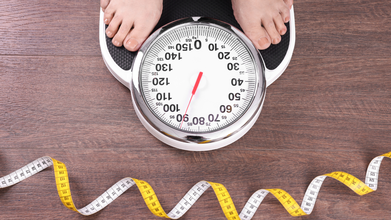
Long considered a standard tool for assessing body weight, Body Mass Index (BMI) may not be as reliable as once believed. A new study shows that relying on BMI can incorrectly classify people as overweight or obese.
When a team of Italian researchers used the gold standard technique of dual-energy X-ray absorptiometry (DXA) to measure body fat in the general population, they found that the traditional WHO-approved BMI classification system misidentified a significant number of people as having overweight or obesity.
Also Read: Abdominal Obesity Greater Risk Factor For Indians, says Dr. Jitendra Singh
How Is The BMI Wrong?
A total of 1,351 adults of mixed gender aged between 18 and 98 years were checked for their body weight using the DXA system.
The results, published in the journal Nutrients, revealed that more than one-third (34 percent) of those with obesity defined by BMI had been misclassified and should be in the overweight category.
For those with an overweight BMI, DXA showed that more than half – 53 percent – had been misclassified – three quarters of those misclassified fall into the normal weight category, while the other quarter should have been classified as having obesity.
Also read: IPL 2026: Rohit Sharma's Transformation Impresses Nita Ambani; Fitness Secrets Revealed
The DXA analysis found that the prevalence of overweight and obesity across the cohort was around 37 percent overall (23.4 percent overweight, and 13.2 percent obesity, compared to 26.2 percent and 14.1 percent with BMI).
“In the past few years, there has been a lot of criticism of the BMI system due to its inability to accurately capture body fat percentage or distribution, to correctly categorise weight status based on adiposity,” said Professor Marwan El Ghoch, of the Department of Biomedical, Metabolic and Neural Sciences, University of Modena and Reggio Emilia, Modena, Italy.
Despite these concerns, BMI as a weight classification system continues to be used in the general population in primary healthcare (i.e., general practitioners) and non-clinical (i.e., policy and health insurance) settings, he added.
The researchers urged revising public health guidelines to consider combining direct body composition or their surrogate measures, such as skinfold measurement or body circumference, with the waist-to-height ratio, with BMI, while assessing weight status in the general population.
Waist-to-Height Ratio May Be More Accurate: The India Story
In January 2025, India revamped its obesity guidelines, and the new approach focused on abdominal obesity and comorbid diseases, rather than just BMI.
According to the redefining team, it was essential to move beyond BMI-only approaches to tackle the ever-growing number of people related to other major health risks. They stated that while BMI can be a screening tool, obesity must be defined by body fat.
“BMI should be used for screening purposes, but obesity should be confirmed ideally by a measure of body fat wherever feasible, or another measure such as waist circumference, WHR, or Waist-to-height ratio,” Dr. Naval Vikram, Professor of Medicine, at AIIMS, New Delhi, was quoted as saying to IANS at the time.
Also read: 41 million children aged 5-19 living with high BMI in India: Study
What Do The New Guidelines Say
It recognizes abdominal fat — closely linked to insulin resistance — as a key factor in the diagnosis. It integrates the presence of comorbidities — such as diabetes and cardiovascular disease — into the diagnostic process.
The revised guidelines also introduce a two-stage classification system, addressing both generalized and abdominal obesity.
Stage 1 Obesity: Increased adiposity (BMI > 23 kg/m²) without apparent effects on organ functions or routine daily activities.
Stage 2 Obesity: Advanced state of obesity with increased BMI more than 23 kg/2, and abdominal adiposity; excess Waist Circumference or Waist-to-Height Ratio.
Left Delhi To Escape Air Pollution? Why Health Effects May Linger For A Long Time
Credit: AI
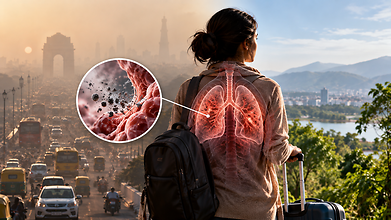
Leaving Delhi for a city with cleaner air could be a health-smart decision as it can reduce your exposure to harmful pollutants. But just because you are away from the smog, it does not mean the health effects from years of inhaling polluted air will recover overnight.
That brings us to an important question. How long do lungs take to recover after living in an excessively polluted environment?
Air pollution, particularly fine particulate matter known as PM2.5, triggers inflammation and oxidative stress throughout the body. This can directly impact the lungs, heart, blood vessels and even the brain.
The World Health Organization says long-term exposure to air pollution increases the risk of serious disorders like heart disease, stroke, chronic obstructive pulmonary disease (COPD) and lung cancer. That is why relocating could be beneficial without necessarily being a complete reset for the body.
Exposure Stops But Not Effects
Also read: Delhi Air Pollution Is Back: What Days Of Poor AQI Can Do to Your Lungs
The key difference to note here is between ongoing exposure and the damage that exposure may have contributed to. Once someone moves to a place with cleaner air, they are no longer receiving the same daily dose of pollutants. This can alleviate the ongoing inflammatory burden due to toxic air significantly.
But if years of exposure have contributed to changes in lung function, blood vessels or cardiovascular health, those effects may take much longer to recover, and some chronic disease may not even be completely reversible.
A recent study examining Delhi’s pollution between 2019 and 2023 found that PM2.5 levels exceeded India’s national daily standard on roughly 60% of measurements and the WHO daily guideline on almost all days.
Researchers also found that particles deposited deep in the lungs can be cleared much more slowly than larger particles, sometimes over weeks to years.
Lungs May Be Impacted For A Long Time After Moving
Also read: Children, Adults & Seniors: How Lung Health Risks Change Across Life Stages
PM2.5 particles are small enough to travel deep into the respiratory system. Some particles can reach the alveolar regions of the lungs, where clearance and recovery are slower. Constant exposure can also keep irritating the airways, worsening conditions like asthma and contributing to long-term respiratory disease.
WHO notes that short-term exposure can aggravate asthma and increase respiratory infections, while chronic exposure is associated with diseases such as COPD and lung cancer.
The consequences of air pollution on health are not just limited to breathing. PM2.5 can contribute to inflammation and oxidative stress, while some particles can enter into the bloodstream. This can affect blood vessels and the cardiovascular system.
Long-term exposure has also been associated with atherosclerosis, heart attacks and stroke, among other cardiovascular outcomes. The US Environmental Protection Agency says evidence links both short and long-term PM2.5 exposure with changes in heart and blood-vessel function and with cardiovascular disease.
Recovery After Moving Away
Reducing exposure could be an excellent health intervention to start the recovery process. Once a person is no longer repeatedly exposed to high concentrations of PM2.5 and other pollutants, the body is no longer subjected to its active effects.
But recovery also depends on what has happened during the years of exposure. Temporary inflammation or irritation may improve after exposure falls, while structural changes or chronic diseases may persist for quite a while even after moving away.
It is therefore more accurate to think of relocation as reducing future exposure rather than expecting to escape pollution health effects scot-free.
Delhi’s pollution crisis is not confined to a few extremely bad winter days. Research analysed five years of AQI data and found persistently high PM2.5 and PM10 concentrations. It also found that pollution generally worsened during post-monsoon and winter months. Evening commuting periods also produced higher particulate deposition than morning periods.
When Your Nervous System Is Overloaded: Signs Your Body Needs A Pause

Credit: AI
In my 13 years of working with clients as a trauma-informed consulting psychologist, I have often noticed that people recognise nervous-system overload only after their body forces them to slow down.
Until then, they may describe themselves as “too sensitive”, “lazy” or “unable to cope”. In reality, these reactions are often the nervous system’s attempt to protect us.
Fight, Flight, Freeze Or Shutdown
Our nervous system continually assesses whether we are safe. When stress feels persistent or overwhelming, the body may move into fight or flight.
We might become irritable, restless, anxious or unusually controlling. The heart may race, muscles tighten and sleep become disturbed. At other times, the system may shift towards freeze or shutdown, showing up as exhaustion, emotional numbness, procrastination, forgetfulness or a strong desire to withdraw.
Also read: LSD-Based Treatment Clears Second Phase 3 Trial: Could It Be The First New GAD Drug In 2 Decades?
When Everyday Reactions May Signal Overload
For example, someone who becomes disproportionately angry over a minor delay may not simply have an “anger problem”; their system may already be carrying days or months of accumulated stress. Another person may sit before a simple email for hours, unable to respond.
What looks like avoidance may actually be a freeze response. Some people remain highly productive while feeling disconnected from their bodies, until headaches, digestive difficulties or fatigue begin demanding attention.
These signs do not automatically indicate trauma or a mental health condition. They are invitations to become curious: What has my system been carrying? When did I last feel rested, supported or genuinely safe?
Small Ways To Help The Body Feel Safer
If you notice these patterns, begin gently. Reduce unnecessary stimulation, eat regularly, protect your sleep and spend time with people around whom you do not have to perform. Slow breathing—particularly allowing the exhale to be longer—may help signal safety. You can also look around the room, notice your feet on the floor and name what you can see and hear. Small, repeated experiences of safety are often more helpful than forcing yourself to “calm down”.
If symptoms persist, interfere with daily life or feel difficult to manage alone, speaking with a trauma-informed therapist can help you understand the patterns beneath them. Therapy is not only for moments of crisis; it can offer a safe space to listen to what the nervous system has been communicating all along.
The body is rarely working against us. Often, it is asking for care in the only language it knows.
By Ms Arouba Kabir, Psychologist & Therapist, Founder - Enso Wellness
Why Someone Days Away From Death May Start To See Loved Ones: End-Of-Life Doctor & Neurologist Explain

Credit: AI
Someone who is dying may start to their loved ones who passed away years ago. This could be unsettling and confusing for families and relatives who may assume that the person is just hallucinating or undergoing a deeper neurological issue.
But hospice physician Dr Christopher Kerr says such experiences are a known phenomenon called end-of-life dreams and visions (ELDVs). Kerr, chief medical officer of Hospice Buffalo, has spent decades studying these experiences in dying patients extensively.
Appearing on The Oprah Podcast, he told Oprah Winfrey that many patients near death describe seeing deceased relatives or people who cared for them during their lives. The experiences can feel completely real to them.
Why Do People Near Death See Deceased Loved Ones?
Also read: Ebola Bundibugyo Virus: Kenya Confirms First Death In Case Imported From Congo
One of the possibilities is that the brain experiences significant changes as the body starts to shut down.
Alterations in sleep, consciousness, metabolism, oxygen levels, medications, and brain chemistry can all affect perception during the final stages of life.
Dr. Rakesh Lalla, Additional Director - Neurology, Fortis Hospital, Mumbai, told HealthandMe, " These visions could be explained by the alterations that occur within the brain as the body starts to close down. Due to oxygen deprivation and altered brain activity, the brain would process memories, feelings, and stimuli differently. The areas responsible for memory processing and vision could become stimulated or disrupted, which could result in some vivid visions or experiences."
The expert also said that these visions do not mean that the person has a neurological or psychiatric issue.
Dr. Lalla said, "They do not necessarily mean that the person is confused or suffering from a psychiatric condition. In many cases, they are brief, peaceful, and emotionally meaningful to the individual. We still do not fully understand why particular people or memories appear."
The neurologist also advised families to stay supportive and calm during such situations.
He added, "The brain’s complex relationship between memory, emotion and perception is likely to play an important role. For families, the key is to remain calm, listen without dismissing the experience, and provide reassurance and comfort."
Also read: Global Life Expectancy Returns To Pre-Pandemic Levels, But NCDs Resulted In 8 Out 10 Deaths: WHO
Hallucinations Or Part Of The Dying Process?
Experts who have been studying ELDVs have also found that these experiences have some distinctive patterns that do not resemble random hallucinations.
In a 2014 longitudinal study led by Kerr, most of the 59 hospice patients who completed the study reported at least one dream or vision. Almost half occurred during sleep, and nearly all patients said the experiences felt real. The most common involved deceased friends or relatives or other loved ones. In fact, comforting visions of deceased people became more common as patients moved closer to death.
A 2026 systematic review of 13 studies similarly found that ELDVs occurred in at least one in five dying adults.
The National Institute on Aging also states that dying people may appear to see or talk to someone who is not present and may report dreams involving deceased relatives or friends. Such experiences are often comforting, and caregivers are generally advised not to immediately correct or challenge the person.
Seeing Loved Ones Could Be A Comforting End
Kerr said that patients seeing deceased loved ones in their visions appeared calmer afterward. His research suggests that these experiences may carry deep emotional meaning for patients.
“Very little is said between the person in the dream and the dreamer, but everything seems to be understood,” Kerr told Oprah.
Scientists still cannot say exactly what produces these experiences or whether they represent anything beyond changes occurring in the dying brain.
- Follow Us :


© $2026 Times Horizon Private Limited