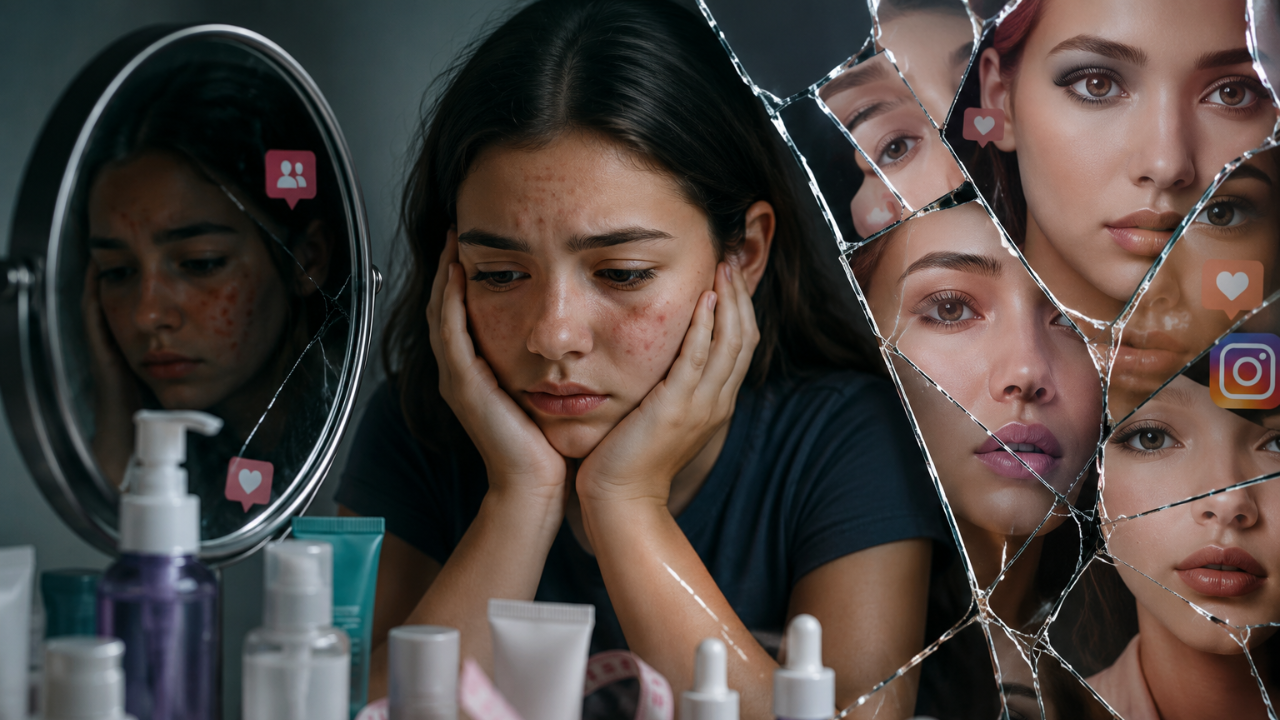
Thanks to growing popularity of complex and elaborate skincare trends on social media, perfect skin has become the ultimate beauty goal for many teenagers. But experts are warning that this obsession is fueling a worrying condition known as cosmeticorexia, where young people use anti-aging and active skincare products far beyond what their skin needs, increasing the risk of irritation, allergies, and long-term damage. When Skincare Turns Into Skin Damage Teenagers and even younger children suffer from severe skin damage, chemical burns, and dermatitis. The cause of this issue is not a common medical condition but a reflection of an unhealthy trend called cosmeticorexia (dermorexia). This dangerous obsession pushes people to treat their skin as an unacceptable defect that needs to be constantly adjusted, filed, tightened, peeled, and made younger. Social media and anti-aging marketing culture promote this disorder by encouraging adolescents to use various comedogenic creams, serums, and toners with harmful effects on sensitive and fragile skin. Thus, millions of teenagers damage their skin beyond repair before it naturally matures.Also read: Is Plant-Based Vitamin D3 Really Better? Doctors Reveal the Truth Why Teen Skin Is More Vulnerable There are multiple concerns about the health of teenage skin from a medical perspective. The skin of adolescents is thinner and more sensitive to external influences. In addition, teenagers' skin is subject to increased sebum production and associated risks of comedones, blackheads, and dermatitis. The Hidden Risks Of Trendy Skincare Products The use of "cosmeceuticals" or prescription drugs with neurotoxins, retinol, AHA (glycolic acid), and vitamin C can accelerate skin damage when used inappropriately. Recent research has shown that the standard skincare regimen of a teenager who follows social media and beauty vloggers includes more than eleven irritating substances. Topical application of such a combination of cosmetics damages the upper layer of the skin, provoking allergic reactions, dermatitis, redness, and irritation. Moreover, the use of retinol and AHA (glycolic acid) without medical supervision may lead to photosensitivity, increasing the risk of UV-induced skin damage. Finally, an increasing number of cases of allergic contact dermatitis are linked to synthetic and harmful substances found in luxury cosmetic products.Also read: Vitiligo Myths Debunked: It's Not Contagious or Caused by Food Cosmeticorexia: A Psychological And Skin Health Disorder Cosmeticorexia is an example of a psychodermatological disease, where psychological problems manifest through dermatological conditions. The constant pursuit of flawless skin can lead adolescents to adopt harmful skincare practices that ultimately damage their skin rather than improve it. The Right Skincare Routine For TeenagersFrom a medical point of view, the role of healthcare providers is to combat this dangerous trend by addressing its immediate consequences. Teenagers' skin does not require anti-aging treatments or additional nourishment. The only essential skincare routine includes three simple steps: gentle cleansing, applying a non-comedogenic moisturizer, and using a hydrating sunscreen every day. Protecting Teens From Harmful Beauty Trends Doctors, parents, educators, and social media platforms must work together to counter the anti-aging industry's growing influence on teenagers. Raising awareness about age-appropriate skincare and discouraging unnecessary cosmetic treatments can help protect young people from avoidable chemical damage and long-term skin problems. By Dr Gaurav Garg Dermatologist & Hair Expert, Founder, Dermalife Skin Hair Clinic