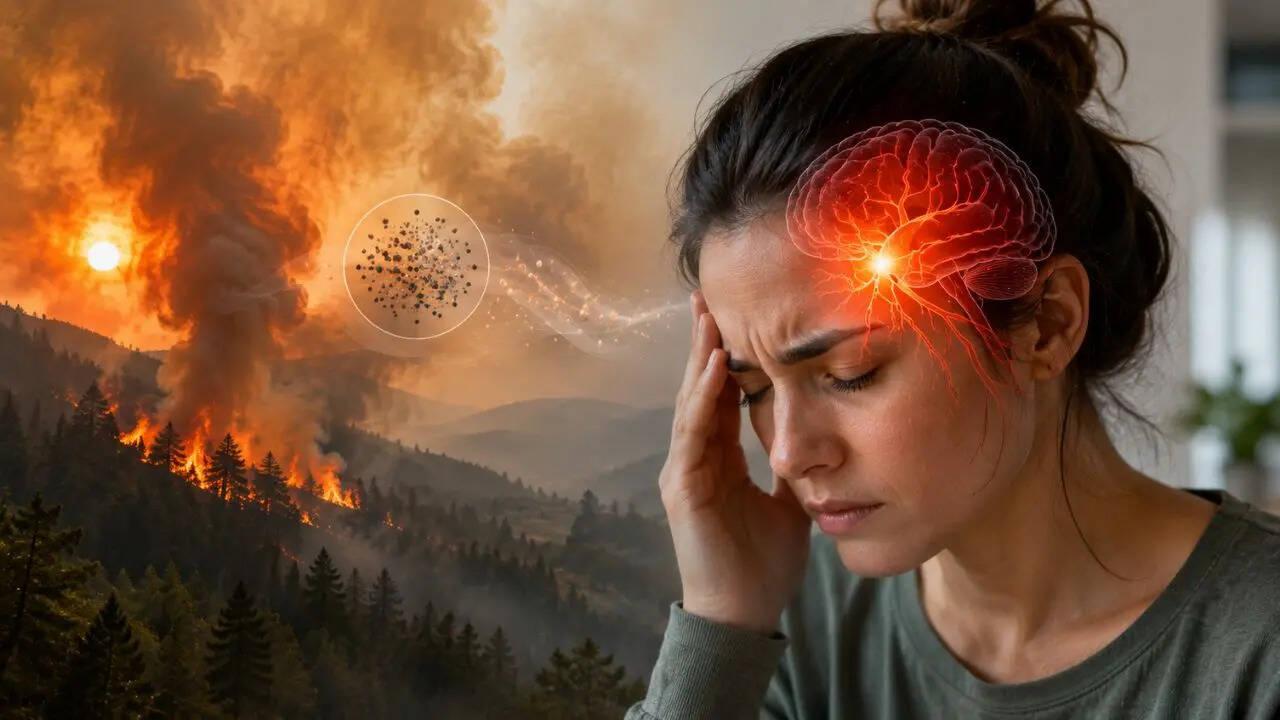
As wildfires have become more frequent and intense in several countries, scientists are looking for hidden health consequences of the smoke that lingers on long after the flames subside. Beyond respiratory issues and eye irritation, wildfire smoke may also trigger severe migraine attacks. A recent study in JAMA Network Open found that exposure to wildfire smoke was associated with a significant increase in emergency department visits for migraine and other primary headache disorders. The finding suggested that that polluted air from wildfires may be a powerful migraine trigger. What Did The Study Find? Researchers from Health Canada, the British Columbia Centre for Disease Control, and several Canadian universities analysed nearly 998,000 emergency department visits for migraine and other primary headache syndromes in Alberta and Ontario between 2010 and 2023. They discovered that for every 5 µg/m³ increase in wildfire-related PM2.5 (tiny particulate matter produced by wildfire smoke), emergency department visits for migraine and other primary headache disorders increased by about 6%. However, the researchers did not observe a similar increase with PM2.5 pollution on days without wildfire smoke, suggesting that wildfire smoke may have unique characteristics that make it more harmful than regular air pollution.Also read: Global Heatwave Crisis Grows: France Sees Excess Deaths Japan Swelters, Camels Die In Africa Effects Of Wildfire Smoke On The Brain Wildfire smoke contains microscopic particles known as PM2.5, which are small enough to enter the lungs and even pass into the bloodstream. Scientists believe these particles may trigger inflammation throughout the body, increase oxidative stress, affect blood vessels and the nervous system, and activate pain pathways involved in migraine. Previous research has also linked air pollution to headaches, but this study specifically isolates the effects of wildfire-generated smoke. Emerging evidence also suggests smoke exposure may contribute to difficulty concentrating, memory problems, cognitive decline, and increased inflammation affecting brain function.Also read: Wildfire Smoke Could Hurt IVF Success; Here's Why Doctors Say You May Want To Delay Your Appointment Who Is At Risk? Another important observation was that the association was stronger among people living in moderate and underprivileged neighbourhoods. The researchers suggest that the differences in housing quality, access to air filtration, healthcare access, or the ability to avoid smoke exposure during wildfire events are valuable factors. The authors said, “Acute exposure to wildfire-sourced PM2.5 was associated with increased emergency department visits for migraine and other primary headache syndromes.” They also noted that, “These findings support the need for further research into wildfire smoke and severe headache-related outcomes.”Also read: What Happens After Wildfires? Long-Term Health Risks To Watch Out For After Exposure Wildfires Are Escalating Around The World The study arrives as multiple countries continue to battle severe wildfire incidents. Canada remains in the midst of an active wildfire season, with hundreds of fires burning across the country. Across France and Spain, massive wildfires have forced the evacuation of hundreds of thousands of residents. Other parts of Europe, including Scotland, have also experienced significant wildfire activity this summer.Also read: Study Says California Wildfire Can Affect The Heart Other Hazards Of Wildfire Smoke Lung And Chronic Respiratory Disease Prolonged exposure to wildfire smoke can have long-term effects on the respiratory system. Possible health effects may include persistent cough, poor lung function, worsening asthma symptoms and more. Heart Disease The tiny particles in wildfire smoke don't just stay confined to the lungs. Once they enter the bloodstream, they can affect the cardiovascular system. In the long run, wildfire smoke exposure can lead to heart attacks, stroke, irregular heart rhythms, elevated blood pressure, increased inflammation in blood vessels Mental Health Effects Besides the stress of evacuation and property loss, smoke exposure itself may contribute to mental health problems directly. They can cause anxiety, depression, post-traumatic stress disorder (PTSD), sleep disturbances, among other conditions. Possible Cancer Risk Growing evidence suggests that long-term exposure to wildfire smoke may increase the risk of several cancers. Studies have reported possible associations with lung cancer, breast cancer, colorectal cancer, bladder cancer, and certain blood cancers.Pregnancy And Infant Health Research suggests exposure during pregnancy may increase the risk of preterm birth, low birth weight and other pregnancy complications. Healthcare providers recommend minimizing outdoor exposure whenever air quality deteriorates.