
- Health Conditions A-Z
- Health & Wellness
- Nutrition
- Fitness
- Health News
- Ayurveda
- Videos
- Medicine A-Z
- Parenting
Daniel Radcliffe Says Becoming A Father Helped Him Quit Smoking After 20 Years

Credit: Instagram/Canva
Harry Potter star Daniel Radcliffe has quit smoking after 20 long years. The reason: his two–year–old son with girlfriend Erin Darke.
Speaking to media outlet Vulture, the 36-year-old English actor shared that after becoming a father, he was inspired by intrusive thoughts about his mortality, which enabled him to quit the deadly habit after two decades.
"I smoked for 20 years pretty heavily, and I was never even thinking about quitting, and then shortly after having my son, the intrusive thoughts of my own death really helped as an incentive to quit," Radcliffe was quoted as saying.
Radcliffe also shared how a book -- The Easy Way to Quit Smoking, by Alan Carr -- helped him decide to quit smoking.
"It may not work for everybody, but it really worked for me," noted the star, currently starring in the Broadway play Every Brilliant Thing.
Earlier this month, the actor spoke with WSJ Magazine and shared that from being on “cigarettes all day”, he's transformed into a fitness freak.
How Does Smoking Affect Our Body?
Smoking can affect all organs in our body. While lung cancer and tuberculosis are the most prominent ones, smoking can seriously increase the risk of several chronic diseases. These include:
- Heart Disease
- Asthma
- Reproductive Health
- Vision Loss
- Chronic Obstructive Pulmonary Disease
- Cancers of the liver, stomach, and colon.
While quitting tobacco is important, it is a difficult task, with some people finding it harder to quit than others. It may be important to seek help quitting.
Also read: Cigarettes And The Female Body: The Hormonal Toll We Don’t Talk About
What Happens When You Stop Smoking?
- In just 20 minutes of stopping, your blood pressure and heart rate begin to normalize.
- Within a few weeks, your lung function improves.
- Over time, the risk of heart disease and cancer also decreases dramatically.
These strategies have shown varying levels of success in aiding smokers to quit permanently. In addition, alternative methods like e-cigarettes and mindfulness-based techniques have gained traction in helping reduce smoking addiction.
Science-backed Methods To Help You Quit Smoking
Behavioral Support
Quitting smoking isn’t just about resisting cravings. Often, behavioral support through counseling or therapy is crucial for tackling the psychological aspects of addiction. Behavioral therapy involves working with a trained professional to identify triggers, develop coping strategies, and create a tailored quit plan. Research shows that combining counseling with other quit methods can significantly increase success rates.
Prescription Medications
Some medications, such as varenicline (Chantix) and bupropion (Zyban), have been shown to help people quit smoking by reducing cravings and withdrawal symptoms. Experts suggest that varenicline works by blocking the effects of nicotine in the brain, while bupropion is an antidepressant that helps manage withdrawal symptoms. Both medications are generally more effective when combined with behavioral therapy.
Nicotine Replacement Therapy (NRT)
Nicotine replacement products, such as nicotine patches, gums, lozenges, and nasal sprays, deliver controlled amounts of nicotine to ease withdrawal symptoms. According to experts at Harvard Health, NRT can double the chances of quitting by alleviating physical cravings while the person works on overcoming the psychological addiction.
India Launches 1st Repository Of Data On Major Psychiatric Disorders

Credit: Canva
About 10.6 percent –15 percent of India's population suffers from some form of mental health conditions, with 15 percent of the adult population also requiring active intervention.
To enable researchers to gather as well as systematically document data on patients with major forms of mental illness, neuroscientists in India have developed CALM-Brain — a digital repository of data on brain structure and function from a range of psychiatric disorders.
CALM-Brain contains data from over 2,000 participants from 900 families across the country.
CALM-Brain will help clinicians and researchers
- to understand the onset of neuropsychiatric disease
- check progression
- decode underlying biological changes
- provide better diagnosis
- plan personalized treatments for patients.
“CALM-Brain was conceived as a method to assemble data from multiple scales of analysis of brain structure and function on a single platform. We believe that the application of modern methods of data analysis to this dataset will help bridge the gap between these scales of analysis,” said Prof. Raghu Padinjat, CBM co-ordinator at CBM-NCBS, in a statement.
Also read: World Happiness Report 2026 Flags Social Media Harms On Adolescents' Mental Well-being
What Is CALM-Brain?
CALM-Brain is the result of collaborative efforts of researchers at the Rohini Nilekani Centre for Brain and Mind (CBM) — a partnership between the National Institute of Mental Health and Neuro Sciences (NIMHANS) and the National Centre for Biological Sciences (NCBS) - TIFR.
CALM-Brain is India’s first-of-its-kind repository of clinical, neuroimaging, behavioral, genetic, and other datasets on disorders such as:
- addiction,
- bipolar disorder,
- dementia,
- obsessive compulsive disorder (OCD)
- schizophrenia.
- Functional Magnetic Resonance Imaging (fMRI)
- Near Infrared Spectroscopy (NIRS)
- electroencephalogram (EEG)
- observations of cognition
- eye-tracking
- genetic analyses of blood samples
- clinical assessments.
The dataset is also linked to a biorepository of stem cells, which can be used to perform biological research in psychiatry to understand the origins of such severe mental illnesses.
“The primary goals of the project are to identify biological markers of severe psychiatric illnesses, which cut across traditional diagnostic frameworks. In addition, we will try to identify fundamental biological mechanisms of the disease and medication response,” said Prof. Y.C. Janardhan Reddy, CBM coordinator at CBM-NIMHANS.
Burden Of Mental Illnesses In India
Mental wellness is a major health and economic concern in India. The World Health Organization (WHO) estimates India’s economic loss due to mental health conditions to be USD 1.03 trillion (2012-2030).
Recently, health experts and policymakers, as part of the government-led Post-Budget Webinar series, highlighted the growing burden of mental and neurological disorders in India and also stressed the urgent need to strengthen institutional capacity to meet emerging healthcare demands.
"One in seven Indians is affected by mental health disorders, while several states continue to face a treatment gap ranging from 70 to 90 percent," the experts said.
They added that "neurological and mental health conditions are among the leading contributors to disability-adjusted life years (DALYs)" among citizens.
To address the rising burden, the government aims to launch NIMHANS-2 — first announced by Finance Minister Nirmala Sitharaman during the Union Budget 2026-27 — to deliver specialized care for mental health and neurological disorders in north India.
"In addition, the Central Institute of Psychiatry, Ranchi, and the Lokopriya Gopinath Bordoloi Regional Institute of Mental Health, Tezpur, will be upgraded as regional apex institutions to strengthen mental healthcare services in the eastern and north-eastern regions," FM Sitharaman said.
Metformin Controls Blood Sugar With Help From Brain Neurons, Finds Study

Credit: iStock
Metformin has remained the safe and most effective first-line treatment for Type 2 diabetes for the last 60 years. The anti-diabetic drug has been known to work through the liver and gut to lower blood sugar levels and improve the way the body handles insulin.
However, a new study has, for the first time, shown that metformin probably works through the brain, and neurons in a specific region boost its anti-diabetic effects.
The findings open up potential for more targeted and effective diabetes therapies as well as for improving brain health.
The international team of researchers led by those at Baylor College of Medicine, in the US, decoded a brain-based pathway involved in metformin's ability to lower blood sugar.
They found that the widely used diabetes medication switches off a key protein and activates specific neurons, and lowers blood sugar through a previously hidden pathway.
"Metformin is not just working in the liver or the gut, it's also acting in the brain. We found that while the liver and intestines need high concentrations of the drug to respond, the brain reacts to much lower levels," said corresponding author Dr. Makoto Fukuda, associate professor of pediatrics - nutrition at Baylor.
Metformin: New Brain Pathway
The new study, published in Science Advances, targeted a small protein called Rap1 -- located in a brain region known as the ventromedial hypothalamus (VMH).
Mice studies proved that metformin fights blood sugar by suppressing the activity of Rap1 in VMH.
To prove the findings, the team deployed genetically engineered mice without Rap1 in the brain.
In mice with a high-fat diet that models type 2 diabetes, low doses of metformin did not improve their blood sugar levels.
On the contrary, when metformin was delivered in very small amounts directly into the brains of diabetic mice, it effectively lowered blood sugar levels.
Further, the team found that SF1 neurons located in the VMH are helping metformin to fight diabetes.
When the team measured the electrical activity of these neurons, they found that metformin’s activity increased only when Rap1 was present
The findings demonstrated that Rap1 is required for metformin to activate these brain cells and regulate blood sugar.
"This discovery changes how we think about metformin," Dr. Fukuda said.
Also read: Indian Drug Regulator Flagged 90 Combination Medicines Sold Without Approval
Metformin: Other benefits
Metformin has also shown potential to boost fertility levels in people with polycystic ovary syndrome (PCOS) -- a condition that affects how the ovaries work.
Metformin treats PCOS by lowering insulin and blood sugar levels. This can also improve ovulation and encourage regular periods.
Metformin has previously shown its potential for slowing brain aging and improve lifespan.
While metformin is safe for most adults and children aged 10 years and older, the drug may not suitable for some people. this includes people who:
- have ever had an allergic reaction to metformin or other medicine
- have uncontrolled diabetes
- have liver or kidney problems
- have a severe infection
- are being treated for heart failure or have recently had a heart attack.
Cardiovascular Diseases Lead As India’s Top Killer: US Cardiologist Points Out Risk Factors
Credit: NYU Langone/iStock
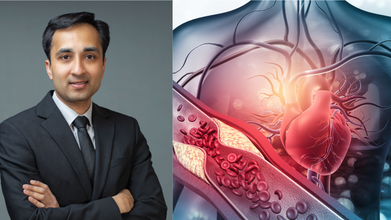
Indians are facing an increasing burden of heart diseases, and mortality is rising faster compared to other countries. A top US cardiologist has now shared the major risk factors that range from genetics to obesity to pollution.
Cardiovascular diseases (CVDs) cause nearly 31 per cent of all deaths in India, according to the latest Sample Registration Survey (SRS) 2021-2023 data from the Registrar General of India, released in September 2025.
The SRS report highlighted cardiovascular diseases as the leading cause of death, especially among adults over 30.
Speaking exclusively to HealthandMe, Dr. Sripal Bangalore, Professor of Medicine at New York University School of Medicine, highlighted the key reasons why India is seeing a huge burden of heart diseases.
"I think it’s a combination of traditional and non-traditional risk factors. Globally, we are seeing the burden of obesity increasing, and specifically in India, genetic factors and non-traditional risk factors also play a role," Dr. Sripal said.
"There is a growing investigation into lipoprotein(a) and other causes of cardiovascular disease (in India). Obesity is a major risk factor, and I’m sure stress and pollution also add to it, with more and more data supporting these links," he added.
Data from the World Heart Federation showed that heart disease kills 28.6 lakh Indians every year. In the recent past, India has also been seeing a significantly higher rate of heart attacks and related deaths, even in children as young as 12 years old.
Also read: AHA’s New Dyslipidemia Guidelines Stress Early Screening, Lifestyle Management
What Factors Are Driving This Trend
"I think we need to know that part of it tends to be non-traditional, because in the Western world most of it is explainable by traditional risk factors like hypertension, diabetes, and hypercholesterolemia," Dr. Sripal said.
"What we see in India is that it is less about those risk factors, but more about non-traditional ones, including potentially genetic factors and lipoprotein(a)," the doctor added.
The Indian-origin interventional cardiologist also cited lifestyle factors such as stress and pollution that are significantly adding to the increased risk of cardiovascular events in the country.
AHA 2026 Cholesterol Guidelines: Relevance For India
Recently, the American Heart Association (AHA) released cholesterol guidelines, which stressed the importance of early screening, starting with teenagers.
The guidelines call for early intervention through early screening and healthy lifestyle changes, starting from childhood.
It recommends:
- Children (9-11 years): Cholesterol screening if never done before.
- Adults (30-79 years): Evaluate 10- and 30-year ASCVD risk to determine the need for early intervention
"India is a good example where LDL levels (bad cholesterol) may not be very high, like in the Western world. Many times, HDL cholesterol (good cholesterol) tends to be lower, and there are other risk factors, including lipoprotein(a), which seems to be elevated here," Dr. Sripal said.
How To Improve Heart Health
The doctor also explained whether overall diet quality matters more than just cholesterol intake.
"Diet adds to the totality of everything that we do, including increasing the risk of obesity. Cholesterol may explain some part of it, but having a heart-healthy diet is critically important," Dr. Sripal said.
The cardiologist highlighted the need to increase the intake of fruits and vegetables, as consuming natural foods is critically important.
Importantly, he also emphasized at least making sure that you have a lipid panel to check your cholesterol levels.
"We are assuming that you are staying healthy and not smoking. Checking blood pressure, it depends on your age, but at least once a year, checking your lipid panel would be critically important," Dr. Sripal told HealthandMe.
As a cardiologist, he shared that to boost heart health, the key is
- to make sure that you lead a healthy lifestyle,
- stay away from smoking,
- increase physical activity,
- reduce stress.
"Pollution is one factor, and I think we can all do our part to make sure that we don’t contribute more to environmental pollution," he noted.
- Follow Us :


© 2024 Bennett, Coleman & Company Limited