
- Health Conditions A-Z
- Health & Wellness
- Nutrition
- Fitness
- Health News
- Ayurveda
- Videos
- Medicine A-Z
- Parenting
Why Are US Women Dressed In Red?

Credits: WBBJTV. News
Cardiovascular disease remains the leading cause of death among women, claiming more lives each year than all cancers combined. Yet, it continues to be misunderstood, underdiagnosed, and often dismissed as a “male” health problem. In Ohio and across the US, women are now using a striking visual message to confront this reality head-on, by quite literally dressing for the cause.
February, observed as American Heart Month, marks a renewed push to educate communities about heart disease, especially among women. Health advocates stress that while the spotlight is brightest this month, the risks and responsibilities extend far beyond the calendar.
“It’s our Super Bowl,” said Lauren Thomas, development director for the American Heart Association of North Central West Virginia and Ohio Valley. “It’s about awareness. Heart health is not a one-month conversation. It has to be a year-round priority where people actively put their hearts first.”
Why Red Has Become a Warning Sign
Across Ohio, women are wearing red, a color long associated with love but also with danger. The message is deliberate. Red symbolizes the urgency of cardiovascular disease, a condition responsible for one in every three deaths among women.
“When we wear red, we start conversations that many people avoid,” said Melissa Pratt, a heart disease survivor, reported WBBJ News. “One in three women die from cardiovascular disease. Wearing red encourages women to get checked, understand their risks, and take their health seriously.”
From landmarks lit in red to workplaces, neighborhoods, and social media feeds filled with crimson outfits, the visual campaign is meant to disrupt complacency. It asks a confronting question. If heart disease is killing women at this scale, why is it still not treated like a crisis?
Ohio Valley And Downtown Jackson Women Taking the Lead
Coinciding with American Heart Month, the Ohio Valley Women of Impact campaign launches this Friday. Six local women, Crissy Clutter, Jan Pattishall-Krupinski, Lacy Ferguson, Shelbie Smith, Jennifer Hall-Fawson, and Laurie Conway, are leading fundraising and awareness efforts aimed at improving women’s heart health.
Their work focuses on education, early detection, and supporting research that better understands how heart disease presents differently in women. Symptoms in women can be subtle, ranging from fatigue and nausea to jaw or back pain, which often delays diagnosis and treatment.
Turning Awareness Into Action
To mark the start of the month, the American Heart Association hosted a National Wear Red Day breakfast on Friday morning at the LIFT Wellness Center in Jackson Walk Plaza. The event brought together survivors, advocates, and health professionals to reinforce a simple but powerful message. Awareness must lead to action.
Health experts continue to urge women to prioritize regular checkups, manage blood pressure, cholesterol, and stress, and recognize early warning signs. Lifestyle changes, timely screenings, and informed conversations can significantly reduce risk.
Dressed In Death, Fighting For Life
The women of Ohio are not wearing red for fashion. They are wearing it as a warning, a remembrance, and a call to action. In dressing themselves in the color of urgency, they are confronting a disease that has taken too many lives quietly. This February, their message is clear. Heart disease is not inevitable, but ignoring it can be deadly.
How Colonialism Increased India's Diabetes Burden - Explained
Credits: South Magazine
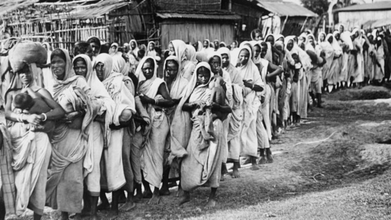
If your roots trace back to the Indian subcontinent, your risk of developing type 2 diabetes is significantly higher than that of Europeans. Research shows that Indians, Pakistanis, and Bangladeshis are up to six times more likely to develop the condition, often at a younger age and at lower body weights. For years, carbohydrate-heavy diets were blamed. But growing scientific evidence points to a far deeper and darker cause: repeated famines during British colonial rule that may have altered metabolic resilience across generations.
Can Hunger Change Human Biology?
The idea that starvation can leave a genetic imprint may sound extreme, but science supports it. Prolonged nutrient deprivation can permanently affect how the body stores fat, processes glucose, and responds to food abundance later in life. Even a single famine can raise the risk of metabolic disorders such as diabetes in future generations.
This understanding forms the basis of the “thrifty genotype hypothesis,” a concept widely discussed in evolutionary biology.
The Thrifty Genotype Hypothesis Explained
The thrifty genotype hypothesis suggests that populations exposed to repeated famines develop genetic traits that help conserve energy. These traits are lifesaving during scarcity but become harmful in times of plenty, increasing the risk of obesity and diabetes.
Economic historian Mike Davis documents that India experienced 31 major famines during 190 years of British rule between 1757 and 1947, roughly one every six years. By contrast, only 17 famines occurred in the previous 2,000 years. Davis estimates that 29 million people died in the Victorian era alone. Economic anthropologist Jason Hickel places the death toll from colonial policies between 1880 and 1920 at around 100 million.
Scientific Evidence Linking Famines to Diabetes
A study published in Frontiers in Public Health titled The Elevated Susceptibility to Diabetes in India: An Evolutionary Perspective argues that these famines reshaped metabolic traits. The researchers note that Indians tend to have a higher fat-to-lean mass ratio, lower average birth weight, and reduced ability to clear glucose. This combination increases metabolic stress and lowers resilience, explaining earlier onset of diabetes compared to Europeans.
A Nation That Shrunk Over Time
Colonial-era famines also affected physical growth. Studies show that average Indian height declined by about 1.8 cm per century during British rule. Historian accounts describe ancient Indians as tall and robust, with even Greek chroniclers noting their stature during Alexander’s invasion. By the 1960s, however, Indians were about 15 cm shorter than their Mesolithic ancestors.
Read: How Colonialism Continues To Bear An Impact On The South Asian Health Crisis
While the British did not cause early declines, widespread impoverishment under colonial rule sharply accelerated the trend. Only in the past 50 years has average height begun to recover.
Famines Were Policy Failures, Not Nature
Mike Davis argues that colonial famines were driven not by food shortages but by policy. Grain continued to be exported even as millions starved. During the 1876 famine, Viceroy Robert Bulwer-Lytton refused to halt exports, and relief work was deliberately discouraged. Davis describes these deaths as the result of state policy, not natural disaster.
Medical journal The Lancet estimated that 19 million Indians died during famines in the 1890s alone.
Breaking the Diabetes Cycle
India now faces the consequences. According to the Indian Council of Medical Research, over 101 million Indians live with diabetes today. Experts argue that prevention must begin early, with reduced sugar intake, low-glycaemic diets, healthier fats, and compulsory physical activity in schools. Education about famine-linked intergenerational health risks could also help younger generations make informed choices.
India has avoided famine since Independence in 1947. The next challenge is ensuring that history’s biological scars do not continue to shape its future.
Nipah vs Bird Flu in India: Which Virus Poses A Greater Threat To Humans?
Credits: Canva
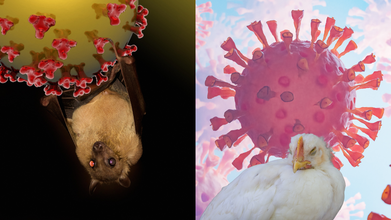
As India steps into 2026, two familiar yet unsettling names have returned to the public health conversation. Nipah virus cases reported from West Bengal and fresh bird flu detections among crows in Bihar have raised questions about how dangerous these infections really are for humans. While both diseases originate in animals and can cross over to people, their risks, spread patterns and fatality levels are very different.
Two zoonotic threats, very different risks
Nipah virus and avian influenza are both zoonotic, meaning they jump from animals to humans. Beyond that similarity, the comparison largely ends. Nipah is rare but extremely lethal when it infects humans. Bird flu, on the other hand, spreads widely among birds and poultry, but only occasionally infects people.
Health experts note that understanding this distinction is crucial. Nipah alarms public health systems because even a small cluster of cases can lead to severe illness and death. Bird flu triggers large scale surveillance mainly due to its impact on poultry and the economy, with human cases remaining uncommon.
Read: Bird Flu In India: How Safe Is It To Eat Chicken And Eggs?
Nipah virus and why it worries health officials
The Nipah virus was first identified in Malaysia in the late 1990s and has since caused multiple outbreaks in South and Southeast Asia. Fruit bats are its natural carriers, and humans can get infected through contaminated food, contact with infected animals or close contact with an infected person.
Symptoms often begin like a common viral illness, with fever, headache and cough. In many patients, the disease progresses rapidly. Within days, some develop encephalitis, seizures, confusion and coma. Respiratory distress is also common in severe cases.
According to the World Health Organization, Nipah’s fatality rate ranges between 40 and 75 percent, depending on the outbreak and access to timely medical care. There is no approved vaccine or specific antiviral treatment. Doctors rely on intensive supportive care, which makes early detection and isolation critical.
In January 2026, West Bengal reported multiple Nipah cases, prompting contact tracing and monitoring of nearly 200 people. Most tested negative, and the WHO assessed the risk of wider spread as low. Still, the high death rate keeps Nipah firmly on India’s list of priority pathogens.
Bird flu and its limited human impact
Bird flu, or avian influenza, is caused by influenza A viruses that primarily infect birds. Strains such as H5N1 and H9N2 have been detected repeatedly in India among poultry and wild birds. Bihar’s Darbhanga district recently reported thousands of bird deaths, triggering containment measures.
Humans usually get infected through close contact with sick or dead birds or contaminated environments. When infection does occur, symptoms can resemble seasonal flu at first, but severe cases may progress to pneumonia or acute respiratory distress.
Some bird flu strains have shown high fatality rates among confirmed human cases, sometimes close to 50 percent. However, experts stress that these numbers come from very small case counts. Sustained human to human transmission remains rare, which limits large outbreaks in people.
Read: Nipah Virus Outbreak In India: Myanmar Airport Tightens Health Screenings
Which virus is deadlier for humans?
In terms of individual risk, Nipah virus is considered deadlier for humans. Its consistently high fatality rate, lack of treatment options and potential to cause severe brain inflammation make it especially dangerous, even when case numbers are low.
Bird flu poses a broader threat to animal health and livelihoods, but its direct impact on human life has so far been limited. Public health officials continue to monitor both closely, knowing that vigilance, early reporting and strong surveillance are the best tools to prevent either virus from spiralling into a larger crisis.
Can H5N1 Virus Infect Humans?
Credits: Canva
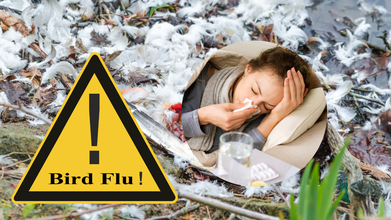
After the death of 150 crows in Bihar's Bhagalpur district in Naugacha, sudden death of 1,500 crows in Chennai, in Tamil Nadu has again raised concerns over bird flu. At the center of all these is Highly Pathogen Avian Influenza or the HPAI, which is also known as bird flu or the A H5N1 virus. While the strain is known for being notorious and have jumped states, spreading outbreaks in many Indian states, including Jharkhand, Bihar, Maharashtra, Andhra Pradesh, Kerala, Telangana, and Tamil Nadu, the concerns do not end there. Many are concerned if it is a threat to humans too.
Can H5N1 Virus Infect Humans?
As per the World Health Organization (WHO) data, between January 2023 and December 2025, a total of 993 human cases of avian influenza were reported in 25 countries. Almost half of them, which is around 477 people, died. The virus has a fatality rate of 48 per cent.
Two different studies, one done by the universities of Cambridge and Glasgow that show how avian flu strains are multiplying even when the body temperatures could hinder viruses. Whereas, another important study led by Indian scientists, by Philip Cherian and Gautam Menon of Ashoka University, published in BMC Public Health predict if H5N1 or the bird flu virus, could start spreading among humans. How quickly must we act to stop it?
Can H5N1 Virus Infect Humans? How It Survives In The Body?
Human influenza viruses infect many each year. The seasonal strains we see most often fall under influenza A and tend to do well in the cooler temperatures of the upper respiratory tract, which is close to 33°C. They are less suited to the warmer, deeper parts of the lungs, where temperatures reach about 37°C.
As per Science Daily, when the body cannot slow an infection, the virus continues to multiply and spread, which can lead to more serious illness. Fever acts as a protective response, pushing body temperature as high as 41°C. Until now, the exact reason why fever slows some viruses but not others has been unclear.
Avian influenza behaves differently. These viruses usually grow in the lower respiratory tract, and in their natural hosts, such as ducks or seagulls, they often infect the gut. Temperatures in these areas can reach 40°C to 42°C, which helps explain their greater tolerance to heat.
Read: Could Bird Flu Become The Next Pandemic For Humans?
Can H5N1 Virus Infect Humans? What Does The India Specific Study Reveal?
Using BharatSim, an open-source simulation platform originally developed during Covid-19, the researchers recreated what an outbreak might look like in real life. “The threat of an H5N1 pandemic in humans is a genuine one,” Prof Menon said, “but we can hope to forestall it through better surveillance and a more nimble public-health response.”
Their model begins where experts believe a real outbreak would: with a single human infection, most likely a poultry worker or someone exposed to infected birds at a farm or market. The danger, the researchers argue, lies not in that first case, but in whether sustained human-to-human transmission takes hold.
The study by Ashoka University has the most sobering findings in how fast control can slip away. According to the simulations, once cases rise beyond roughly two to ten people, the virus is likely to move beyond immediate contacts and into the wider community.
If households of close contacts are quarantined when just two cases are detected, the outbreak can almost certainly be contained. By the time ten cases are identified, however, the model suggests the infection has probably already spread far enough that early interventions no longer make a meaningful difference.
To ground their work in reality, the researchers focused on a village in Tamil Nadu’s Namakkal district, one of India’s largest poultry hubs. With more than 1,600 farms, around 70 million chickens and tens of millions of eggs produced daily, the region reflects the kind of dense human-animal interaction where spillovers are most likely.
In the simulation, the virus spreads outward from a single workplace into homes, schools and markets, tracking primary and secondary contacts. Once “tertiary” infections, contacts of contacts, appear, control becomes dramatically harder without severe measures such as lockdowns.
Read: Bird Flu Variant Can Now Withstand Fever, Sparking Stronger Human Threats
Can H5N1 Virus Infect Humans? What Works And What Does Not Work
Culling birds work, but only if it happens before humans are infected. Once the spillover is done, isolating patients and quarantining is the only option that can stop the virus, that too if done very early. Targeted vaccination could help raise the threshold at which the virus can sustain itself. Quarantine imposed too early keeps families together longer, increasing household transmission. Imposed too late, it barely slows the outbreak at all.
- Follow Us :


© 2024 Bennett, Coleman & Company Limited