
- Health Conditions A-Z
- Health & Wellness
- Nutrition
- Fitness
- Health News
- Ayurveda
- Videos
- Medicine A-Z
- Parenting
Unique Symptoms Of 'Cicada' The Highly Mutated New COVID Variant Of 2026
Credits: Canva
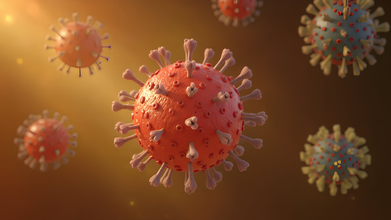
A new, highly mutated COVID variant called 'Cicada' is spreading in the US. This is the BA.3.2 mutation of the COVID-19 variant. While nationally the cases of COVID have remained low, the BA.3.2 strain is gaining traction across the globe.
Also Read: Brain Aging: This Protein Is Linked to Memory Loss and Cognitive Decline
What Is The Cicada COVID Variant?
Cicada or the BA.3.2 strain emerged over a year ago, and simmered until last fall. However, this was when it started ramping up in countries including the US. As of February, BA.3.2 has been detected in at least 25 states, noted the US Centers for Disease Control and Prevention (CDC).
The variant's slew of genetic changes in its spike protein is what has made people concerned. This is what makes it unique and distinct from other variants in circulation.
According to Andrew Pekosz, Ph.D., a virologist at the Johns Hopkins Bloomberg School of Public Health, as reported by TODAY.com, "It [the variant] has a lot of mutations that may cause it to look different to your immune system."
Also Read: Eye Drops: US FDA Recalls Over 3 Million Products Over Safety Concerns
The SARS-CoV-2 virus that causes COVID-19 mutates constantly and spreads over time. It thus leads to emergence of new variants.
A new study published in the CDC’s Morbidity and Mortality Weekly Report suggests that emerging variants could weaken protection gained from prior COVID-19 infection or vaccination.
One such “hyper-mutated” strain, BA.3.2, is now being closely tracked by public health officials. In December 2025, the World Health Organization classified it as a “variant under monitoring.”
When Was Cicada COVID Variant First Detected?
BA.3.2 was first detected in South Africa in November 2024. It is a descendant of BA.3, an Omicron subvariant that appeared in 2022 and briefly circulated alongside BA.1 and BA.2, according to the CDC.
Although BA.3 never became dominant, it did not completely disappear. “It fizzled out, but persisted at low levels,” said Pekosz. After two years and dozens of mutations, BA.3.2 eventually emerged.
For much of 2024, the variant spread quietly, overshadowed by dominant strains like Nimbus and XFG, which stem from BA.2. However, by September, BA.3.2 began gaining ground. “It was under the radar, replicating, until it started spreading more efficiently between people,” Pekosz noted.
What sets BA.3.2 apart is its spike protein, which carries an unusually high number of mutations — around 70 to 75. This makes it significantly different from strains such as JN.1 and LP.8.1, which current COVID-19 vaccines are designed to target.
The CDC describes BA.3.2 as a “genetically distinct” lineage compared to recent variants. Early laboratory studies suggest it may be capable of evading existing immunity, as its spike protein changes help it escape neutralising antibodies.
Also Read: World Doctors’ Day: Date, Origin And Significance
What Makes Cicada So Unique?
The BA.3.2 variant is nicknamed by T Ryan Gregory, Ph.D., a professor of evolutionary biology at the University of Guelph. He wrote on X, formerly Twitter: "Well, it's that time again. Meet "Cicada", BA.3.2* (including descendant RE.*). This one has been underground for years (its ancestor BA.3 hasn't been circulating since early 2022, and didn't do much then either) but is now emerging as a contender for the next major lineage."
While most of the symptoms of this new variant remains same as from the other variants, one thing that stands out here is the gastrointestinal symptoms that cicada could cause. However, experts note that this variant will not make anyone more sicker. Other symptoms include:
- Cough
- Fever or chills
- Sore throat
- Congestion
- Shortness of breath
- Loss of smell or taste
- Fatigue
- Headache
Suicide Prevention Day: When Does A Distressing Thought Become A Suicide Warning Sign? Experts Explain

Credit: AI
“I wish I could disappear.” “I don’t want to wake up tomorrow.” “I can’t do this anymore.”
Not every expression of wanting to disappear means a person wants to die. But experts say changes in the frequency, intensity and nature of these thoughts can indicate suicide risks.
Everyday, we hear people around tossing such statements around when they are overwhelmed by emotional pain. They may be spoken during a period of intense stress, grief, relationship conflict, professional pressure or what feels like an unbearable phase of life. But what exactly do they mean?
On World Suicide Prevention Day, mental health experts say there is an important difference between wanting to escape a painful situation, contemplating about death in a passive manner and actively thinking about ending one's life.
At the same time, such statements should not automatically be brushed aside as something a person said “in the moment”. Understanding what lies behind those words, how often such thoughts occur and whether they are becoming more intense can help determine when emotional distress may be moving into a higher-risk state.
Not Every Thought About Disappearing Is A Wish To Die
In a conversation with HealthandMe, Dr. Shiv Prasad, Head of Department, Psychiatry, Lady Hardinge Medical College & Smt. Sucheta Kriplani Hospital, says statements expressing a wish to disappear can reflect different degrees of psychological distress.
“These statements can show different levels of distress which a person might be going through. Sometimes a person is expressing a wish to escape from overwhelming emotional pain rather than a wish to die. This can be different from a passive wish for death, such as “I wish I would not wake up,” and different again from active suicidal thinking, where the person is actively thinking about ending their life.”
Talking to HealthandMe, Dr. Samant Darshi, Psychiatrist & De-Addiction Specialist, Director- Psymate Healthcare, Noida, also stresses the need to distinguish between these experiences. He says such statements may indicate different levels and intensity of pain and suffering.
“I want to vanish" statements can indicate different levels of suffering and distress. It is essential clinically to differentiate among transient escape wishes, passive thoughts of death, and suicidal ideas. They do not necessarily indicate that someone wishes to kill himself but should be addressed properly and discussed considering the patient's situation.”
The experts say that a person saying they want to disappear may be expressing a desire to escape from overwhelming circumstances rather than a desire to die. Passive thoughts of death represent another level of concern, while active suicidal thinking involves thoughts of ending one's own life.
Also read: Eclectic Therapy: Why Mental Health Treatment Cannot Follow a One-Size-Fits-All Approach
When Do Suicidal Thoughts Become More Concerning?
Experts say one of the key things to watch for is escalation. A thought that was fleeting may become recurrent. A vague wish wanting things to stop may become a persistent desire to die. The person may begin thinking about how, when or where they could end their life.
Dr. Prasad explains, “We as clinicians become more concerned when these thoughts become more frequent, more intense, more persistent, or harder for the person to control and these thoughts move from “I want my suffering to end” to “I want to die” and then towards thinking about how, when or where to do it.
He adds, “The situation is even more concerning when there is suicidal intent, a plan, access to the means to carry it out, or any preparation to act. A previous suicide attempt along with severe mental illness, substance use, and major recent stressors can further amplify the risk.”
Dr. Darshi similarly points to changes in the nature of suicidal thinking as a major concern. Questions around frequency, intensity, persistence, control, intent, planning and preparation can provide a clearer picture.
“Suicide becomes more worrisome when suicidal thoughts occur frequently, persistently, intensively, specifically, or uncontrollably. The development of increased interest in death, creation of suicide plans and methods, inability to resist suicidal impulses, and increase in hopelessness are indicative of increasing risk. Any changes in these aspects require urgent expert intervention and help.”
Also read: Teachers' Day 2026: How Teachers Shape Students’ Mental Health
Signs May Appear Before The Person Talks About Suicide
There is no single behavioural change that can reliably predict suicide. However, family members and friends may notice changes that suggest a person is struggling more than they are letting on.
Dr. Prasad says, “Family and friends may start to notice social withdrawal, loss of interest, major changes in sleep or appetite, increased alcohol or drug use, irritability, agitation, or a sudden worsening of mood. The person may also repeatedly talk about feeling hopeless, trapped, helpless or like a burden. They may even start to verbalise that they want to die, or life seems worthless to them so these are few statements which we should be vigilant about.”
Withdrawal, disturbed sleep, irritability or loss of interest can occur with depression, anxiety, burnout, grief, physical illness or ordinary periods of stress. None of these signs, by itself, proves that someone is suicidal. What should prompt concern is a noticeable change in behaviour or emotional state.
Dr. Darshi adds, “One's friends and relatives can observe withdrawal, loss of interest in things and people around, emotional changes, irritation, changes in sleep or appetite, decreased effectiveness, giving away personal belongings, unusual farewells, increased use of drugs, or unusual calmness after serious mental pain. None of these symptoms proves suicidal ideation, but any change is worth paying attention.”
Also read: Col Anurag Upadhyay’s Locked-In Syndrome: What The Rare Condition Means
Someone Can Look Completely Fine And Still Be At Risk
One of the most persistent misconceptions about suicide is that a person at risk will necessarily look visibly distressed. It may not be always true. Someone can continue working, studying, socialising, exercising or talking to friends while privately experiencing significant suicidal thoughts.
Dr. Prasad says, “A person can continue to work, study, meet friends and even appear cheerful while experiencing serious suicidal thoughts internally. People may hide their distress because of shame, fear of being judged, concern about family, or because they do not know how to ask for help. Therefore, appearing normal does not mean that a person is necessarily safe. If there are reasons for concern, it is better to ask directly rather than assume everything is fine.”
Expert says people may conceal their distress for many reasons, including shame, fear of judgement or concern about how others might react. Some may also feel pressure to continue fulfilling their responsibilities despite what they are experiencing internally.
Dr. Darshi explains, “Individuals might deliberately hide signs of distress, feel obligated to function, or look fine even with immense distress inside. This means that being "normal" outside cannot exclude a person from the risk. The experience that people report having inside is what counts in assessing their safety.”
Also read: Mental Health Emergency Visits Among Children Aged 6-9 Rise 62% In England
What Should You Ask If Someone Says They Are Suicidal?
When someone admits to having suicidal thoughts, the instinct of friends and family may be to panic, immediately reassure them or tell them that they have so much to live for. Experts say the first step should instead be to stay calm and listen.
Dr. Prasad says, “The first step is to stay calm and listen without judging. It is appropriate to ask directly: “Are you thinking about suicide?” “Have you thought about how you would do it?” “Have you made any preparations?” These questions can help us understand how urgent the situation is.”
He adds, “Someone with suicidal thoughts should be encouraged to seek professional help, especially when the thoughts are recurring or worsening. But any active suicidal intent, plan, access to the means, recent preparation, or a recent attempt should be treated as an emergency. In such a situation, the person should not be left alone and urgent emergency help should be sought.”
The difference between having suicidal thoughts and being in immediate danger cannot always be determined by a friend or family member alone. When there is active intent, a plan, preparation, a recent attempt or an inability to remain safe, the situation should be treated as an emergency.
Asking About Suicide Does Not Put The Idea In Someone's Head
There is a long-standing fear that directly asking a person about suicide could somehow introduce the idea or encourage suicidal behaviour. Both experts reject this.
Dr. Prasad says that it is a common myth. He said, “It can make it easier for someone to speak about thoughts they may have been hiding out of fear or shame. A calm question such as, “I’ve noticed that you seem to be struggling. Are you thinking about suicide?” can open the door to an important conversation and allow the person to get help.”
A direct but calm question can communicate that the person is being taken seriously and that they do not have to hide what they are experiencing.
When Should Someone Seek Professional Help?
Experts say people should not necessarily wait for suicidal thoughts to become severe before seeking help.
Dr. Prasad says, “I would advise people not to wait until suicidal thoughts become very severe. Professional help should be sought when suicidal thoughts are repeated, becoming stronger or more frequent, interfering with daily life, or occurring alongside significant mental illness, hopelessness, substance use, severe insomnia or other major changes in behaviour. If a person has suicidal intent, a plan, has started preparing, this is no longer a “wait and watch” situation. Urgent emergency help is needed.”
The message is not that every disturbing thought should be treated as an immediate emergency. Rather, repeated, worsening or increasingly difficult-to-control suicidal thoughts deserve professional attention, even if the person has never attempted suicide. And when there is intent, planning, preparation or an inability to stay safe, waiting is no longer appropriate.
Dr. Darshi says, “Thoughts of suicide should warrant professional help if they are recurring, if they are becoming intense, if the person is unable to control them, if they involve hopelessness, and if they interfere with everyday activities. Thoughts involving intent, plans, access to means, and past suicidal actions should definitely warrant professional help. When someone is unable to keep themselves safe, it is best to seek emergency help.”
A person repeatedly saying they want to disappear, cannot go on, does not want to wake up or feels that there is no way out may be trying to communicate distress that they do not know how to express differently. The response does not have to be panic or dismissal.
One should ask them directly and listen without judgement. One should also take recurring or escalating thoughts of self-harm seriously. And seek professional or emergency help when the level of risk demands it.
Are GLP-1 Drugs Actually Changing Asthma Biology, Or Are People Simply Having Fewer Attack Due To Weight Loss?
Credit: AI
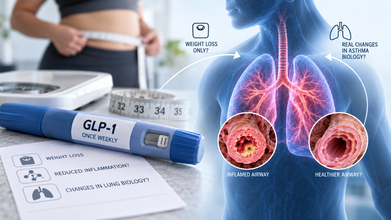
GLP-1 drugs have been become increasingly popular for obesity and type 2 diabetes. But it may also have a beneficial effect on your lungs. New research presented at the European Respiratory Society (ERS) Congress in Barcelona suggests that people with asthma who were prescribed GLP-1 receptor agonists, particularly semaglutide, experienced significantly fewer asthma attacks.
But the important question is - are these drugs directly affecting asthma biology, or are people simply getting their asthma in control because they lose weight?
The study does not provide that answer. In fact, researchers and independent experts say clinical trials are needed before GLP-1 drugs can be considered a treatment for asthma.
GLP-1 Drugs May Help With Control Asthma
Researchers led by Professor Chloe Bloom of Imperial College London’s National Heart & Lung Institute analysed UK electronic health records in four parallel studies.
Each study included around 20,000 to 22,000 people who had started a GLP-1 receptor agonist or a different type of diabetes medicine called a sulfonylurea.
The researchers looked at people with asthma and COPD and compared the frequency of acute respiratory attacks after treatment. The strongest result was seen with semaglutide.
Among people with asthma, semaglutide use was linked with nearly 40% fewer asthma attacks, while among people with COPD, it was linked with about a 20% reduction in flare-ups. The effect appeared stronger among people with more pronounced asthma.
Professor Bloom said, “The effect was strongest with semaglutide especially in people with asthma, where use of semaglutide appears to be associated with nearly 40% reduction in asthma attacks. Semaglutide also led to a 20% reduction in COPD flare ups.”
Also read: Ozempic Hair: GLP-1 Drug Use Linked To 7% Higher Baldness Risk In Men
Asthma And Obesity
Obesity itself is strongly associated with asthma. Excess body fat can affect lungs, increase inflammation and as well as immune response.
Dr. Shehla Shaikh, Consultant Endocrinologist, Saifee Hospital, Mumbai told HealthandMe, “People who are obese have a higher risk of developing asthma and often have asthma that is more frequent or more severe. When people lose weight the pressure, on the lungs decreases breathing becomes easier. Inflammation goes down. That may be why some people who use GLP-1 medicines say they have asthma attacks. However new research suggests that the story may not end with weight loss.”
So, if someone with obesity and asthma takes semaglutide, loses weight and subsequently has fewer attacks, the improvement may simply be a consequence of the weight loss.
Dr Vimal J. Pahuja, Associate Director, Dept of Medicine, Metabolic Physician & Diabetologist, Dr L H Hiranandani Hospital, spoke to HealthandMe, to explain more factors that could influence asthma flare-ups: “Obesity itself can make asthma worse. Extra weight around the chest and abdomen can reduce lung expansion and increase the effort needed to breathe. Obesity is also linked with acid reflux, sleep apnoea and a background state of inflammation, all of which can worsen asthma. Therefore, when a person loses meaningful weight on a GLP-1 drug, it is quite reasonable to expect fewer symptoms and possibly fewer attacks.”
Also read: Wegovy & Zepbound Are Not Approved By US FDA For Children Under 12: So Why Are Prescriptions Rising?
Even though research has not reached there yet, could there be a possibility GLP-1 drugs could have a beneficial impact on asthma? If yes, this could spark hope for the possibility that the drugs could have effects on airway inflammation that are partly independent of weight loss.
Dr. Pahuja explained, “GLP-1 receptors are also found in the lungs. Laboratory studies suggest that activating these receptors may calm inflammatory signals, reduce excess mucus and make the airways less reactive. Animal studies have shown reductions in several immune pathways involved in asthma, including signals that normally attract inflammatory cells into the lungs.”
He continued, “This is scientifically exciting because obesity-related asthma often behaves differently from the typical allergic asthma seen in younger patients. Early human studies are also encouraging. People with both diabetes and asthma who started GLP-1 medicines appeared to have fewer asthma flare-ups than those taking some other diabetes treatments. Importantly, some of this benefit remained even after researchers accounted for weight and blood-sugar changes. However, this does not mean GLP-1 drugs are asthma medicines. They should not replace inhalers or standard asthma treatment.”
The research was observational and based on medical records, rather than a randomised clinical trial. That means researchers observed what happened to people who received different medicines but did not randomly assign the treatments.
Also read: Exclusive: GLP-1 Drugs Are The ‘New Statins’, Says University Hospital Birmingham Professor
Could GLP-1 Drugs Become Asthma Treatments?
Professor Bloom herself cautioned: “The findings from this study are encouraging, but they should not change treatment decisions on their own. People with asthma or COPD should not start GLP-1 receptor agonists specifically for their lung condition outside current prescribing guidance.”
Experts caution that despite promising outcomes of GLP-1 drugs, more research and clinical trials would be needed to prove that weight loss medicines have effects that transcend weight loss and diabetes management.
Dr. Shaikh concluded, “GLP-1 receptors are part of biological pathways that are linked to inflammation and metabolism. Scientists are studying whether GLP-1 drugs could directly affect inflammation in the airways or reactions that help cause asthma. The evidence is still growing, and it is too early to say that GLP-1 drugs really change the underlying biology of asthma.”
Hot Tea, Coffee May Triple Esophageal Cancer Risk: Study

Credit: iStock
If you regularly drink your tea or coffee “very hot,” you may be at three times higher risk of developing a type of esophageal cancer, according to a new study.
The team found that drinking hot beverages at very high temperatures may increase the risk of esophageal squamous cell carcinoma (SCC), which forms in the mucosal lining of the food pipe.
Very Hot Drinks Linked To Higher Cancer Risk
Studies in Asia, Africa, South America and the Middle East have consistently shown that drinking tea or mate (a herbal drink) at very high temperatures (around 70°C) increases esophageal cancer risk. However, evidence has been limited for drink temperatures typically consumed in Western populations.
To explore this, a team at Oxford analyzed data from around 980,000 UK adults and tracked their health records for more than 10 years to see whether they developed esophageal SCC.
Also read: Why You Suddenly Can’t Tolerate Foods You Once Ate Easily
Compared with people who reported drinking their beverages “warm,” those who preferred their drinks “hot” had nearly twice the risk of esophageal SCC, while those who drank them “very hot” had a three times higher risk.
The findings “add to existing evidence that drinking very hot drinks could increase the risk of esophageal squamous cell carcinoma,” said Dr Keren Papier, lead researcher and senior nutritional epidemiologist at Oxford Population Health.
It’s The Temperature, Not Tea Or Coffee
But does the beverage matter? No, the study did not find that consuming tea and coffee increased the risk of esophageal SCC. Instead, the risk was associated with the temperature of any hot beverage consumed.
“Our findings suggest that reducing drink temperature in populations where tea and coffee are frequently consumed could offer an important means of SCC prevention,” the researchers said.
How Could Very Hot Drinks Raise Cancer Risk?
It is unclear how higher drink temperatures may affect esophageal cancer risk. However, existing evidence suggests that very hot drinks may damage the lining of the esophagus, which, over time, can increase the chance of cancer.
The International Agency for Research on Cancer (IARC) also classifies drinking very hot beverages above 65°C as “probably carcinogenic” to people.
What Is Esophageal Cancer?
Read More: Attention Ladies: More Than 5 Cups Of Coffee Linked To Lower Bone Density; Tea May Help
The esophagus is a long, hollow tube that helps move swallowed food from the back of the throat to the stomach for digestion. Esophageal cancer is a malignant tumor in the food pipe and primarily affects people over the age of 55.
Lifestyle factors that may predispose a person to esophageal cancer include tobacco use, alcohol consumption, chronic acid reflux, obesity, and poor diet choices.
In the UK, there is a 1% lifetime risk of being diagnosed with esophageal SCC.
How Can You Reduce Your Risk?
While the evidence linking hot drinks to cancer risk is still evolving, there are proven ways to reduce the risk of esophageal SCC.
“The most important ways to reduce the risk of this cancer type are not smoking and cutting down on alcohol,” said Fiona Osgun, head of health information at Cancer Research UK. Letting your tea or coffee to cool down a little before taking a sip, may be a good idea.
- Follow Us :


© $2026 Times Horizon Private Limited