
- Health Conditions A-Z
- Health & Wellness
- Nutrition
- Fitness
- Health News
- Ayurveda
- Videos
- Medicine A-Z
- Parenting
Why Did This 64-Year-Old Man's Tongue Suddenly Start Sprouting Green Hair?

Representational Image (Canva) and image from the case study, courtesy: The New England Journal of Medicine
Back in 2023, a 64-year-old man experienced something weird. He had green hair growing on his tongue. Initially he was prescribed antifungal medicine, however, the treatment did not work on him. What he had was called a hairy tongue.
A Visit To Doc
The patient's tongue turned green about two weeks before he paid a visit to the doctor. This was shortly after he had completed a course of antibiotics from a gum infection.
What initially happened was a discoloration and doctors thought that it was a case of oral thrush, which is a fungal infection. As a result, he was prescribed antifungal treatment, however, this did not do anything. Rather, there was moss-like growths.
When doctors had a closer look, they realized that the man's filiform papillae, which are the tiny, cone-shaped bumps that cover the surface of the tongue and give its rough texture were longer than from a healthy tongue. Though there were no signs of injury or change in taste reported from the patient.
What The Case Report Said?
The case report was published in the New England Journal of Medicine, where physicians wrote, "A diagnosis of hairy tongue was made."
What is hairy tongue? Hairy tongue or lingua villosa is a benign condition that causes hair-like growths of various colors to sprout on top of the tongue, said the report.
These growths are filiform papillae that haven’t shed as they normally do through regular friction — such as from brushing with a toothbrush, using a tongue scraper, or eating solid, textured foods. Under typical conditions, these tiny projections grow to about 1 millimeter before falling off naturally, in a process called desquamation, similar to how skin sheds, according to the Cleveland Clinic.
When this natural shedding doesn’t occur, the papillae can continue growing—reaching lengths of up to 0.7 inches (18 millimeters)—which can result in a condition known as hairy tongue. According to the American Academy of Oral Medicine, it affects roughly 13% of people at some point in their lives, most commonly in men and individuals over the age of 65.
As these bumps elongate into hair-like strands, they begin to trap food particles, bacteria, dead skin cells, and other debris—leading to the discolored, furry appearance of a hairy tongue. According to the American Academy of Oral Medicine, the tongue may appear brown, white, green, or even pink, depending on the underlying cause and factors like mouthwash use or certain candies.
What Causes Hairy Tongue—And Why It Sometimes Turns Black or Green
In many cases, hairy tongue takes on a jet-black appearance, a condition medically known as lingua villosa nigra, or black hairy tongue, according to a recent case report.
Several factors can increase the risk of developing a hairy tongue—regardless of its color. These include consuming a soft-food diet, drinking excessive amounts of coffee, tea, or alcohol, smoking, dehydration, poor oral hygiene, and taking certain oral medications that alter the mouth’s microbial balance. Regularly brushing the tongue is one of the most effective ways to prevent the papillae from becoming elongated and discolored.
In the case report, doctors treated a patient who presented with a green-colored tongue. They advised him to gently scrub his tongue with a toothbrush four times a day and to stop smoking. At a six-month follow-up, the patient’s tongue had returned to a normal appearance—even though he continued to smoke, the report noted.
High Brain Age May Increase Dementia Risk, Study Shows

Credit: Canva
People with a brain age that exceeds their actual age may be at a higher risk of developing dementia, according to a new JAMA Open study.
Brain aging is the natural, progressive process of structural and chemical changes in the brain over time, resulting in typical age-related cognitive decline, such as slower processing speeds, reduced brain volume (atrophy) and memory lapses.
A machine-learning study by University of California San Francisco and Beth Israel Deaconess Medical Center that was published in March 2026 has now found that a higher brain age for every 10-year gap with the actual age increased dementia risk by nearly 40 percent.
Senior author Yue Leng, MBBS, PhD, associate professor of psychiatry at the UCSF School of Medicine said: "Brain age is calculated from sleep brain waves. We know that brain activity during sleep provides a measurable window into how well the brain is aging."
Leng noted that earlier studies have found treating sleep disorders can change sleep-related brain-wave patterns.
"Better body management, such as lowering body mass index and increasing exercise to reduce the likelihood of apnea, may have an impact. But there's no magic pill to improve brain health.," first author Haoqi Sun, PhD, assistant professor of neurology at Beth Israel Deaconess Medical Center also added.
The researchers noted that the results suggest that improving sleep health could influence brain aging.
What Is Dementia?
Dementia is an umbrella term used to describe a significant decline in mental function that is serious enough to affect everyday life. It commonly impacts memory, thinking, and reasoning skills.
Dementia itself is not a single disease but a collection of symptoms caused by underlying conditions such as Alzheimer’s disease or vascular dementia.
Common signs include memory problems, confusion, difficulty finding words, changes in mood or behaviour and trouble completing familiar tasks.
These symptoms usually worsen over time and are not considered a normal part of ageing. Although there is no cure, treatment options can help manage symptoms, and early diagnosis plays an important role in care planning.
Alzheimer’s Disease: The Leading Cause of Dementia
Alzheimer's disease is one of the most common forms of dementia and mostly affects adults over the age of 65.
About 8.8 million Indians aged 60 and above are estimated to be living with Alzheimer's disease. Over seven million people in the US 65 and older live with the condition and over 100,00 die from it annually.
Alzheimer's disease is believed to be caused by the development of toxic amyloid and beta proteins in the brain, which can accumulate in the brain and damage cells responsible for memory.
Amyloid protein molecules stick together in brain cells, forming clumps called plaques. At the same time, tau proteins twist together in fiber-like strands called tangles. The plaques and tangles block the brain's neurons from sending electrical and chemical signals back and forth.
Over time, this disruption causes permanent damage in the brain that leads to Alzheimer's disease and dementia, causing patients to lose their ability to speak, care for themselves or even respond to the world around them.
While there is no clear cause of Alzheimer's disease, experts believe it can develop due to genetic mutations and lifestyle choices, such as physical inactivity, unhealthy diet and social isolation.
Early symptoms of Alzheimer's disease include forgetting recent events or conversations. Over time, Alzheimer's disease leads to serious memory loss and affects a person's ability to do everyday tasks.
There is no cure for this progressive brain disorder and in advanced stages, loss of brain function can cause dehydration, poor nutrition or infection. These complications can result in death.
How Much Wine Should You Drink To Decrease Your Risk Of Dying?

Credit: Canva
While it is commonly known that drinking alcohol heavily can lead to multiple chronic conditions, a new global study suggests that moderately drinking wine can decrease your risk dying from cardiovascular disease by 21 percent.
A group of Chinese researchers who analyzed 340,924 adults in the UK between 2006 and 2022 classified a 12-ounce beer, a 5-ounce glass of wine or a 1.5-ounce shot of liquor each contains about 14 grams of pure alcohol.
Those who consumed less than 20 grams per week, about 1.5 standard drinks, were classified as never or occasional drinkers. The low alcohol consumption group included men who drank more than 20 grams per week but no more than 20 grams per day, and women who drank between 10 grams per day and 20 grams per week.
They found those with high alcohol consumption were 24 percent more likely to die from any cause, 36 percent more likely to die from cancer and 14 percent more likely to die from heart disease.
Additionally, even low intake of spirits such as beer or cider was associated with a nine percent higher risk of dying from cardiovascular disease compared with drinking never or occasionally.
Dr Zhangling Chen, a professor at the Second Xiangya Hospital, Central South University in China and the study’s senior author said: “These findings can help refine guidance, emphasizing that the health risks of alcohol depend not only on the amount of alcohol consumed, but also on the type of beverage."
Talking about how wine could lower death risk, the scientists noted that several factors may account for the differences by alcohol type.
Certain compounds present in red wine, such as polyphenols and antioxidants, may have benefits for cardiovascular health. Wine is also more likely to be consumed with meals and by people who have higher-quality diets and healthier behaviors in general, while spirits, beer and cider are more likely to be consumed outside of meals and were associated with lower overall diet quality and other lifestyle risk factors.
"Taken together, these factors suggest that the type of alcohol, how it is consumed and the associated lifestyle behaviors all contribute to the observed differences in mortality risk," Dr Chen said.
Coronary Artery Disease: The Silent Killer
Despite being as a common heart disease, coronary artery disease (CAD) develops over years and has no clear signs and symptoms apart from a heart attack. The illness begins due to a buildup of fats, cholesterol and other substances known as plaque in and on the artery walls.
Over time, this can cause narrowing or blockage of the coronary arteries and block the supply of oxygen-rich blood to heart which can lead chest pain (angina), shortness of breath and ultimately, heart attacks.
Typically, those above the age of 45, having a biological family member with heart disease, lack of sleep, smoking, consuming saturated fats along with other autoimmune diseases such as lupus and rheumatoid arthritis can increase the risk of developing CAD.
Treatment options may include medicines and surgery. Eating a nutritious diet, getting regular exercise and not smoking can help also prevent CAD and the conditions that can cause it.
Nearly one in 10 Indian adults suffer from CAD and about two million people die from the disease annually. Apart from this, about 18 to 20 million American adults aged 20 and older are also affected about the disease.
Strokes: A Rising Crisis In India
Additionally, heart strokes are also one of the leading global health burdens, causing significant deaths and disability worldwide, including in India. Compared to Western countries, stroke also tends to occur at a younger age and is associated with a higher case fatality rate in the country.
One in seven stroke patients in India are young adults aged below 45 years, with hypertension leading as the major risk factor, according to a study by the Indian Council of Medical Research (ICMR).
The Global Burden of Disease Study 2021 identified hypertension, air pollution, tobacco smoking, high cholesterol, increased salt intake, and diabetes as the leading risk factors of stroke.
Incidence of stroke is increasing significantly in low- and middle-income countries (LMICs), especially in India, due to population growth, aging, and greater exposure to risk factors.
Can Botox help treat finger ulcers and gangrene?
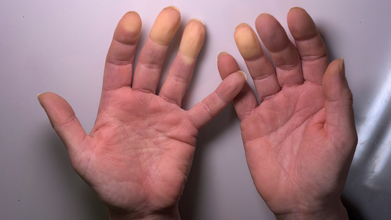
Credit: iStock
If you think that injections of botulinum toxin -- commonly known as Botox -- are only used to make skin wrinkle-free, you may be mistaken.
A new study led by US researchers has shown that Botox injections can act as a “rescue therapy” to treat conditions such as finger ulcers, digital ischemia, and gangrene that are difficult to manage with standard therapies.
Finger ulcers (or digital ulcers) are painful open sores, while acute digital ischemia causes the fingers to become extremely painful, cold, and sometimes pale or bluish in color. Gangrene is the dangerous death of body tissue (necrosis), often turning skin black, green, or purple.
These debilitating complications, often associated with conditions like lupus, rheumatoid arthritis, systemic sclerosis, or bacterial infections, are caused by reduced blood flow to the fingers and heal poorly.
Botox injections, which work by reducing blood vessel constriction and improving circulation, may help achieve complete healing of lesions in more than 85 percent of such patients, according to a study recently published in JAMA Dermatology.
“These new findings are particularly important because therapeutic options remain limited for the cutaneous and vascular manifestations of systemic sclerosis and other autoimmune diseases,” said Dr. Netchiporouk, a scientist in the Infectious Diseases and Immunity in Global Health Program at the Research Institute of the McGill University Health Center.
Netchiporouk noted that the available vasodilator and immunosuppressive treatments are generally administered intravenously.
In contrast to Botox injections, these are also costly, minimally effective, and associated with significant adverse effects.
Also read: Botox Helped Her Burp: How Injectables Changed A 25-Year-Old's Life
The study also described the case of a 50-year-old man with a rare autoimmune disease that caused joint pain and digital necrosis (gangrene).
While traditional medications helped reduce his pain, he was forced to stop working, and the condition severely impacted his quality of life.
However, after receiving botulinum toxin injections, his pain was relieved, and sensation improved within 24 hours, and the necrosis began to improve within two weeks.
“This treatment has become an important tool, especially for patients with autoimmune vascular diseases that result in serious health consequences and for which there are few therapeutic options,” Netchiporouk said.
Also read: Why Regulatory Clarity Is Important for Safe Aesthetic Procedures in India
Botox: Safe, With Minimal Adverse Effects
The study, based on a systematic review and individual patient data meta-analysis of 30 published studies and one unpublished case involving 119 patients, found that only a few patients experienced adverse effects.
These were generally mild and short-lived, most commonly temporary muscle weakness or pain at the injection site.
“Our results show that botulinum toxin can improve blood circulation in the fingers and treat serious complications such as ulcers or gangrene, offering a safe and easy-to-administer alternative,” said Dr. Catherine Zhu, a dermatology resident at the McGill University Health Center.
Zhu added that the injections can be easily administered by rheumatologists and dermatologists in outpatient settings, reducing reliance on intravenous therapies that require hospitalization and increasing overall healthcare costs.
Importantly, in most cases, a single injection session was sufficient to achieve the desired response.
“Botulinum toxin can offer significant benefits with a favorable safety profile. It deserves further study to develop standardized protocols and optimize outcomes,” said Dr. Netchiporouk.
- Follow Us :


© 2024 Bennett, Coleman & Company Limited