
- Health Conditions A-Z
- Health & Wellness
- Nutrition
- Fitness
- Health News
- Ayurveda
- Videos
- Medicine A-Z
- Parenting
A ‘Super Flu’ K-Strain Is Raising Early Christmas Alarms, Here’s What We Know
Credits: Canva
Super flu or the mutated variant of flu, clade K, has swept the world and caused an early spike in cases worldwide. In Australia, it has caused an early summer spike, while in the UK, it has caused a surge in hospitalization. As per the National Health Service (NHS) England, the number of cases of K flu has been increasing since December 7 and December 11. Hospitalization is up 55% in a week, noted NHS.
This has led to a warning by the UK Health Security Agency (UKHSA) and urged anyone with symptoms to "consider wearing a mask". In Australia too the rise of cases has led to health warnings among people. President of the Royal Australian College of General Practitioners Michael Wright said, "We’re diagnosing more cases of the flu than ever, and it is concerning that our vaccination rates have been falling year on year for the past few years. If you have got the flu, make sure you don’t go spreading it to other people because that’s not the gift that people want at Christmas"
What Do We Know About The Subclade K or the Super Flu So Far?
Known as the superfly, this is H3N2 'subclade K'. It is a type of seasonal influenza A virus and people have not encountered much of it in the recent years. This is why there is less immunity against it. However, the National Health Service (NHS), UK, has already sent out a 'flu jab SOS' to vulnerable people.
NHS has confirmed that the super flu is circulating in England this year, and due to less immunity, it is making it easier to spread across people. The UK Health Security Agency (UKHSA) has urged people to get a flu jab. As per the early data, this year's vaccine has offered good protection despite the new strain.
Daniel Elkeles, chief executive of NHS Providers, said that the major concern is that H3N2 is associated with a more severe illness and superflu could be "a very nasty strain of flu". He said that UK could be experiencing a "tidal wave" of illness.
The main strain circulating this winter is a drifted H3N2 variant, which the UKHSA says has left the community with “less natural immunity.” H3N2 strains tend to cause more serious illness in older adults than H1N1 strains and are linked to higher hospitalizations and deaths. This pattern adds further strain to the NHS during the winter months.
Current data shows that 71.7% of people aged 65 and over in England have received this year’s flu vaccine as of December 7. Uptake remains lower in those under 65 in clinical risk groups (37.4%), pregnant women (35.6%), and children aged two or three (41.9%).
Should You Get A Vaccine?
You should. NHS UK, and National Centre for Immunisation Research and Surveillance Australia are urging anyone with symptoms, or anyone who is vulnerable or eligible to get an influenza vaccine.
Even if you are healthy, you should get the shot, say doctors. Vaccines are still working against the drifted influenza A (H3N2) subclade, also known as the super flu. The vaccines in high street chemists are sold for £20.
Anyone can be vaccinated, except for those who have a serious allergy to any of its ingredients or to the vaccine it self. The best way to know is to speak to the pharmacist and your GP.
For the vaccine to work, it usually takes up to 14 days. However, what is more important to not is that during the 14-day-long period, you are still vulnerable to catching the virus.
Flu Vaccine Myth 101: Some people think that it is the flu vaccine itself that has given them the flu, however, the truth is that while vaccine does not give you a flu, it gives your body the instruction it needs to fight off an infection, in case you catch it. While you may still catch the flu after being vaccinated, the affects will be milder and would not last as long.
Ozempic And Wegovy Prices Slashed Again In India To Counter Cheaper Generics
Credit: iStock
Danish pharma giant Novo Nordisk has once again reduced the prices of its blockbuster drugs Ozempic and Wegovy in India. The strategic move is aimed at staying ahead of the entry of the low-cost generic competition in the country.
Starting today, the Ozempic price in India will be cut by 36 percent, while Wegovy has seen a steeper 48 percent reduction — limiting the base price below Rs 6,000 per month.
While Ozempic is available in three dose strengths of 0.25 mg, 0.5 mg, and 1 mg in India, Wegovy has five dose strengths.
Ozempic's and Wegovy's lowest doses of 0.25 mg will now be priced at Rs 1,415 for a weekly shot from Rs 2,200 and Rs 2,712 earlier, respectively, Novo Nordisk India said in a statement on Tuesday.
The average price reduction across doses is 23.8 percent for Ozempic and 27 percent for Wegovy, it added.
Speaking to the media, Novo Nordisk stated that the price cut will benefit a large section of people with diabetes and obesity in India.
The generic weight loss drugs will open up a huge customer base, especially in India, with a high burden of diabetes and obesity.
Novo first slashed Wegovy's price for the first time by up to 37 percent from its launch price last year.
In addition to the entry of generics, the launch of rival Eli Lilly's blockbuster diabetes and obesity drug Mounjaro in India in 2025.
Also read: Semaglutide Becomes Cheap In India: A Gamechanger Or Health Gamble?
Entry Of Generics In India
Soon after the end of Novo Nordisk's patent on semaglutide, on March 20, a host of companies in India launched generic versions of Ozempic.
This includes NATCO Pharma's Semanat and Semafull, priced at Rs 1,290 per month and Rs 1,750 — about 90 per cent cheaper than Ozempic, costing Rs 8,800 per month.
Eris Lifesciences also announced its plans to launch a multi-dose vial under the brand name Sundae at the same price.
Dr. Reddy’s Laboratories, Sun Pharmaceutical Industries, and Glenmark Pharmaceuticals have also launched their generic versions of semaglutide.
Dr. Reddy’s Obeda is priced at Rs 4,200 per month, available in 2 mg and 4 mg strengths.
Sun Pharmaceutical Industries will sell under the brand names Noveltreat (doses ranging from Rs 900) and Sematrinity (doses ranging from Rs 750). Meanwhile, Glenmark’s GLIPIQ vials range from Rs 325 to Rs 440 per week.
Zydus Lifesciences has also announced the launch of its generic version of semaglutide injection under the brand names SEMAGLYNTM, MASHEMATM, and ALTERMET. The average monthly cost of the treatment will be about Rs 2,200, the company said in a statement.
How Does Semaglutide Work?
Semaglutide works as a GLP-1 receptor agonist that mimics the GLP-1 hormone to regulate appetite and blood sugar. It slows gastric emptying and makes you feel fuller longer. It also signals the brain to reduce hunger and cravings, and triggers the pancreas to release insulin when blood sugar is high.
Also read: This Pill Is More Effective For Weight Loss Than Ozempic, Scientists Say
They work by increasing insulin release in a glucose-dependent manner, decreasing the liver's production of glucagon, and slowing down the emptying of the stomach, which helps lower blood sugar levels after a meal. They also act on the brain to suppress appetite and increase feelings of fullness, leading to reduced calorie intake.
In people with type 2 diabetes, notes Harvard Health, the body's cells are resistant to the effects of insulin and the body does not produce enough insulin, or both. This is when GLP-1 agonists stimulate the pancreas to release insulin and suppress the release of another hormone called glucagon.
These drugs also act in the brain to reduce hunger and act on the stomach to delay emptying, so you feel full for a longer time. These effects can lead to weight loss, which can be an important part of managing diabetes.
Leptospirosis: US health officials flag outbreak risk after floods in Hawaii

Credit: iStock
Health officials in the US have issued a risk of leptospirosis — a bacterial illness — in Hawaii, after the “Kona low” storm floods.
The Hawaii Department of Health (DOH) and the Hawaiian Humane Society (HHS) have urged residents and recovery workers to monitor for signs of leptospirosis that can affect both people and pets.
Leptospirosis is caused by bacteria Leptospira, which are carried in the urine of infected animals, including rats, mice, mongoose, livestock, and dogs.
The disease can spread via the urine of infected animals and can enter the human body through broken skin or through the mouth, nose, or eyes.
“Hawaii already has among the highest rates of leptospirosis in the country due to its warm, wet climate,” said HHS and DOH in a joint statement.
“Flooding events like the recent Kona low storm can dramatically increase exposure risk by spreading contaminated soil and water across a broad area,” it added.
The agency urged people to check out symptoms in pets, such as fever, decreased appetite, vomiting, diarrhea, and muscle soreness, and get medical help.
The risk of Leptospirosis outbreak is common after a storm, because the dead animals are likely to spread the bacteria. Further, flooding also forces rodents out of their burrows, leading them into homes, shelters, and debris piles where they shed bacteria more easily.
What Is Leptospirosis?
Leptospirosis is one of the most prevalent zoonotic diseases worldwide, often linked to poor sanitation and agricultural practices that involve contact with animals or contaminated water.
The bacteria can survive in contaminated water or soil for weeks to months, primarily spreading through the urine of infected animals.
Humans can contract the disease through direct contact with infected urine or through contaminated food, water, or soil.
There are two main forms of leptospirosis: icteric leptospira, which presents with jaundice, and anicteric leptospira, a milder variant without jaundice. Leptospirosis can also manifest as Weil's disease, a severe complication.
What Are Symptoms Of Leptospirosis in humans?
Symptoms typically develop 2 to 30 days after exposure and can range from mild to severe. Initial signs often include
- high-grade fever,
- red eyes (conjunctival suffusion),
- calf tenderness,
- headache,
- dry cough,
- nausea,
- diarrhea.
In more serious cases, the infection can lead to complications such as
- jaundice,
- kidney damage
- liver damage,
- meningitis,
- respiratory issues,
- hemorrhages.
Pulmonary hemorrhage — acute bleeding from the lungs — can also occur, posing life-threatening risks such as respiratory and renal failure. The illness may last from a few days to several weeks, and without treatment, recovery can take months, according to the US Centers for Disease Control and Prevention (CDC).
What Precautions Should Be Taken?
To reduce the risk of leptospirosis infection, individuals are advised to take several important precautions. According to the CDC, it is essential to avoid wading through dirty rainwater, especially during the rainy season, and to wear gumboots in such conditions.
Proper care of any injuries or cuts is crucial, and frequent handwashing, particularly after handling food or working in potentially contaminated environments, is highly recommended. Additionally, individuals should avoid contact with animals that appear sick or are known carriers of the bacteria.
Vaccination is also vital—pet owners should ensure their pets are vaccinated against leptospirosis, especially if they are frequently exposed to water or wildlife. Staying hydrated by drinking plenty of clean water and preventing water stagnation around the home can further minimize the risk of infection.
Cicada COVID Variant: Use Masks To Avoid Transmission, Say Experts
Credit: Canva
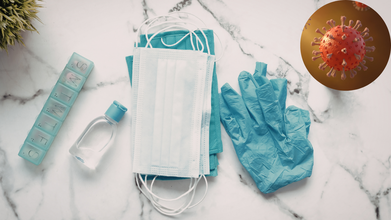
The emerging COVID variant, BA 3.2, nicknamed “Cicada,” has revived memories of the COVID-19 pandemic that disrupted the world and raised fresh concerns about the possibility of severe illness.
The variant has been given the nickname “Cicada” due to its reappearance after remaining dormant or undetected for a long period, much like cicadas that emerge after years underground.
With the variant already spread to 23 nations, as of February, experts are urging people to use masks to avoid transmission.
What Is The Cicada COVID Variant?
Cicada was first identified in a respiratory sample in South Africa in November 2024.
It is a descendant of the Omicron BA.3 lineage, and is genetically distinct from the previously circulating JN.1 lineages (including LP.8.1 and XFG).
BA.3.2 comprises two major branches, BA.3.2.1 and BA.3.2.2. BA.3.2.2 also has substitutions like: K356T, A575S, R681H, and R1162P.
The World Health Organization (WHO) has designated BA.3.2 as a Variant Under Monitoring (VUM). It means the variant may not be that dangerous yet, but it may have concerning mutations.
As per the US CDC’s latest Morbidity and Mortality Weekly Report, Cicada has “70 to 75 substitutions and deletions in the gene sequence of its spike protein”.
Time To Mask Up
Dr. Sai Balasubramanian, a doctor and healthcare strategy executive, writing in Forbes, stressed the need to follow COVID practices such as masks and hand hygiene.
"Healthcare professionals recommend taking general precautions, similar to those used to prevent most viral transmission: get vaccinations when appropriate, wear masks in crowded areas or indoors where there is a high risk of transmission," he said.
He also urged “avoid individuals who have known illness or infections, wash hands frequently, and continue to stay apprised of local community guidelines and the infection spread”.
Cicada variant “is different from the (Covid-19) viruses we have been dealing with for the last two years," Prof Ravi Gupta, of Cambridge University, who advised the UK government during the pandemic, was quoted as saying by The Mirror.
Will The Cicada Variant Cause Severe Illness?
The SARS-CoV-2 virus has the potential to turn deadly in people, especially among vulnerable populations such as those with a weak immune system.
The Cicada variant is particularly concerning as it provides no immune protection to people with previous infection or even vaccination.
Yet, the World Health Organization and health experts advise that existing COVID vaccinations can help prevent severe illness and hospitalization.
"It would appear that all the protections we have from our experience with the virus and with vaccines probably offer more limited—not zero—but more limited protection against this strain," Dr. William Schaffner, professor of infectious diseases at Vanderbilt University Medical Center, was quoted as saying by Time.
Cicada Variant: Any New Symptoms?
The symptoms of Cicada aren't different from those of previous COVID variants. These include:
- sore throat,
- fever or chills,
- headache,
- cough,
- body aches,
- runny nose
- nausea
- diarrhea.
- Follow Us :


© 2024 Bennett, Coleman & Company Limited